
Small Corner Desk Ideas For A Home Office
Small corner desk ideas for a home office start with the desk itself: a floating desk, 36 inches wide and 16 inches deep, mounted at elbow height when seated, that leaves the floor clear and costs roughly $50–80 — less than a bought desk, and built in an afternoon. The consensus measurements are tighter than most people guess: height 28–30 inches, depth 12–16 inches for laptop work (24 inches if a monitor and papers share the desk), about 25 inches of clear knee space underneath, and a chair seat 17–19 inches high. The rise of remote work has made the desk situation in small rooms one of the most-searched topics on Pinterest, and a corner is the smallest room a desk can live in.
The ten ideas below build that desk step by step, from measuring the chair first to the five-minute end-of-day reset. Everything fits in one corner, nothing needs a whole room, and the setup folds away when the corner has to be a dining spot by night. Work through them in order, and the corner becomes an office.

Key Takeaways:
- A floating desk 36 inches wide and 16 inches deep costs about $50–80 and leaves the floor clear.
- Mount it at 28–30 inches high, with about 25 inches of clear knee space and a chair seat 17–19 inches high.
- Lag-bolt into studs, not anchors alone — floating desks typically rate 80–120 lb; follow the maker’s spec.
- One shelf above, one cable tray below, one drawer or tray for everything, and a five-minute reset every evening.
Tip 1 — A floating desk 36 inches wide and 16 deep
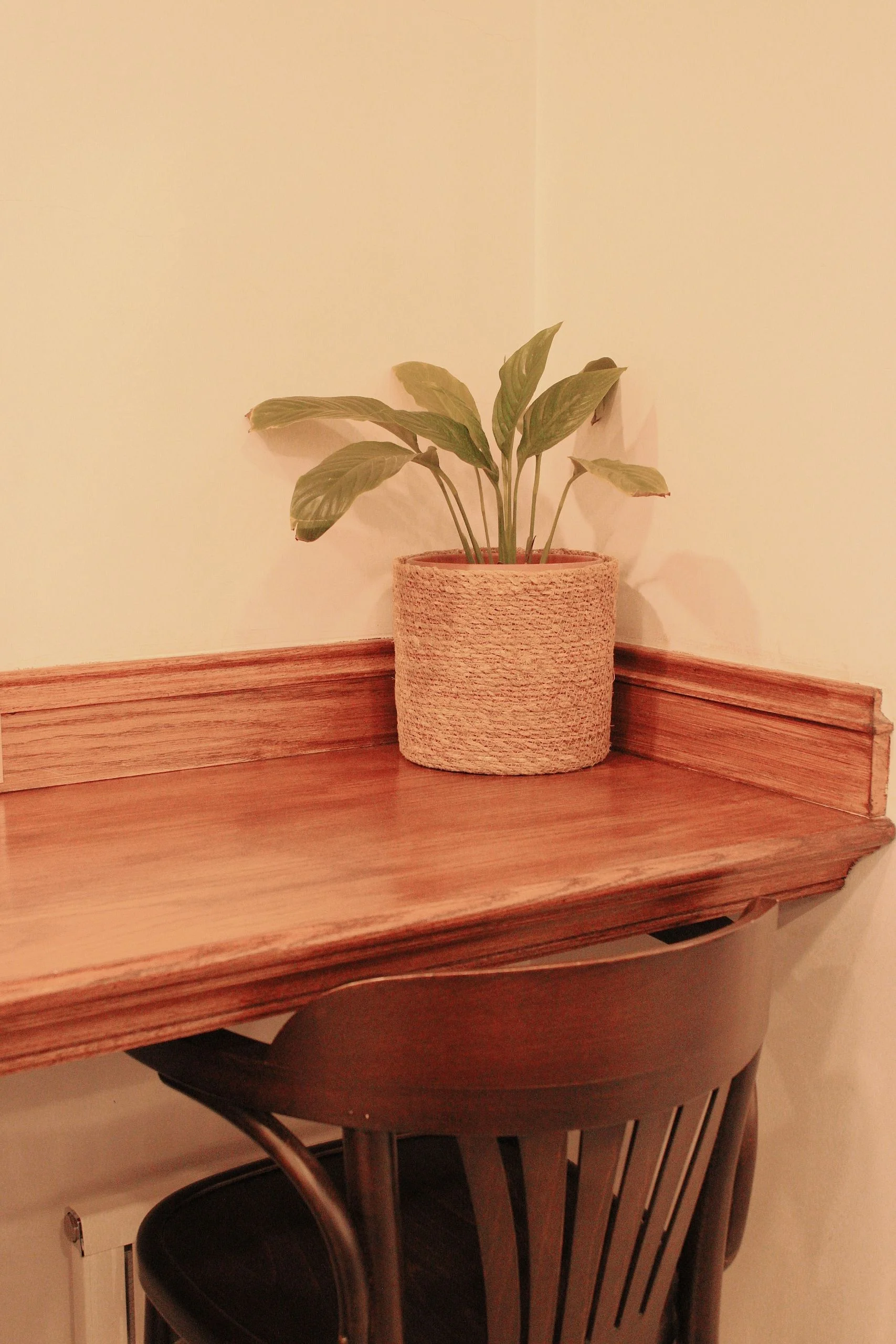
A floating desk 36 inches wide and 16 inches deep costs about $50–80 and leaves the floor clear, because a desk with no legs takes no floor at all. A board, two brackets and a wall are the whole build: the board spans the corner, the brackets hold it, and the floor underneath stays open for feet, a bag, or simply empty space. Sixteen inches of depth is enough for a laptop and a notebook, and 36 inches of width gives elbows room without reaching into the room. The photo shows a minimalist indoor corner with a wooden desk and a potted plant, and the floating build and measurements are not something a photo can prove — so measure the board yourself, and check the brackets before you trust them.
Buy the board first and the brackets second, because the board’s thickness decides the bracket size. A board an inch thick with solid brackets holds a laptop, a lamp and a stack of books without a wobble. One floating board, 36 by 16, and the corner has a desk without losing its floor.
Tip 2 — Mount it at elbow height, and measure the chair first
Mount the desk at elbow height when seated, and measure the chair first, not the wall — because the chair decides the desk height, not the other way round. Sit in the chair you will actually use, let your arms hang naturally, and measure from the floor to your elbow: that is the desk height, and it should land at 28–30 inches for most people, with a chair seat 17–19 inches high. A desk mounted to a standard height with the wrong chair leaves shoulders hunched or wrists bent, and a bad posture costs more than any desk ever saves. The photo shows a computer on a desk near a comfy chair under wooden shelves, and the measuring of the chair is not something a photo can show — the tape measure goes on the chair, before the drill goes near the wall.
Test the height before you drill: stack books on a table to the measured height, sit and type for ten minutes, and adjust until your shoulders relax. One measurement, taken from the chair, and the desk fits the person who uses it.

Tip 3 — One shelf above holds books and a plant
One shelf above the desk holds the books and a plant, so the desk holds only the work. A single shelf, mounted above the desk at a height you can reach without standing, takes the books, the notebook and the small plant off the desktop and puts them where they are visible but out of the way. The desk underneath stays clear for the laptop and the work in hand, and the shelf makes the corner look like an office instead of a table with things on it. The shelf and the desk together are the corner-office cluster: the desk is the work, the shelf is everything else. IKEA’s Workspaces room ideas show the same desk-and-shelf pairing in small corners.
Keep the shelf light — books, one plant, one small box — because a heavy shelf over a desk is a shelf that worries you. Leave a third of the shelf empty, so it never looks crowded and there is always room for the next book. One shelf above, and the desk stays a desk.

Tip 4 — A cable tray under the desk keeps wires off the floor
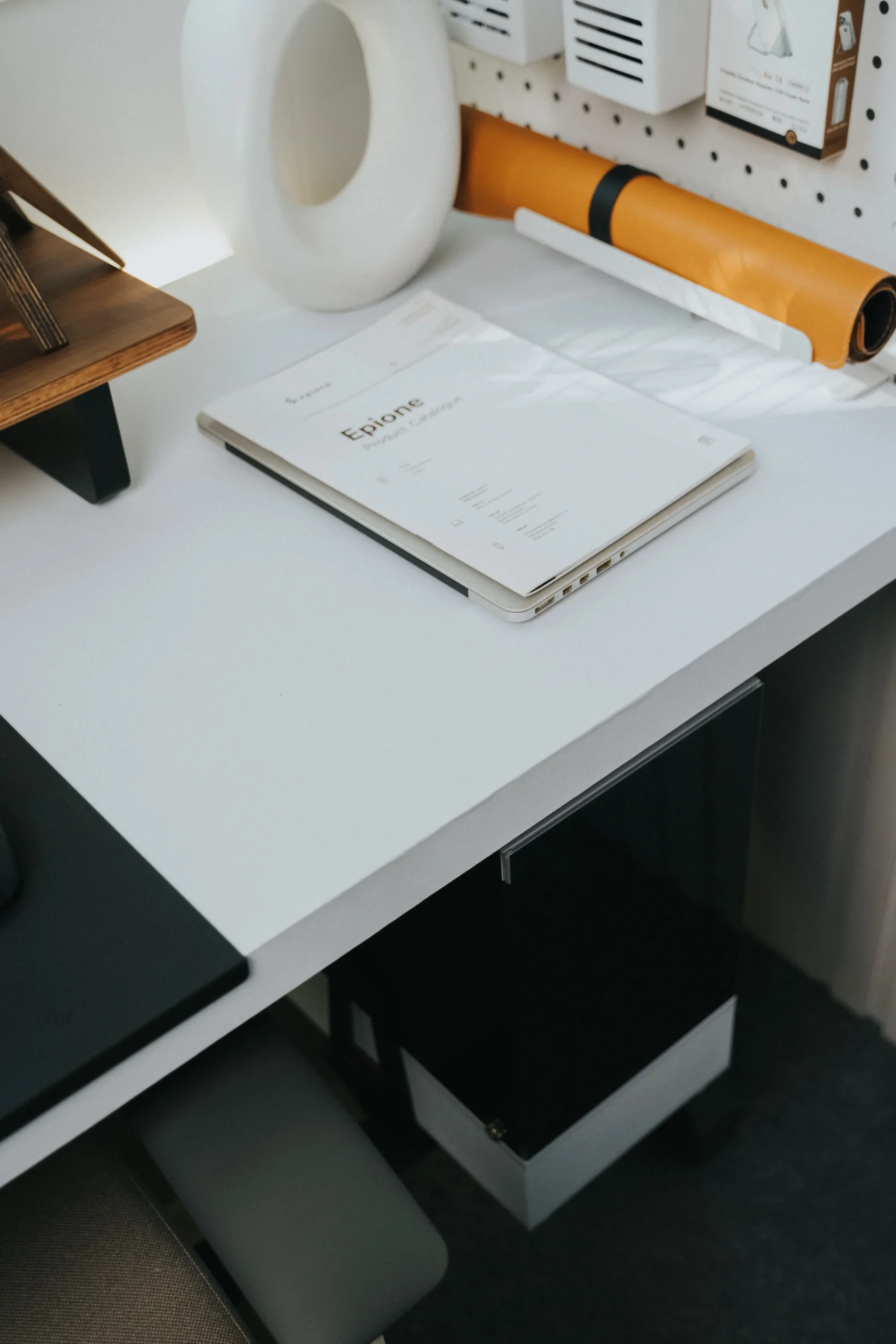
A cable tray under the desk keeps the wires off the floor and out of sight, because a floating desk with wires dangling underneath is a desk that trips people. Screw or stick a small tray under the desktop, run the laptop charger, the lamp cable and the phone cable through it, and the floor under the desk stays as clear as the desk was meant to keep it. The tray also protects the cables from feet and from the stool legs, so they last longer and never get yanked out mid-call. The photo shows a clean modern office desk setup with minimalist elements, and no cable tray is visible — the tray belongs underneath the desktop, where the camera cannot see it and the feet cannot reach it.
Leave one spare slot in the tray for the next cable, because there is always a next cable. A tray that is full is a tray that stops working, and the wires go back to the floor. One tray, under the desk, and the corner office has no wires to show.
Tip 5 — Face the desk to the window if you can
Face the desk to the window if you can, because daylight beats a lamp all morning. A desk facing the window puts the light on your work and on your face, so video calls look bright and reading feels easy, and the view gives your eyes somewhere to rest between tasks. A desk facing the wall puts the light behind you, so your own shadow falls across the keyboard and the room feels smaller than it is. If the corner has a window on one wall, the desk goes on that wall — the corner’s best light belongs to the work.
Keep the window clear of tall plants and stacked boxes, so the light reaches the desk all morning. A sheer curtain softens the glare without blocking it, and a wipeable sill catches the coffee that always sits beside a laptop. One window, one desk facing it, and the smallest office in the house has the best light in it.

Tip 6 — A stool that tucks fully under, never a chair that blocks the door
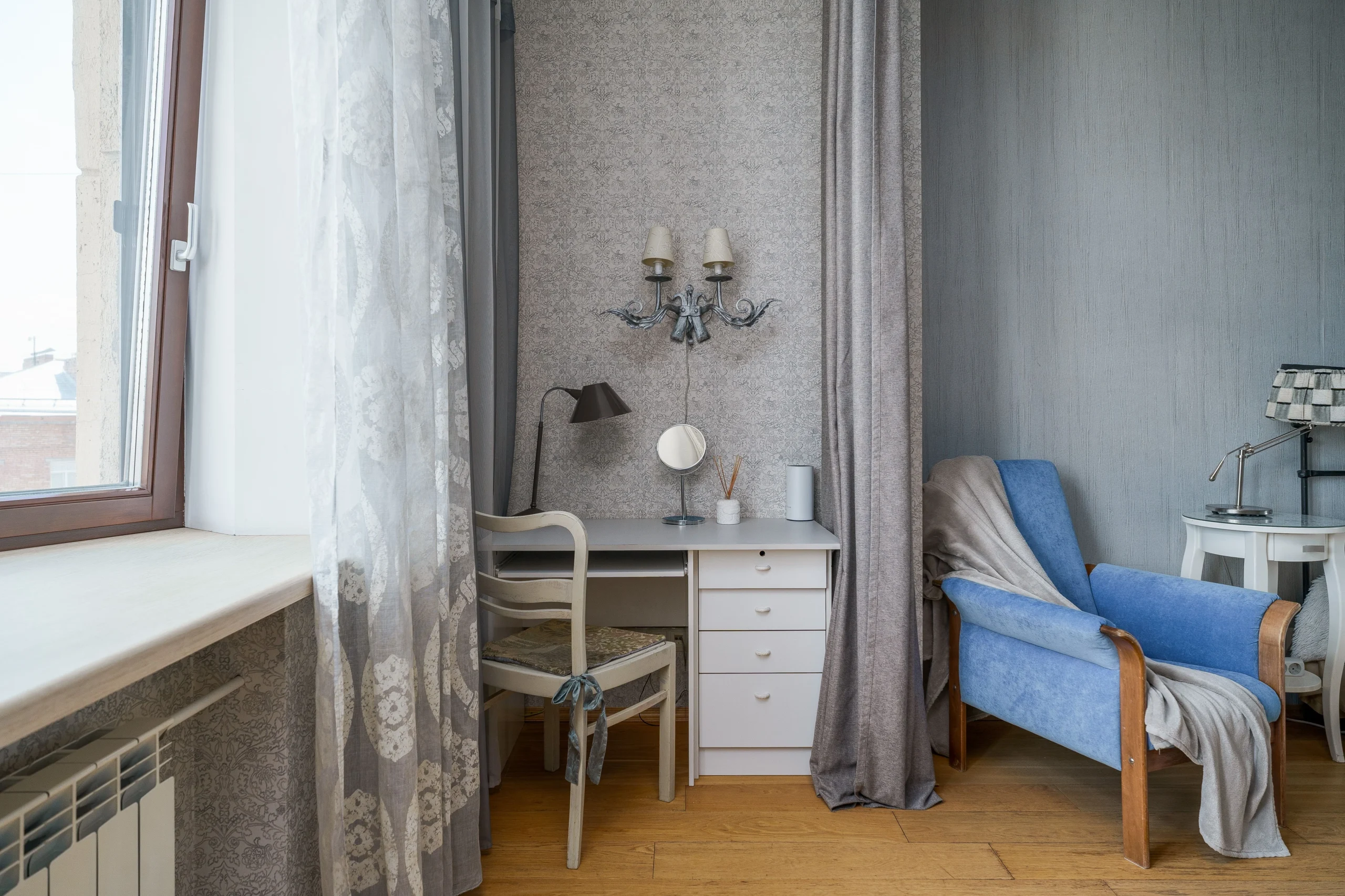
A stool that tucks fully under the desk is the seat for a corner office, never a chair that blocks the door. A stool slides completely under a floating desk when the work is done, so the corner is a corner again and the door swings freely; a chair with a back sticks out into the room, blocks the walkway, and turns the office into an obstacle. Choose a stool with a seat 17–19 inches high, so it matches the desk height you measured, and with no back to catch on the desk edge. The photo shows an elegant interior with a blue armchair, a desk and soft curtains, and the chair in it is not a stool tucked fully under — the stool to copy is the one that disappears under the desk when the day ends.
Test the tuck before you buy: slide the stool under the desk, check that it clears the cable tray, and check that the door opens past it. One stool, tucked fully under, and the office vanishes when the work does. If you would rather buy than build, IKEA’s Desks & Desk Chairs range has small desks and stools sized for corners.
Tip 7 — Keep one drawer or tray for everything
Keep one drawer or tray for everything, because a desk with no home for the small things becomes a pile within a week. One drawer under the desktop, or one tray on the shelf above, holds the pens, the charger, the notebook and the papers — everything that is not the work in hand, but that the work needs nearby. When a thing has a drawer, it goes back in the drawer; when it has no drawer, it stays on the desk, and the desk slowly disappears under it. The photo shows a cozy home office corner with a clock, a notebook and a comfortable chair, and no drawer or tray is visible — the drawer belongs under the desktop, or the tray on the shelf above, where the small things live out of sight.
Empty the drawer once a month and throw away what has not been used, because a drawer that is full is a drawer that stops working. One drawer, one tray, and the desktop holds only the work.

Tip 8 — If the corner is dark, one warm lamp on the shelf
If the corner is dark, one warm lamp on the shelf is the light — not an overhead, which glares off the walls of a small corner. A small lamp on the shelf above the desk throws warm light down onto the work, exactly where the eyes need it, and leaves the rest of the corner in soft shadow, so the office feels like a nook instead of a cell. Choose a warm bulb, not cool white, because warm light reads as evening calm and cool white reads as office lighting. The lamp also doubles as the corner’s evening light when the work is done and the desk becomes a reading spot.
Keep the lamp small enough that it never crowds the shelf, and keep its cable in the cable tray with the rest. One warm lamp, on the shelf, and the darkest corner in the house becomes an office.

Tip 9 — A fold-down desk works when the corner must be a dining spot by night
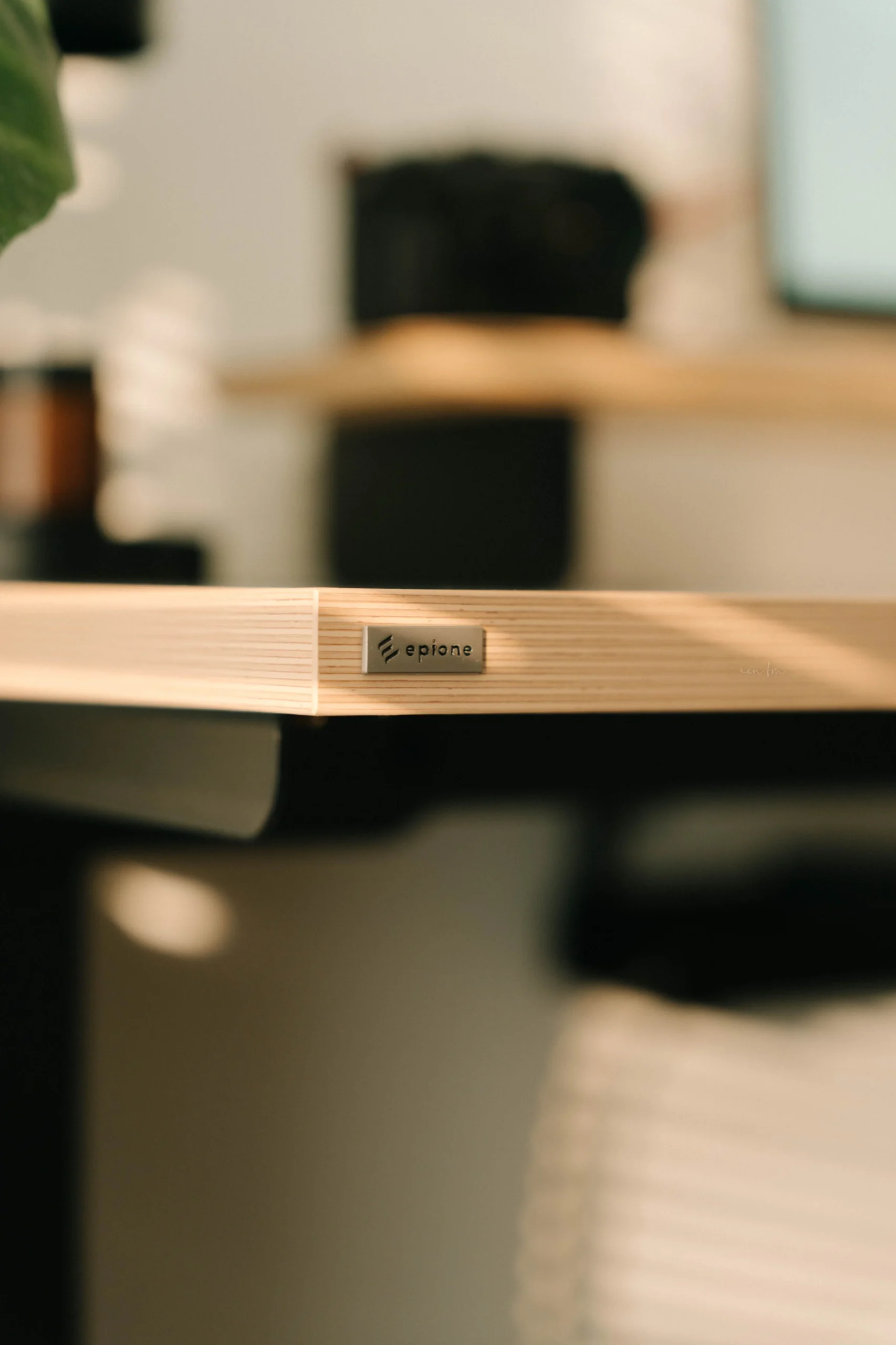
A fold-down desk works when the corner must be a dining spot by night, because a desk that folds to about 4–6 inches deep when closed is a desk that disappears. Hinge the board to the wall, add two folding brackets underneath, and the desk folds down for work and folds up flat against the wall for dinner — the same corner, two jobs, divided by the time of day. The fold-down is the boldest small-space move in this whole post, and it is the one that lets a corner be an office by day and a dining spot by night without a single extra square foot. The photo shows a minimalist wooden desk corner, warmly lit, and the fold-down mechanism is not shown — the desk in the picture is fixed, so the folding brackets are the part to add — and the desk carries small “Epione” branding, which is part of the photo, not part of the build.
Before you build, do the painter’s-tape test: mark the desk outline on the floor with tape, chair included, live with it for a day, and check that the folded desk clears the dining chairs. One fold-down desk, 4–6 inches deep when closed, and the corner does two jobs in the same square feet.
Tip 10 — A five-minute end-of-day reset
A five-minute end-of-day reset — laptop shut, papers in the tray, stool tucked — means the corner is an office again tomorrow morning, not a mess from yesterday. Shut the laptop, slide the papers into the tray, coil the charger into the cable tray, and push the stool fully under the desk. Done in the same order every evening, it genuinely takes five minutes, and it is the difference between starting work at a clear desk and starting work by clearing one. The photo shows a warm inviting corner workspace with a desk, chair and lamp, and the reset action itself is not something a photo can show — the tidy workspace is the result the five minutes buys.
Make the reset the last work job of the day, before the laptop bag closes, so it never gets skipped. A desk that is reset every night is a desk that gets used every morning, because nobody wants to clear yesterday’s work before starting today’s. Five minutes at night, and the corner office is ready every morning.

Frequently Asked Questions
How much weight can a wall-mounted desk support?
A floating desk lag-bolted into studs typically rates 80–120 lb, but always follow the maker’s spec for your brackets and board. Hit studs, or use proper anchors rated for the load — never hang a desk on plasterboard fixings alone.
What size should a small corner desk be?
For laptop work, 36 inches wide and 12–16 inches deep is the consensus, at 28–30 inches high with about 25 inches of clear knee space underneath. If a monitor and papers share the desk, step up to 24 inches deep.
How do I fit a desk in a corner without losing floor space?
Use a floating desk with no legs, or a fold-down desk that folds to about 4–6 inches deep when closed. A stool that tucks fully under the desk keeps the floor clear, and a cable tray underneath keeps wires off the floor.
What chair height goes with a 28–30 inch desk?
A chair seat 17–19 inches high, measured from the floor to your elbow when seated — measure the chair first, not the wall. Test the height with stacked books before drilling, and sit and type for ten minutes before committing.
Can a corner desk face the window?
Yes, and it should if the corner allows it — daylight beats a lamp all morning, and the view gives your eyes somewhere to rest. If the corner is dark, add one warm lamp on the shelf above the desk, not an overhead.
How do I test a corner desk layout before building it?
Do the painter’s-tape test: mark the desk outline on the floor with tape, chair included, and live with it for a day. Check that the door opens, the stool tucks under, and the folded desk clears the dining chairs. Adjust the tape until the layout feels right.
Final Thoughts
Small corner desk ideas for a home office work when the desk is built for the corner, not bought for a room: a floating desk 36 inches wide and 16 inches deep, mounted at 28–30 inches high with about 25 inches of clear knee space, lag-bolted into studs for a typical 80–120 lb rating, and costing roughly $50–80. Measure the chair first, not the wall, put one shelf above for books and a plant, hide the wires in a cable tray, and face the window if the corner allows it. A stool that tucks fully under keeps the floor clear, one drawer or tray holds everything that is not the work in hand, and a warm lamp on the shelf lights the dark corner. If the corner must be a dining spot by night, a fold-down desk closes to 4–6 inches deep — test it first with painter’s tape — and a five-minute reset every evening keeps the office ready. The corner does not get bigger, but it gains a job, and that is what makes it an office.
Save this post on Pinterest for your next home office setup, and read our earlier work-from-home corner ideas next: Small Bedroom Desk Ideas For Work And Study, Cozy Corner Ideas For Working From Home Flats, Cozy Small Living Room Ideas For Work From Home, and Small Corner Storage Ideas With Floating Shelves.
Written from small-room living experience — every idea here is practical for a tiny home office, with a renter-friendly option wherever drilling is a problem.
Last updated 19 Nov 2026. Refresh in 3–6 months: re-check the desk fixings and the cable tray, and re-measure if the chair changes.
Further reading: Small Space Ideas for the Bedroom and Home Office
Further reading: 65 Small Home Office Ideas to Maximize Your Space


One Comment