
Small Corner Storage Ideas With Floating Shelves
Small corner storage ideas with floating shelves start with one simple truth: a corner has two walls, and that is the storage. Shelves and hooks use both walls and take zero floor space, so a corner that holds nothing today can hold books, plants, baskets and bags tomorrow — without a single piece of furniture on the floor. The most-saved corner formula on Pinterest is one job, one anchor piece and one light source, and a storage corner follows it exactly: one job (hold the things), one anchor (the shelves), one light source (the lamp or the window beside it). Most corner nooks cost under $75 and take an afternoon, and this one is no different.
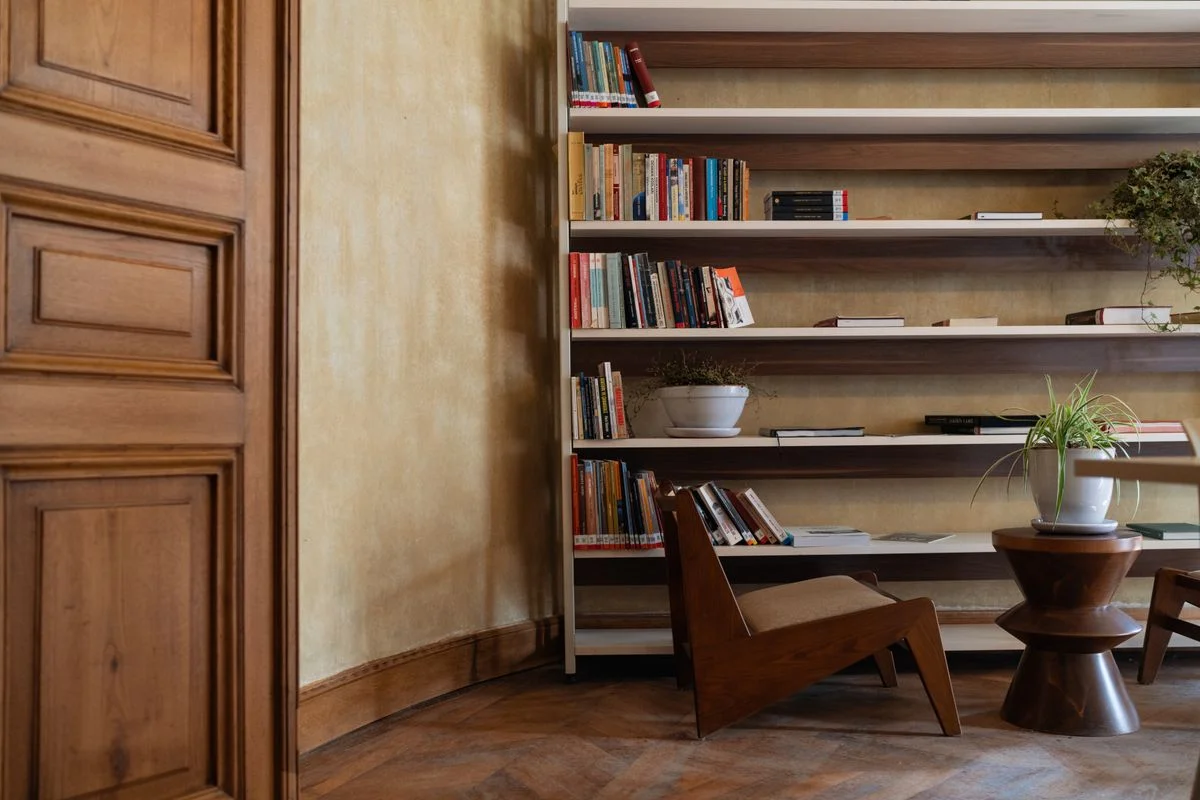
The ten ideas below are ordered from the shelves themselves to the habit that keeps them tidy. The sizing rule to know before you buy: 10 to 16 inches per side for decor, up to 24 inches for plants and books; stack two or three tiers, 12 to 16 inches apart; leave a third of each tier open; use wall anchors rated at least 50 lb. The photo below shows a freestanding corner bookshelf with books, a trailing plant and framed art prints beside it, rather than floating shelves — the idea is the same, a corner holding books and a plant without taking floor space.

Key Takeaways:
- A corner has two walls — shelves on both walls hold twice what a flat wall holds, and take zero floor space.
- Size it right: 10–16 in per side for decor, up to 24 in for plants and books; stack 2–3 tiers, 12–16 in apart; leave a third of each tier open; wall anchors rated at least 50 lb.
- Keep the top shelf for display and the middle shelves for daily things; keep heavy things low and light display high.
- Renting? Use no-drill adhesive hooks and freestanding corner shelves — nothing on the walls, and the deposit stays safe.
Tip 1 — Floating shelves on both walls, not one: the corner holds twice as much
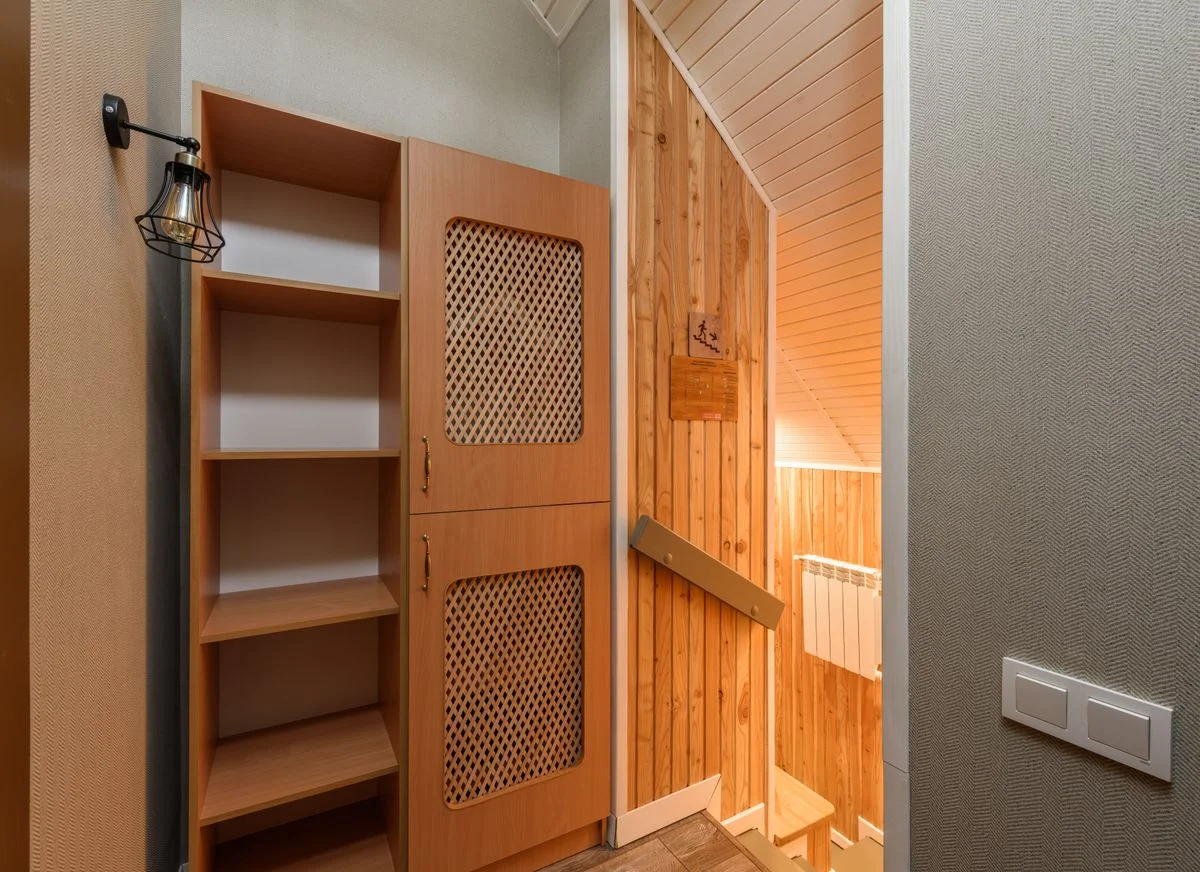
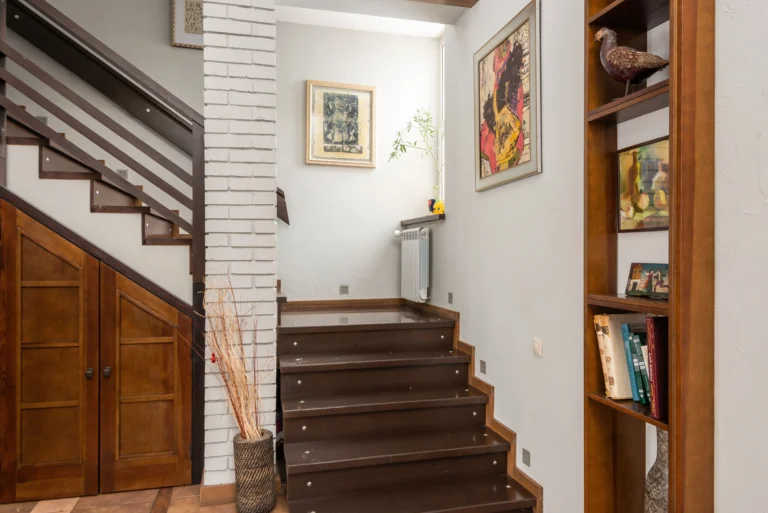
Put floating shelves on both walls of the corner, not just one, because the corner holds twice what a flat wall holds. A shelf on one wall is a shelf; a shelf that turns the corner is storage that wraps the room, and the second wall costs nothing extra in floor space — it was empty anyway. The two walls meet at a right angle, so the shelves meet too, and the corner becomes the strongest storage spot in the room instead of the weakest. The photo shows built-in hallway shelves in a wood-panelled hallway by a staircase, rather than floating corner shelves, and they stand empty — the point is the two-wall layout, shelves meeting in the corner.
Start with two or three tiers on each wall, at the same heights, so the shelves look like one piece of furniture rather than two separate ideas. Keep them level across the corner, and the eye reads them as a single storage wall that happens to bend.
Tip 2 — Keep the top shelf for display, the middle shelves for daily things
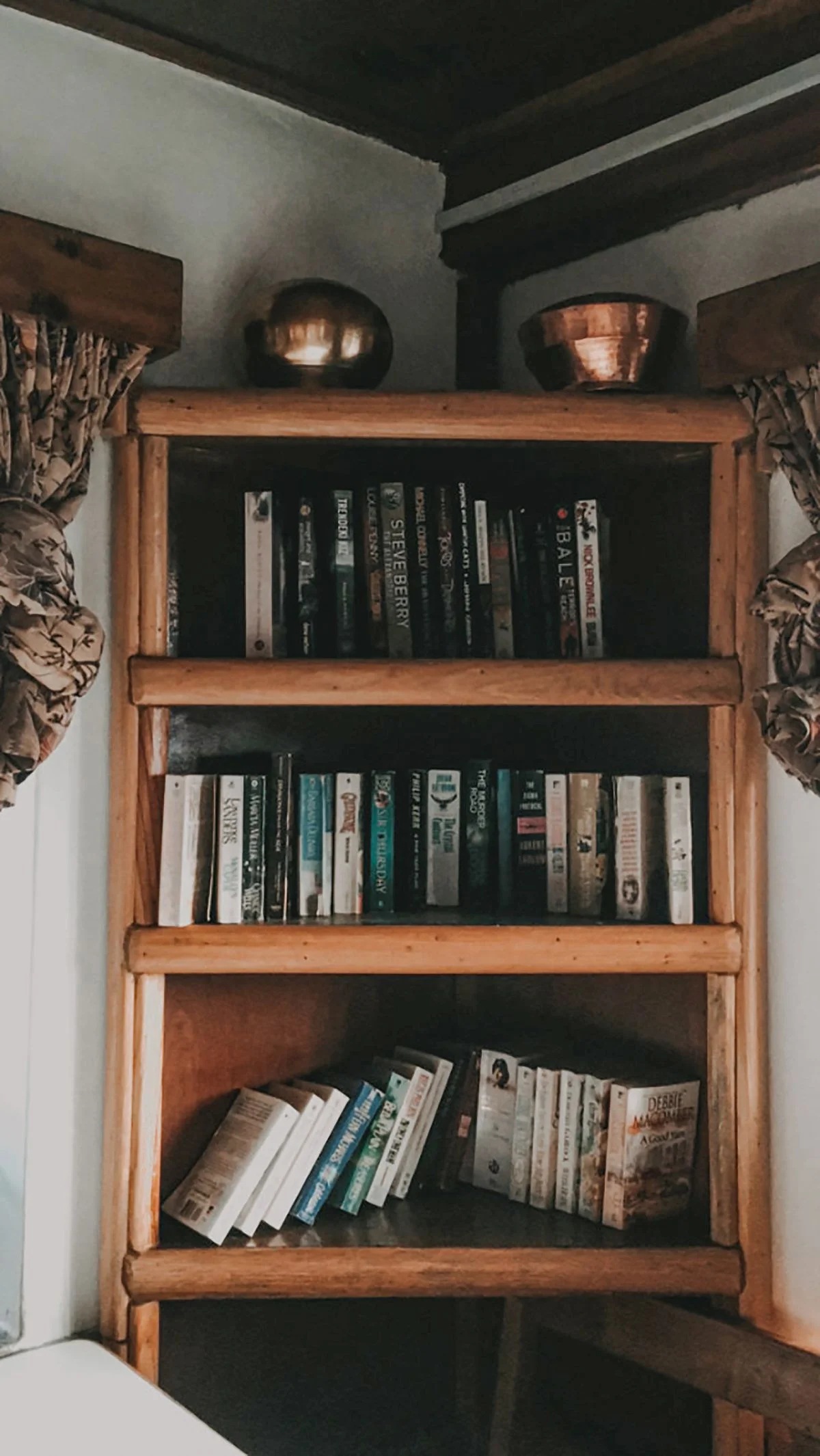
Keep the top shelf for display and the middle shelves for daily things, because a shelf you have to reach for is a shelf you will not use. The middle shelves — the ones at chest and eye height — are where the books you are reading, the basket you grab every morning and the plant you water live, because your hands reach them without stretching or bending. The top shelf, by contrast, is for the things you want to see and never need to touch: a framed photo, a small vase, a trailing plant that softens the corner from above. The photo shows a wooden corner bookcase filled with books, with copper bowls on the top shelf — the top shelf doing its display job, and the books below within easy reach.
Work the rule from the top down: display on the highest shelf, daily things in the middle, the basket on the lowest. A daily thing on the top shelf stays there untouched, and a display piece in the middle gets knocked over within a week. Top for looking, middle for living, and the corner stays useful instead of pretty-but-useless.
Tip 3 — Hooks on the side wall hold bags, coats and headphones
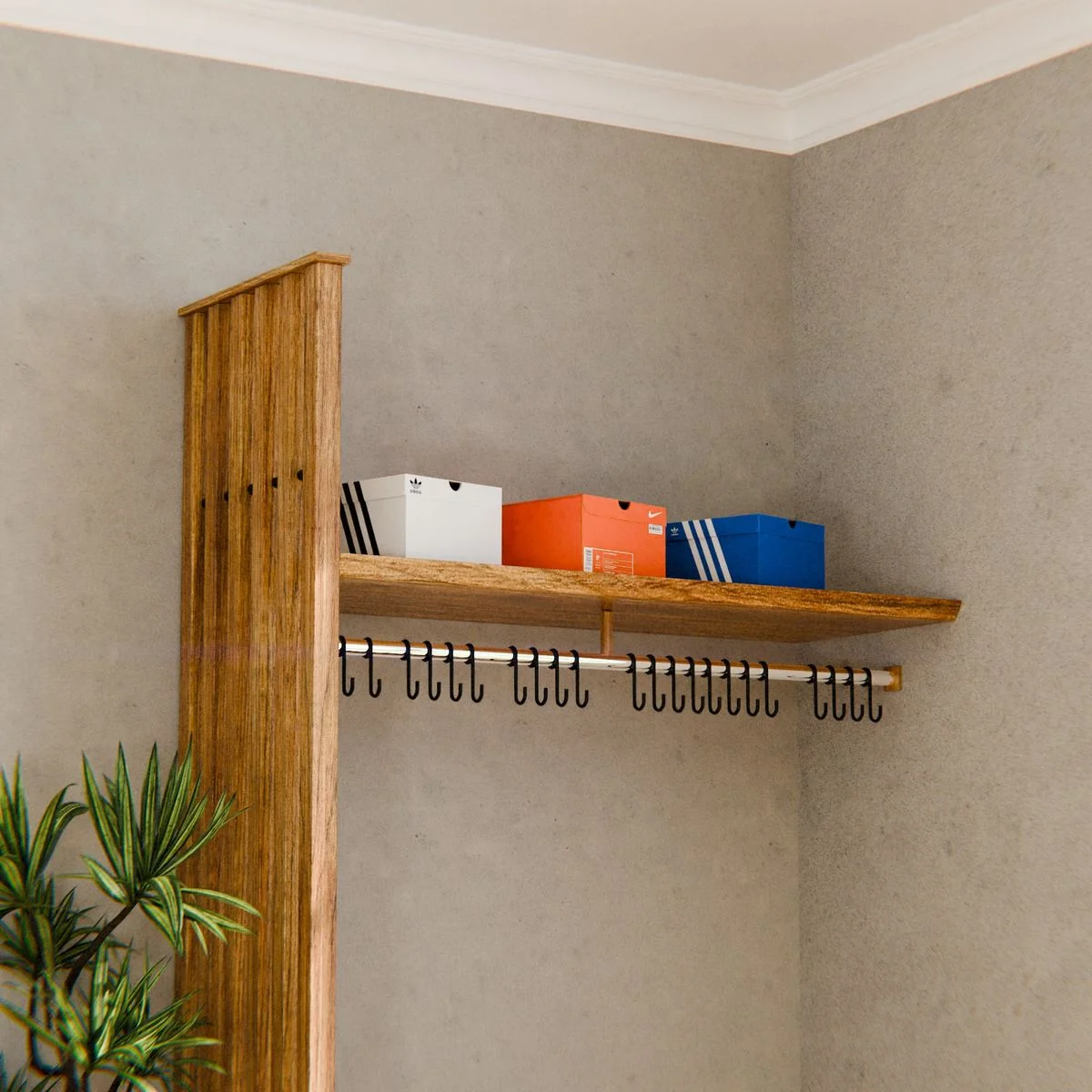
Put hooks on the side wall of the corner, and bags, coats and headphones stop living on the floor. A row of three or four hooks — one for the bag, one for the coat, one for the headphones, one spare — turns the wall beside the shelves into storage that takes no shelf space at all, and the floor stays clear because nothing has to be dropped. Hooks are the cheapest storage there is: a few pounds each, one afternoon to fit, and the corner gains a whole extra job without a single new shelf. The photo shows a wooden coat rack with a row of black hooks and shoe boxes on the shelf above, in a corner — hooks that hold everything, with the shelf above doing the rest.
Fix the hooks at a height you can reach without stretching, and space them far enough apart that a coat and a bag do not fight for the same hook. If you rent, adhesive hooks rated for the weight do the same job with no holes — check the weight rating on the packet, because a hook that holds a scarf will not hold a winter coat. One row of hooks, and the floor stops being the coat rack.
Tip 4 — A basket on the lowest shelf catches the small things that spread
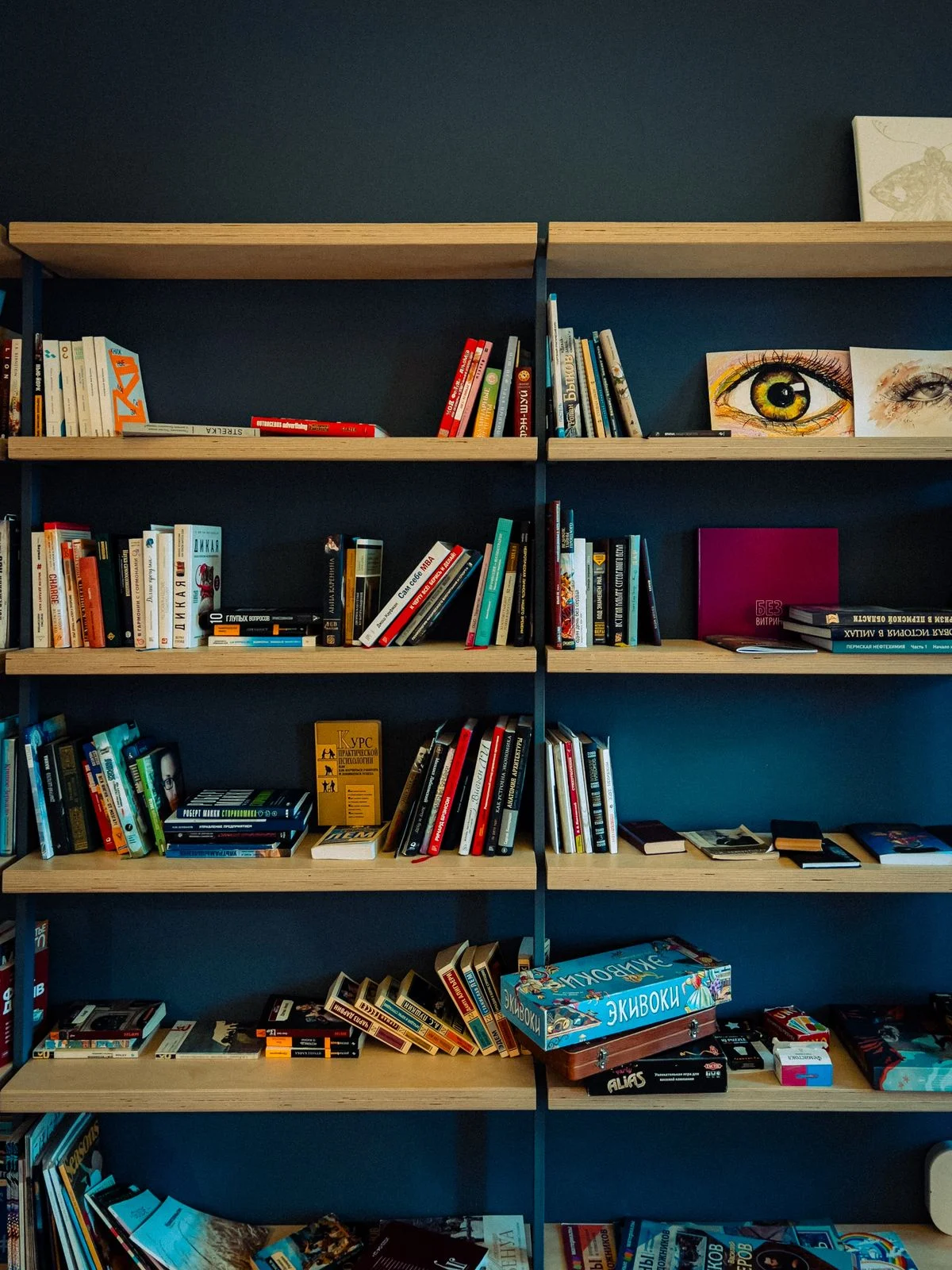
Put a basket on the lowest shelf, and it catches the small things that otherwise spread across the whole room. Keys, chargers, hair ties, the remote, the odd screw from a piece of furniture — small things have no home, so they live everywhere, and the corner is where they collect. One basket, on the lowest shelf where a hand drops things without thinking, gives them that home: everything small goes in the basket, the basket stays in the corner, and the rest of the room stays clear. The photo shows a wide wall of light wooden shelves filled with books and art prints — the basket on the lowest shelf is not in frame, but the shelf layout is the same, and the lowest shelf is where the basket belongs.
Choose a basket that fits the shelf with a little room to spare, so it slides in and out without catching, and keep it shallow enough to see inside at a glance. Empty it once a week: the things that belong elsewhere go back, and the things that belong nowhere leave the house.
Tip 5 — Measure the shelf depth: deeper than 10 inches crowds a small corner
Measure the shelf depth before you buy, because a shelf deeper than 10 inches crowds a small corner. A deep shelf juts into the room, narrows the walkway beside it, and turns the corner into an obstacle — and in a small room, a shelf that sticks out too far is worse than no shelf at all. The rule competitors publish is 10 to 16 inches per side for decor, and up to 24 inches only for plants and books that need the room; for a tight corner, the shallow end of that range is the right one. The photo shows long wall shelves with books and potted plants behind a wooden chair — the depth is not something a photo can prove, so measure yours with a tape, not by eye.
Measure the corner itself, not just the wall: hold a tape measure out from the wall at the shelf’s height and walk past it, and if your shoulder brushes it, the shelf is too deep. A shelf that sits close to the wall holds just as much and never gets in the way, because the things on it — books, plants, baskets — are all shallow things anyway. Ten inches or less, and the corner stays a corner instead of becoming a corridor block.
Tip 6 — One shelf per job: books on one, plants on one, baskets on one
Give each shelf one job — books on one, plants on one, baskets on one — because a shelf with a mixed job ends up with nothing done well. A shelf that holds books, a plant, a basket and a pile of chargers is not storage, it is a junk drawer on a wall, and nothing on it is easy to find. One shelf per job is the rule that keeps a corner tidy without any effort: the books live on their shelf, the plants on theirs, the baskets on theirs, and your hand goes to the right shelf without thinking. The photo shows close-up wooden cubby shelves packed with old books — one shelf per job is a rule for how you fill them, not something the photo can show, because these shelves hold books only.
The wall itself helps: it acts as a natural bookend, so books on a corner shelf stand upright, held by the wall on one side and the next shelf’s books on the other. Keep the rule visible — one label on the basket shelf, one plant per plant shelf — and the corner polices itself. One shelf, one job, and the corner never needs a big tidy-up, only a small one.

Tip 7 — Keep heavy things low: the top shelf is for light display only
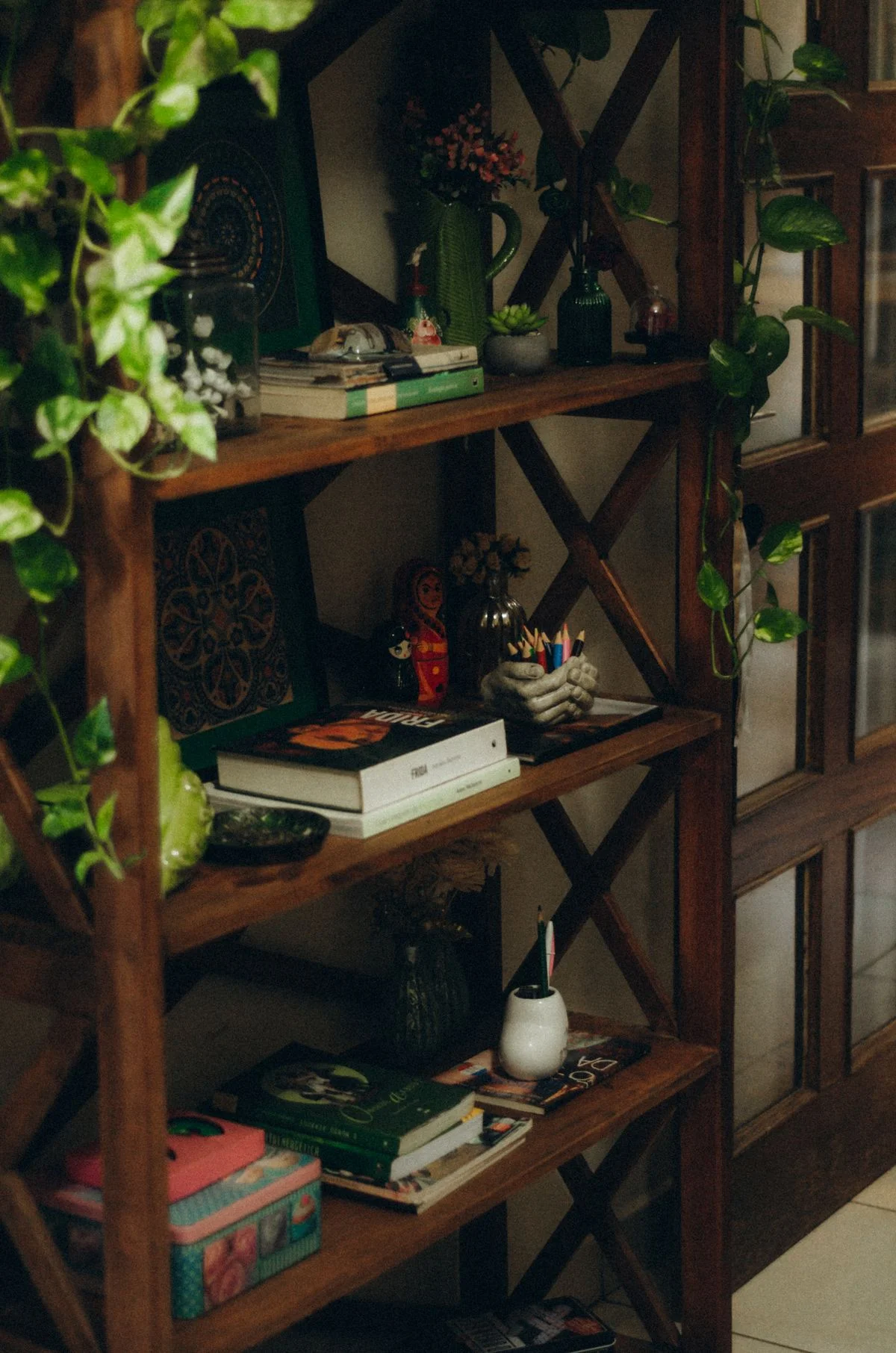
Keep heavy things low, because the top shelf is for light display only. A heavy book, a full basket or a ceramic pot on the top shelf is a risk — it is hard to lift down, hard to put back, and if it falls it falls from the highest point in the room. Heavy things belong on the lowest shelf, where a hand reaches them easily and a slip costs nothing, and the top shelf holds only the light things: a small vase, a framed photo, a trailing plant that weighs almost nothing. The photo shows a wooden bookcase with books, decorations and trailing plants — the heavy-low idea is a rule to apply, not a scene the photo proves, though the light display on top and the books below point the same way.
Check the anchors too: wall anchors rated at least 50 lb are the standard competitors quote, and a shelf loaded with books can pass that quickly, so use the right anchor for the wall you have — plasterboard anchors for plasterboard, masonry fixings for brick. Load the shelf, then pull down gently on its front edge: if it moves, the anchor is wrong. Heavy low, light high, and the shelves stay safe as well as tidy. For ready-made options, browse IKEA’s Storage & Organization range.
Tip 8 — A corner shelf above a desk or vanity doubles its surface without a bigger table
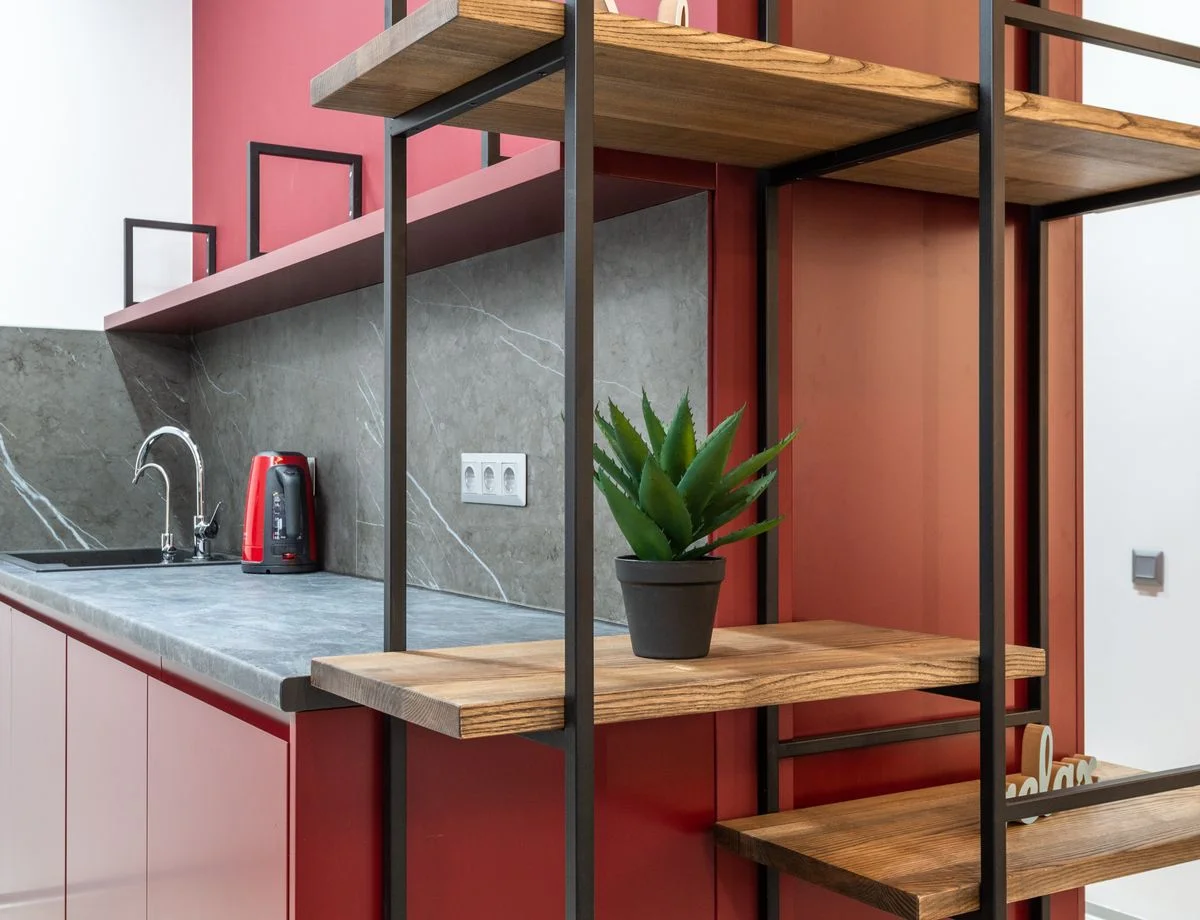
Put a corner shelf above a desk or vanity, and it doubles the surface without a bigger table. A desk in a small room is always too small — the laptop, the lamp, the notebook and the cup never fit — and a shelf above it takes the lamp and the books off the desk, so the desk holds only the work. The same shelf above a vanity holds the creams and the brushes, so the vanity top holds only the mirror’s work. The photo shows open wooden shelves above a kitchen counter with a potted plant on the shelf, a sink and a kettle — shelves above a kitchen counter rather than above a desk, but the same shelf above a work surface, doubling it without a bigger table.
Keep the shelf about 16 to 18 inches above the desk top, so the things on it are in hand from the chair. One shelf is usually enough; two start to crowd the wall and shade the work below. One shelf above the desk, and the small table works like a big one.
Tip 9 — If renting, use no-drill adhesive hooks and freestanding corner shelves
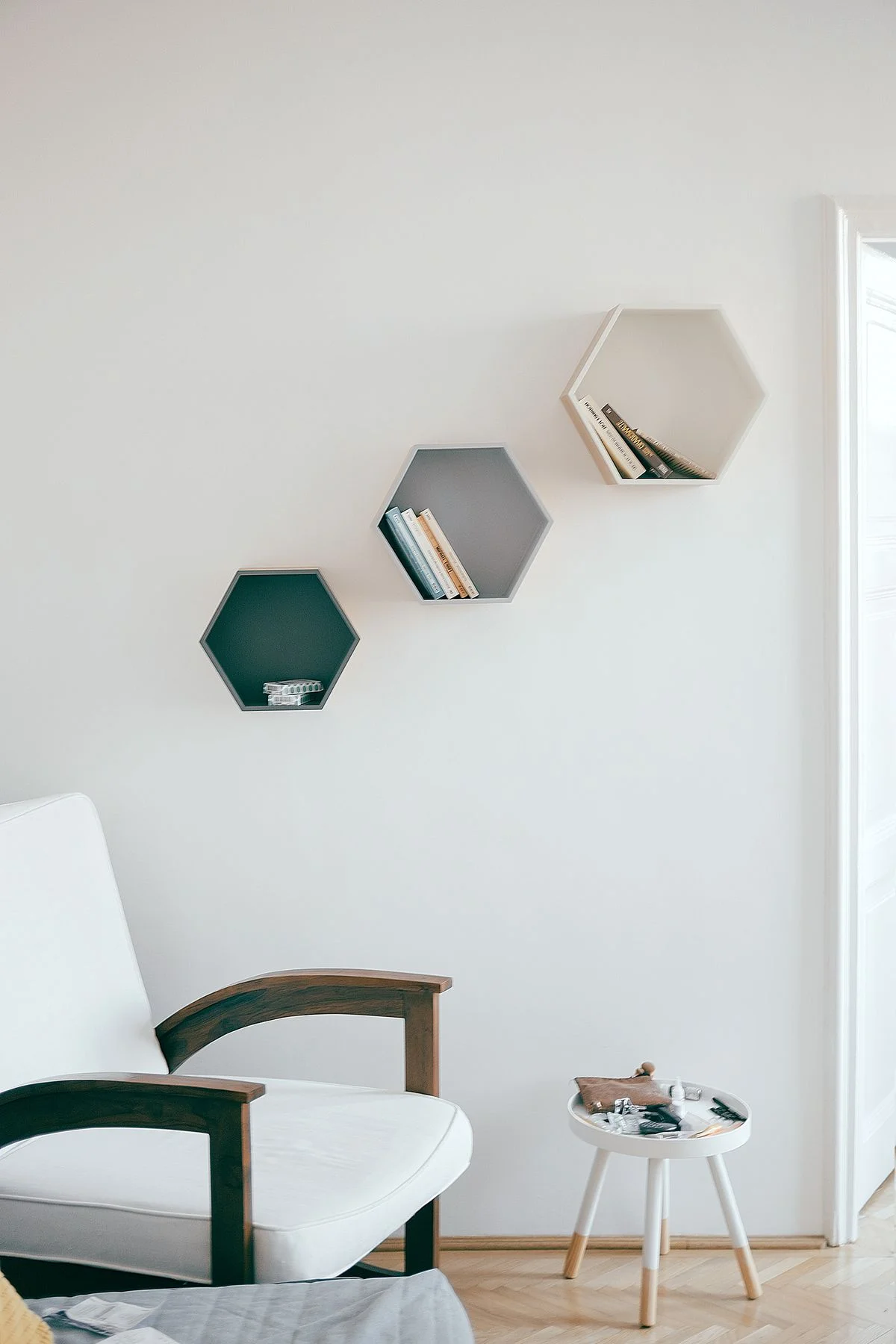
If you are renting, use no-drill adhesive hooks and freestanding corner shelves, and put nothing on the walls at all. A freestanding corner shelf unit — a ladder shelf, a corner bookcase, a stack of crates — stands in the corner on its own feet, holds the same books and baskets, and leaves with you when you move, with no holes to fill and no deposit to lose. Adhesive hooks do the same for bags and coats: they stick to the wall, hold the weight the packet promises, and peel off clean when the tenancy ends. The photo shows three hexagonal wall shelves with books above a white armchair — wall-mounted shelves, so the no-drill version is not shown, but the corner storage idea is the same with freestanding shelves instead.
Check the weight rating on every adhesive hook before you trust it with a coat, because a hook that holds a scarf will not hold a winter jacket — and test one hook with a light bag for a day before you load it. Freestanding shelves need a level floor and a wall behind them for stability, so push the unit tight into the corner and keep the heaviest things on its lowest shelf. No drilling, no holes, and the corner still stores everything.
Tip 10 — A monthly 10-minute shelf sweep: one shelf, one basket, one hook at a time
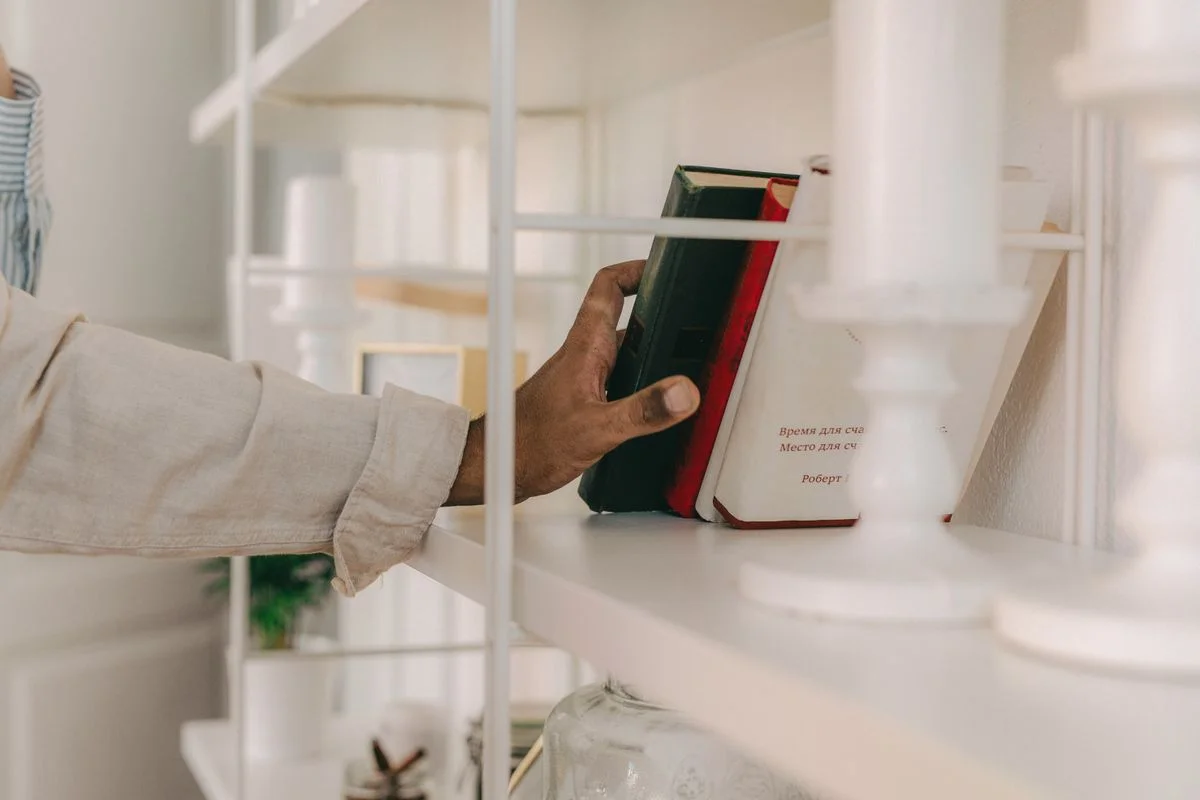
Do a monthly ten-minute shelf sweep — one shelf, one basket, one hook at a time — and the corner never needs a big tidy-up. Shelves collect things quietly: a book that belongs in another room, a plant that has outgrown its pot, a basket that has become a junk drawer, a hook holding a coat nobody has worn in months. Ten minutes, once a month, is enough to fix all of it: start at the top shelf and work down, take everything off one shelf, wipe it, put back only what belongs there, and move on. The photo shows a hand picking a book from a white shelf — the sweep itself is a ten-minute routine, not a scene, but the hand on the shelf is where it starts.
Keep a small bag beside you, so the things leaving the shelf go straight into the bag and out of the room — if they sit on the floor, they will be back on the shelf by evening. Leave a third of each tier open when you put things back, because a shelf with breathing room stays tidy and a packed shelf starts collecting again within a week.
Frequently Asked Questions
Are corner shelves good for small rooms?
Yes — a corner has two walls, so shelves on both walls hold twice what a flat wall holds and take zero floor space. Size them 10 to 16 inches per side for decor, up to 24 inches for plants and books, stack two or three tiers 12 to 16 inches apart, and leave a third of each tier open.
How much weight can a floating corner shelf hold?
It depends on the fixings, not the shelf — wall anchors rated at least 50 lb are the standard to look for, and floating shelves lag-bolted into studs hold far more. Keep heavy things on the lowest shelf, check the anchor type for your wall, and pull down gently on the front edge after fitting.
What should I store on corner shelves in a small room?
Give each shelf one job: books on one, plants on one, baskets on one. The middle shelves hold daily things at chest and eye height, the top shelf holds light display only, and the lowest shelf holds a basket that catches keys, chargers and other small things.
Can I have corner shelves in a rented home?
Yes — use freestanding corner shelves, such as a ladder shelf or corner bookcase, and no-drill adhesive hooks for bags and coats. Nothing goes on the walls, nothing needs filling when you move, and the deposit stays safe. Check every adhesive hook’s weight rating before loading it.
How deep should corner shelves be?
No deeper than 10 inches in a tight corner, and 10 to 16 inches per side for decor in general. A shelf deeper than 10 inches juts into the walkway and crowds a small corner, while a shallow shelf holds books, plants and baskets just as well.
How do I keep corner shelves tidy?
One shelf per job, a third of each tier left open, and a monthly ten-minute sweep — one shelf, one basket, one hook at a time, top shelf down. Take everything off one shelf, wipe it, put back only what belongs there, and carry a bag for the things leaving the room.
Final Thoughts
Small corner storage ideas with floating shelves work when the corner does two walls’ worth of work and the floor stays empty: shelves on both walls, sized 10 to 16 inches per side and stacked two or three tiers 12 to 16 inches apart, with the top shelf for display and the middle shelves for daily things. Hooks on the side wall hold the bags and coats, a basket on the lowest shelf catches the small things, heavy things stay low and light display stays high, and a shelf above the desk or vanity doubles the surface without a bigger table. Renters get the same corner with freestanding shelves and adhesive hooks, and a monthly ten-minute sweep — one shelf, one basket, one hook at a time — keeps it tidy. The corner was empty; now it is the hardest-working storage in the room, and it never took a single inch of floor.
Save this post on Pinterest for your next shelf run, and read our earlier storage and corner ideas next: Small Space Storage Ideas That Use Every Wall, Small Space Storage Systems That Stay Tidy Daily, Renter-Friendly Storage Ideas That Leave No Marks, Small Corner Desk Ideas For A Home Office, and Small Bedroom Desk Ideas For Work And Study.
Written from small-room living experience — every idea here is practical for a tiny home, with a no-drill option wherever drilling is a problem.
Last updated 19 Nov 2026. Refresh in 3–6 months: re-check the shelf fixings and anchors, and re-sort the shelves for the new season.
Further reading: 22 Small Bedroom Storage Ideas and Design Tricks to Save Space
Further reading: 20 Beautiful Storage Solutions That Aren’t Eyesores


One Comment