
Cozy Small Bathroom Plant Ideas For Humid Rooms
Cozy small bathroom plant ideas for humid rooms start with one simple truth: a steamy bathroom is not a hard place to keep plants — it is an easy one, if you pick the right plants. Pothos, ferns, peace lilies and spider plants come from warm, humid places, so shower steam feels like home to them, and they stay green in the low light of a small bathroom where other plants would fade. The trick is choosing plants that love humidity and leaving the ones that hate wet feet in a drier room.
The ideas below build a spa-warm minimal bathroom: green leaves against warm white walls, wood accents on the vanity, and one plant per zone so the room feels calm instead of crowded. Nothing here needs a drill or a new window — just the right plant in the right spot, checked once a week.

Key Takeaways:
- Pick humidity-lovers only: pothos, ferns, peace lilies and spider plants thrive on steam and survive low light.
- One plant per zone, maximum — a crowded bathroom is not a cozy one, and plants need air around them.
- Hang one planter so the sill stays clear, keep plants out of the shower’s direct spray, and always use pots with saucers.
- Check water once a week, rotate pots monthly, and move a fading plant out for a month instead of buying a replacement.
Tip 1 — Pick humidity-lovers: pothos, ferns, peace lily, spider plant
Pick humidity-lovers first — pothos, ferns, peace lilies and spider plants — because these are the plants that treat a steamy bathroom as a good home. Pothos trails from a shelf and tolerates low light and missed waterings; a Boston fern loves the steam and stays full and green where it would crisp up in a dry living room; a peace lily flowers in low light and tells you when it is thirsty by drooping; a spider plant hangs happily and forgives a beginner. Start with one of these four, and the bathroom has a plant that wants to be there.
Buy one plant, not four, and learn how it behaves in your bathroom before you add another. A pothos in a hanging basket is the safest first plant for a windowless bathroom, while a fern is the best choice if you have a small frosted window. Humidity-lovers are the whole list — if a plant is not on it, it probably belongs in another room. For more plant ideas, see 20 Easy-Care Bathroom Plants That Thrive on Steam.
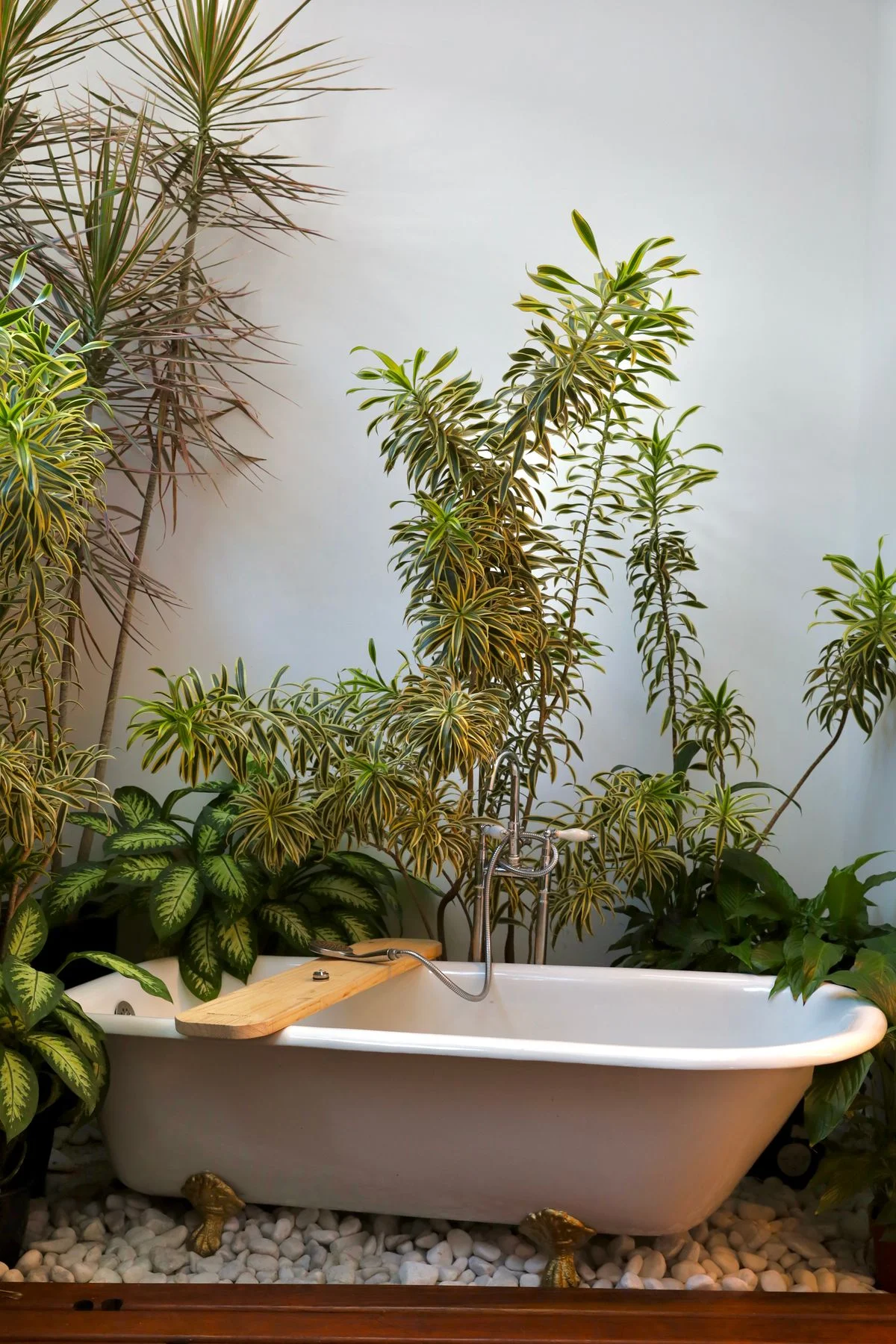
Tip 2 — Hang one planter so the sill stays clear
Hang one planter so the sill stays clear, because in a small bathroom the windowsill is the only flat surface that catches light — and it fills up fast with bottles. A hanging planter takes the plant up and out of the way, leaves the sill free for the one or two things that must live there, and lets the plant trail down where you can actually see it. A simple hanging basket on a hook over the door or from a ceiling hook needs no drilling into tile.
Choose a trailing plant for the hanging planter — pothos or spider plant — so the leaves fall instead of crowding the shelf. Keep the planter light, water it over the sink so drips never reach the floor, and check the hook once a month to make sure it is still firm. One hanging planter, one clear sill, and the room feels taller.

Tip 3 — Keep plants off the shower’s direct spray
Keep plants off the shower’s direct spray, because steam is good for them and a jet of hot water is not. A plant sitting on the shower ledge gets blasted every morning, and the leaves bruise, the soil washes out, and the pot fills with soapy water that the roots cannot use. Put the plant beside the shower instead of inside it — on the vanity, on a shelf, on the sill — close enough to enjoy the steam, far enough to stay dry.
If the only spot is near the shower, move the plant to the far end of the shelf and angle it away from the spray. The rule is simple: if you would not stand there in the shower, the plant should not stand there either. Steam rises and fills the room anyway, so a plant two steps from the shower gets all the humidity it needs without a single drop of spray.

Tip 4 — Pots with saucers, no water marks on wood
Use pots with saucers, because a plant without a saucer leaves a water mark on wood — and in a bathroom with a wooden tray or a wooden vanity, that mark stays. Every pot in the bathroom needs a saucer underneath it, or a second pot to sit inside, so the water that drains out has somewhere to go. Empty the saucer after watering, so the plant is never sitting in a puddle, which rots the roots even in a humidity-lover.
Choose saucers that match the pots, and wipe the wood underneath once a week so a small spill never becomes a stain. A saucer costs almost nothing and saves the vanity, the shelf and the tray — and it is the difference between a plant that looks cared for and a plant that slowly ruins the furniture it sits on.

Tip 5 — One watering check per week, not daily
Do one watering check per week, not daily, because a humid bathroom dries soil slowly and daily watering drowns the roots. Poke a finger into the soil once a week — if the top feels dry, water it; if it still feels damp, leave it alone for another week. Most bathroom plants need water roughly once a week, and some, like pothos, are happy with even less. The steam does the rest of the work.
Set the check for the same day every week, so it becomes a habit instead of a guess, and water over the sink so the excess drains away before the pot goes back. Daily watering is the fastest way to kill a bathroom plant, and it is also the most common mistake — humidity feels like dryness to a worried owner, but the soil knows the truth.
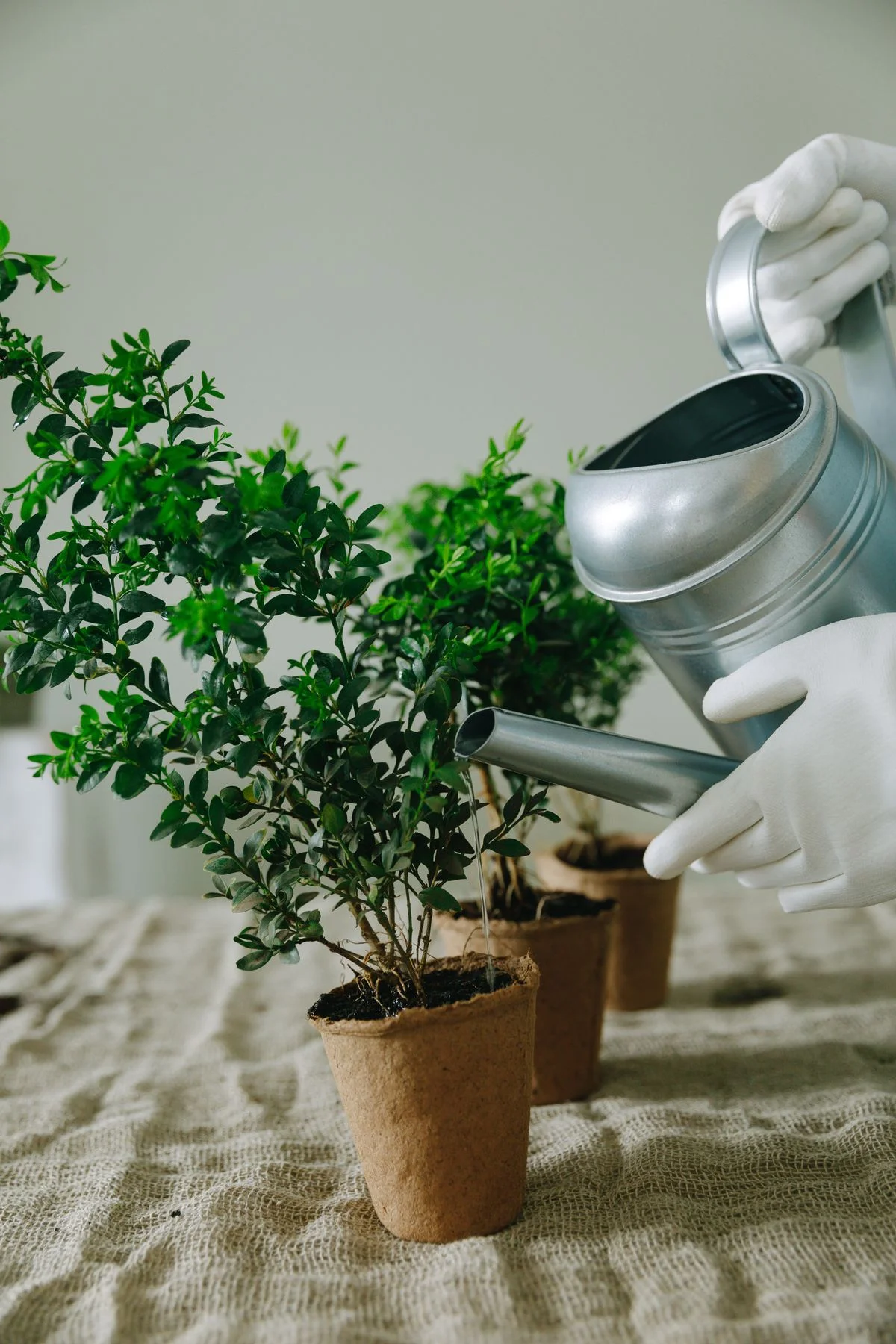
Tip 6 — Rotate pots monthly
Rotate the pots monthly, so every side of every plant gets its turn in the light. A plant that sits in the same spot for months grows toward the window and goes bare on the dark side, and in a small bathroom with one small window that lean shows fast. Turn each pot a quarter turn every month — the same day you do the watering check, so you never forget — and the plant grows evenly instead of reaching.
Rotation also lets you spot trouble early: a yellowing leaf on the dark side, a dry patch where the fan blows, a pot that has outgrown its saucer. One quarter turn a month takes ten seconds per plant, and it is the habit that keeps a bathroom plant looking full instead of lopsided.

Tip 7 — Wipe leaves monthly
Wipe the leaves monthly, because bathroom leaves collect a film of dust, soap and steam that blocks the light they need. A damp cloth, wiped gently over each leaf once a month, takes the film off and lets the plant breathe — and it shows you the plant properly, so you notice a pest or a brown edge before it spreads. Peace lilies and pothos have big, smooth leaves that wipe easily; ferns need a gentler touch, so shake them lightly over the sink instead.
Do the wipe on the same day as the rotation, and the two habits become one five-minute job. A plant with clean leaves looks twice as healthy as the same plant with dusty ones, and in a small bathroom the plant is close enough to see clearly — so the wipe is worth doing properly, leaf by leaf.

Tip 8 — Skip plants that hate wet feet: cacti and succulents
Skip the plants that hate wet feet — cacti and succulents — in a steamy bathroom, because they will rot no matter how careful you are. A cactus wants dry air and dry soil, and a bathroom gives it neither; the soil stays damp, the roots soften, and the plant collapses in a few weeks. Succulents stretch toward the small window, lose their shape, and fade in the low light. They are lovely plants, but they belong in a sunny, dry room.
If you already have a cactus in the bathroom, move it out now and put a pothos in its place — the pothos will thrive where the cactus was dying, and the cactus will recover in a brighter, drier spot. Choosing the right plant for the room is kinder than trying to force the wrong one to survive, and it is cheaper too. For a guide to plants that suit damp, dim rooms, see Best Indoor Plants for Bathrooms With Humidity and Low Light.
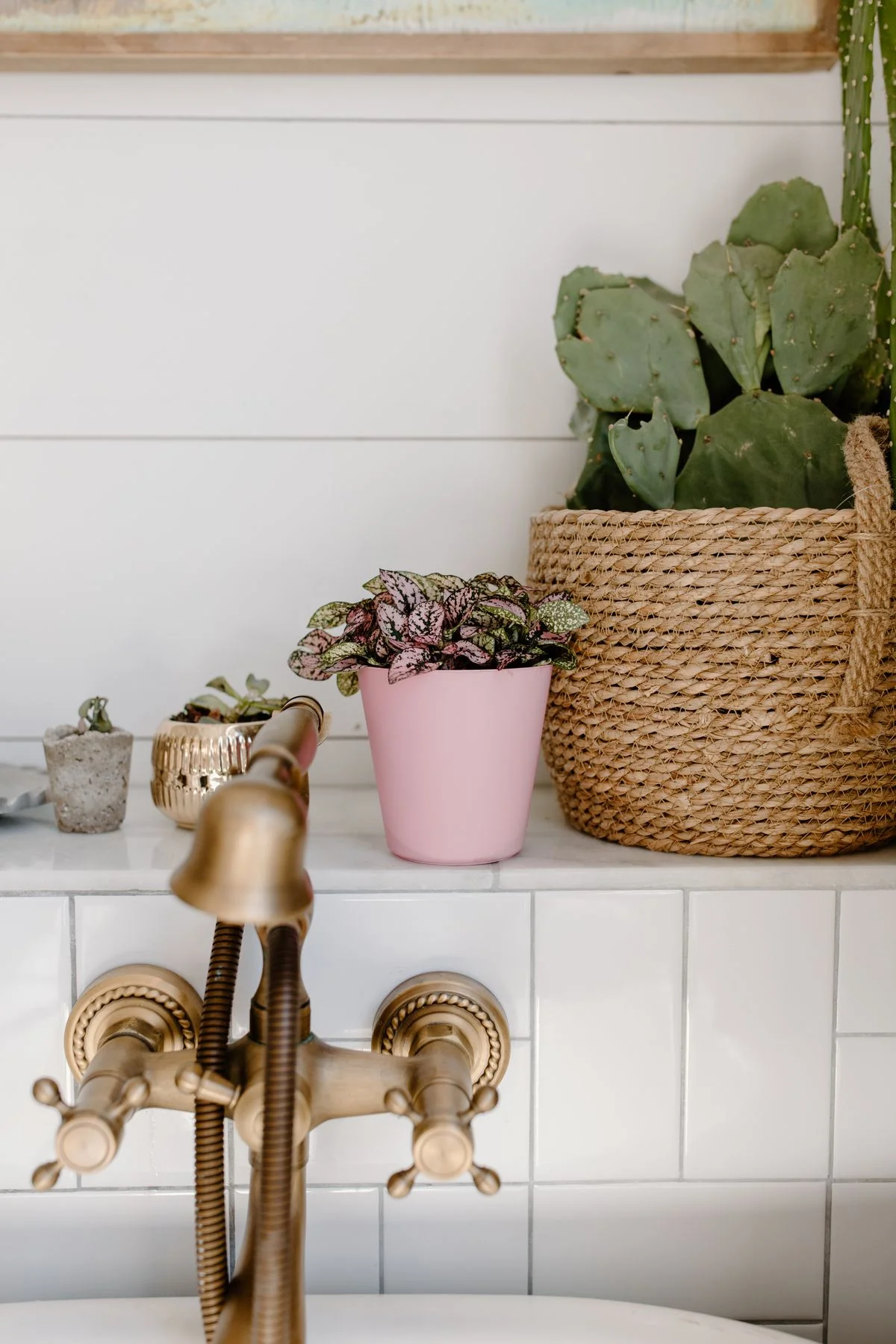
Tip 9 — One plant per zone, maximum
Keep one plant per zone, maximum — one on the vanity, one on the sill, one hanging — because a small bathroom with a plant in every corner is not a jungle, it is a cluttered room that is hard to clean. One plant per zone gives each plant air and light, keeps the surfaces clear for towels and bottles, and lets the green stand out instead of blending into a mess. The spa-warm minimal look that suits a small bathroom is one strong plant, not five small ones competing.
Count the zones before you buy: vanity, sill, shelf, floor — and pick the one or two that suit a plant best. If a zone already holds the soap and the toothbrushes, it is not a plant zone. One plant per zone, and the bathroom feels calm, warm and finished, like a small spa instead of a crowded shelf.
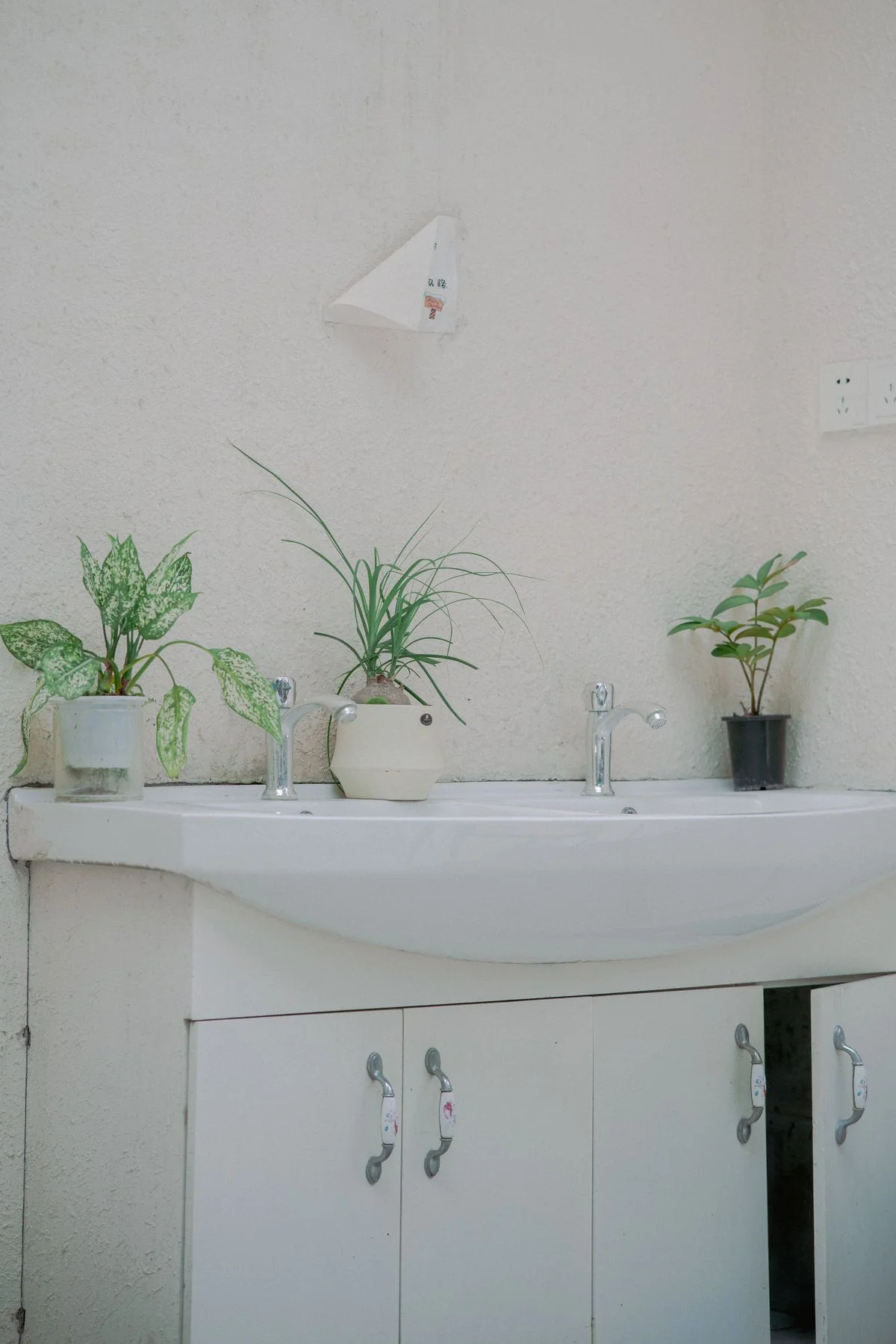
Tip 10 — If a plant fades, move it out for a month
If a plant fades, move it out for a month instead of buying a replacement. A drooping pothos or a browning fern is usually asking for a change of air — more light, less steam, a rest from the fan — and a month in a brighter room by a window often brings it back. Put it somewhere with gentle light, water it once a week, and leave it alone; most bathroom plants recover faster outside the steam than they do inside it.
Buying a replacement for a fading plant just repeats the same mistake in the same spot, and it costs money every time. Move the plant out, watch it for a month, and if it recovers, bring it back to a different zone — or keep the new spot and put a different humidity-lover in the bathroom. One month of patience saves a plant and teaches you what the room actually suits.

What plants are best for a humid small bathroom?
Pothos, Boston ferns, peace lilies and spider plants — they love steam, tolerate low light and forgive missed waterings. Avoid cacti and succulents, which rot in damp air and stretch in dim light.
Can plants survive in a bathroom with no window?
Pothos and peace lilies can manage in a windowless bathroom with the regular ceiling light, but they grow slowly and rarely flower. A small grow light or a weekly move to a brighter room for a day helps, and a hanging pothos is the safest first try.
How often should I water bathroom plants?
Check once a week and water only if the top of the soil feels dry. Shower steam keeps the soil damp longer than in other rooms, so daily watering drowns the roots — most bathroom plants need water roughly once a week.
Where should I put plants in a small bathroom?
One per zone: one hanging planter so the sill stays clear, one on the vanity in a pot with a saucer, or one on the shelf away from the shower’s direct spray. Keep them out of elbow height and off the shower ledge.
Why is my bathroom plant turning yellow?
Usually overwatering — the soil stays wet in the steam — or direct shower spray bruising the leaves. Let the soil dry between waterings, move the plant away from the spray, and move it out of the bathroom for a month if it keeps fading.
Do bathroom plants help with mould?
Plants do not prevent mould, and they cannot replace a working fan or regular cleaning. They make a bathroom feel calmer and fresher, but mould needs ventilation and a dry wipe after showers — a plant is decoration, not a cure.
Final Thoughts:
Cozy small bathroom plant ideas for humid rooms work when you pick plants that love steam and give each one a clear job: pothos trailing from a hanging planter, a fern on the shelf, a peace lily on the vanity, all in pots with saucers and wood accents around them. One plant per zone, one watering check a week, a monthly rotation and a monthly leaf wipe — and if a plant fades, move it out for a month instead of buying a new one. The room stays warm, minimal and spa-like, and the plants stay alive because they were chosen for the room they live in.
Save this post on Pinterest for your next plant, and read our earlier small bathroom ideas next: “Cozy Small Bathroom Ideas That Feel Like A Spa“; “Small Bathroom Lighting Ideas For Bright Mornings“; “Small Bathroom Shower Ideas That Feel Bigger“; “Small Bathroom Window Ideas For Privacy And Light“.
Written from small-room living experience — every idea here is practical for a tiny bathroom, with a no-drill option wherever drilling is a problem.
Last updated 17 Nov 2026. Refresh in 3–6 months: re-check which plants are thriving and which need a month outside the bathroom, and wipe the leaves again.




3 Comments