Small Bedroom Plant Ideas That Survive Low Light
Small bedroom plant ideas that survive low light start with one simple truth: one plant that lives beats five that die. A snake plant, a pothos, a ZZ plant or a peace lily will forgive a dark corner, a north-facing window and a owner who forgets to water — but only if you pick plants built for low light and then leave them alone. Low light does not mean no light: if you can read a book in the corner without switching the lamp on, a low-light plant can live there.
The ten ideas below keep one plant per zone, one watering check a week, and one honest rule: plants make a small bedroom calmer and greener, but they do not clean the air in any way you would notice — an open window does that job. What they do is soften the room, and that is reason enough to keep one alive.

Key Takeaways
- Pick low-light survivors only: snake plant, pothos, ZZ plant and peace lily forgive dark corners and missed waterings.
- One plant per zone, maximum — a small bedroom is not a greenhouse, and plants need air around them.
- Do the shadow test before you buy: if your hand casts a soft shadow, the light is low but usable; if there is no shadow at all, the spot is too dark.
- Check pet safety first: snake plant, ZZ and pothos are toxic to cats and dogs — spider plant, parlor palm and cast iron plant are the pet-safe swaps.
Tip 1 — Pick low-light survivors: snake plant, pothos, ZZ, peace lily
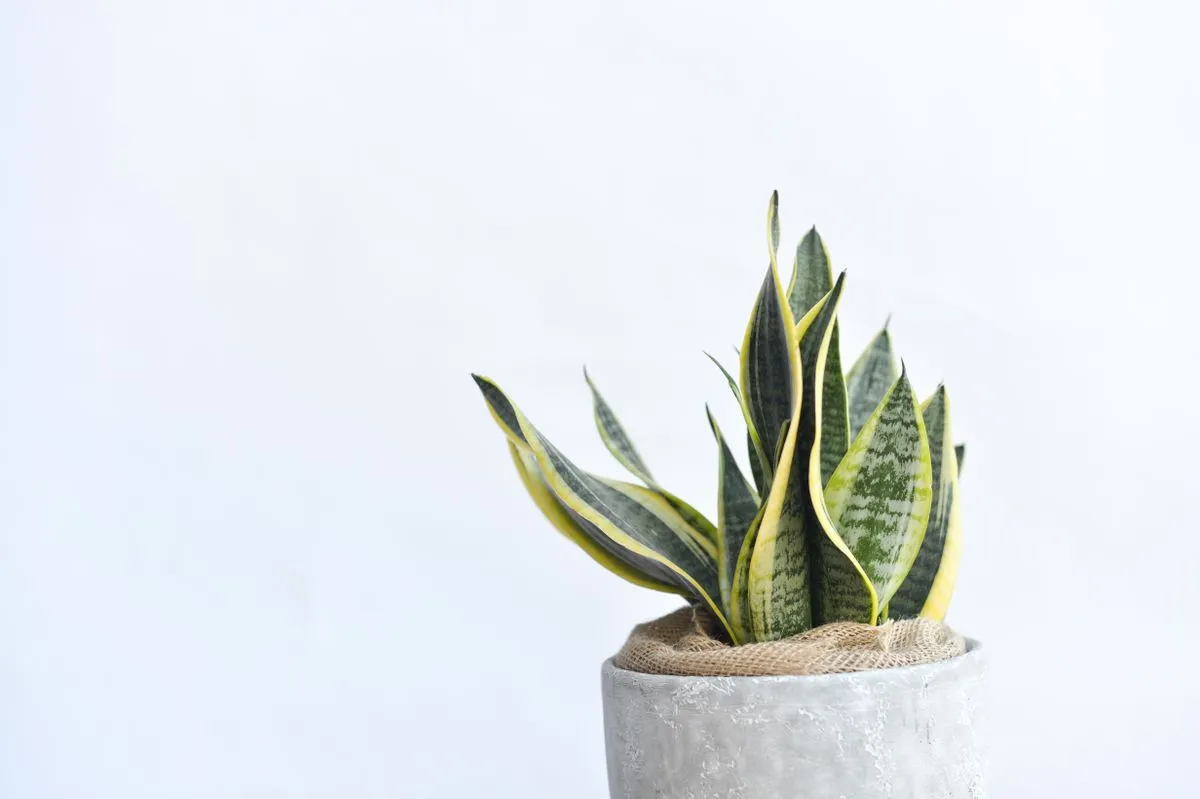
Pick low-light survivors — snake plant, pothos, ZZ plant and peace lily — because these four forgive the two things that kill most bedroom plants: darkness and neglect. A snake plant stores water in its thick leaves and can go weeks without a drink; a pothos trails happily in a dim corner and tells you it is thirsty by drooping slightly; a ZZ plant grows slowly in almost no light at all; a peace lily droops dramatically when it wants water and perks up within hours of a drink. These are the plants for a bedroom, not the ones that need a sunny windowsill.
Buy one of these four first, and only one — a single plant that lives is worth more than a shelf of plants that fade. Check the plant before you buy it: firm leaves, no yellow edges, no soft stems, and soil that is damp but not soaking. One survivor, bought healthy, is the whole foundation of this post.
Tip 2 — One plant per zone, maximum — the bedroom is small, not a greenhouse
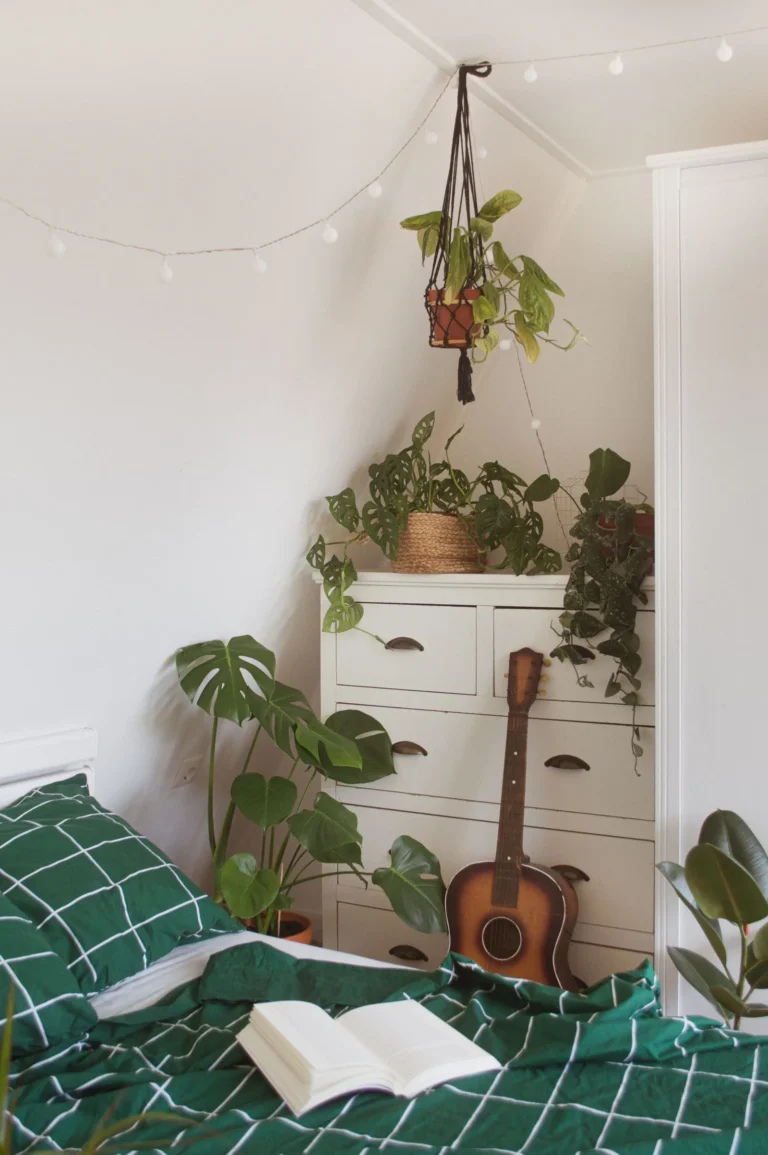
Keep one plant per zone, maximum — the bedroom is small, not a greenhouse. One plant on the nightstand, one on the shelf, one on the desk is already three plants in a room that may be barely bigger than the bed, and three plants crowded together block each other’s light and trap damp air between their leaves. Give each plant its own zone and its own air, and every plant gets the light that is there instead of sharing it. The photo shows several plants grouped on one shelf above the bed — one shelf, one zone, which is the same rule applied to a single spot.
Choose the zones by light, not by decoration: the brightest spot gets the hungriest plant, the darkest corner gets the snake plant, and the desk gets the one plant you will actually see every day. If a zone has no light at all, it gets no plant — an empty shelf is better than a dead plant. One plant per zone, and the room stays a bedroom with plants, not a greenhouse with a bed in it.

Tip 3 — Hang one planter so the sill stays clear
Hang one planter so the sill stays clear, because a small bedroom has no surface to spare. A hanging pothos in a macramé holder or a simple hook by the window takes the plant off the sill, off the nightstand and out of the way — and the trailing vines soften the corner in a way a pot on a shelf never does. One hanging planter is enough: two or three hanging at different heights turn a small room into a jungle, and the vines start brushing the bed. Hang it where it gets the light from the window without blocking it, and where the vines can trail without touching the floor.
Use a hook that screws into the ceiling or a tension rod across the window frame — both are renter-friendly and come down in seconds. Water the hanging plant over the sink, not over the bed, and let it drain fully before you hang it back. One hanging planter, one clear sill, and the room gains a plant without losing a surface.

Tip 4 — Keep plants off the radiator and out of direct draughts
Keep plants off the radiator and out of direct draughts, because hot dry air and cold blasts kill low-light plants faster than darkness ever will. A plant sitting on a radiator dries out from below while its leaves crisp at the edges, and a plant in the path of a draughty window or an air vent gets chilled every time the door opens. Put the plant a step away from the heat and a step away from the draught — beside the bed, on the shelf, on the desk — and it will live on the room’s ordinary air. The photo shows the plant beside the bed by an open window — the draught to avoid is the one that window brings in on a cold night, so close the window or move the plant when winter comes.
Check the spot in winter, not just in summer: a sill that is fine in July can be freezing in January, and a radiator that is off all summer is blasting all winter. Move the plant once with the season, and it never has to survive the worst spot in the room. Off the radiator, out of the draught, and the plant’s only job is surviving the low light — which it can do.

Tip 5 — One watering check per week, not daily — overwatering kills more than darkness
Do one watering check per week, not daily, because overwatering kills more bedroom plants than darkness ever does. A low-light plant uses very little water — in a dim corner it grows slowly, drinks slowly, and sits in wet soil for days if you water it every time you pass. Push a finger an inch into the soil once a week: if it is dry, water it; if it is damp, walk away. That one check is the whole watering routine, and it is the single most important habit in this post.
Water slowly until a little runs out of the drainage hole, then empty the saucer — a plant standing in water rots from the roots up, and root rot is the one thing a low-light plant cannot recover from. In winter, stretch the check to every ten days, because the plant drinks even less when the days are short. One check a week, finger in the soil, and the plant lives.
Tip 6 — Rotate pots monthly so growth stays even
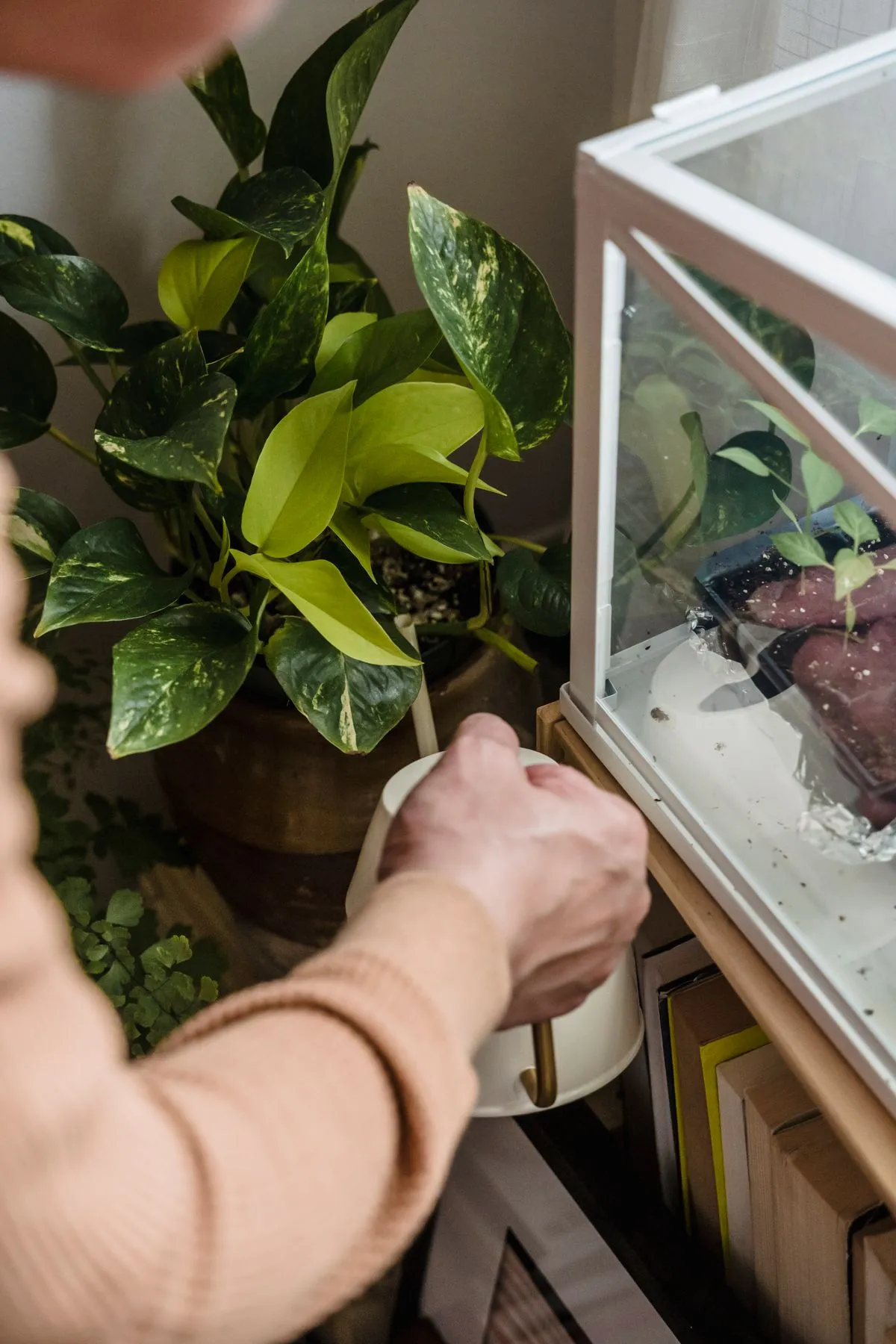
Rotate each pot a quarter-turn once a month, so growth stays even and the plant does not lean towards the window. A plant in low light reaches for the light it can find, and after a few months it leans hard to one side, with all its new leaves on the bright side and bare stems on the dark side. One small turn a month keeps the growth balanced, and the plant stays full on every side instead of flat on one. The photo shows hands misting a potted plant among houseplants — the monthly turn is the other half of that same care, a small touch that keeps the plant even.
Put the rotation on the same day as the monthly leaf wipe, so the two jobs become one habit: turn the pot, wipe the leaves, check the soil, done. A plant that is rotated monthly grows slowly and evenly, which is exactly what a small bedroom needs — a plant that stays the size you bought it, not one that leans across the room. One turn a month, and the plant keeps its shape.

Tip 7 — Wipe leaves monthly so dust never blocks light
Wipe the leaves once a month, because dust blocks the little light a low-light plant gets. In a dim bedroom, every bit of light matters, and a film of dust on a snake plant or a ZZ leaf is enough to cut the light the plant can use. A damp cloth, one leaf at a time, top and bottom, takes five minutes for one plant and doubles the light reaching the leaf. The photo shows the result — glossy ZZ leaves with the dust already gone, catching the light instead of wearing it.
Do the wipe on the same day as the monthly rotation, so the plant gets one five-minute care session a month and nothing more. Skip the leaf-shine sprays — a damp cloth is enough, and sprays can clog the tiny pores on the leaf. One wipe a month, and the plant makes the most of the low light it has.

Tip 8 — Skip plants that need bright sun in a north-facing room
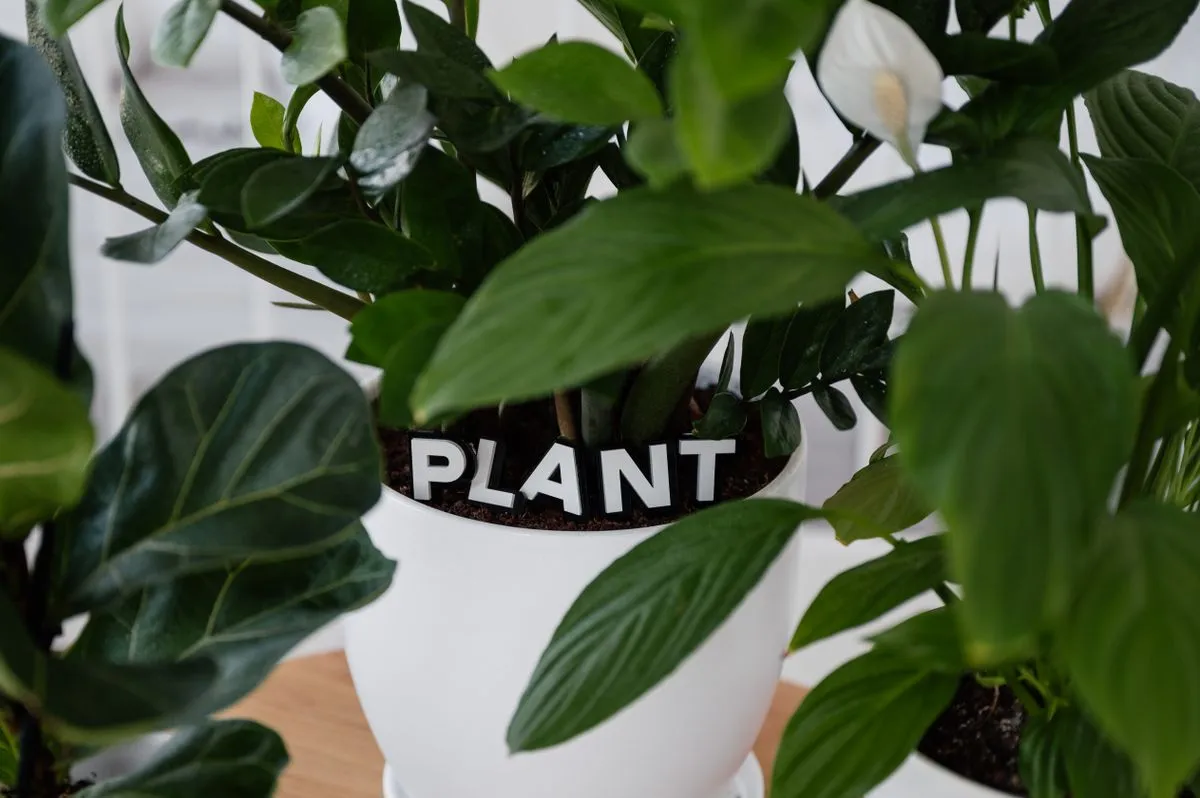
Skip plants that need bright sun in a north-facing room, because a sun-lover in a dark bedroom is a plant with a deadline. Succulents, cacti, fiddle-leaf figs and most flowering plants need direct sun for hours a day, and a north-facing bedroom window gives them none of it — they stretch, pale, drop leaves and die slowly, no matter how carefully you water them. The honest choice is to leave them in the shop and buy the survivors instead. The photo shows the plants to choose — indoor plants in white pots, one carrying a literal PLANT label in the soil — and the sun-lovers stay out of this room entirely.
Before you buy any plant, do the shadow test: hold your hand a foot above the spot at midday and look at its shadow on the surface below. A soft, fuzzy shadow means low light — fine for snake plant, pothos and ZZ. No shadow at all means the spot is too dark even for them, and you need a brighter corner or no plant there. One shadow test, and you buy the right plant the first time.
Tip 9 — A plant on the desk counts as the room’s one plant, do not add four more
Count the plant on the desk as the room’s one plant, and do not add four more around it. A single plant on the desk or the nightstand is the whole green statement a small bedroom needs — it softens the room, it gives you something alive to look at while you work, and it is the one plant you will actually water, wipe and rotate. Four more plants on the shelf, the sill and the floor turn the statement into clutter, and the plants you never see are the plants that die first. The photo shows the plant on a wooden nightstand rather than a desk — the same one-plant rule, wherever its spot is.
If you already have a plant on the desk, that is your plant — enjoy it, care for it, and let the other surfaces stay clear. If you want more green, add it in the room next door, not in the bedroom you are trying to keep calm. One plant, in the spot you see every day, and the room stays green without becoming a greenhouse.
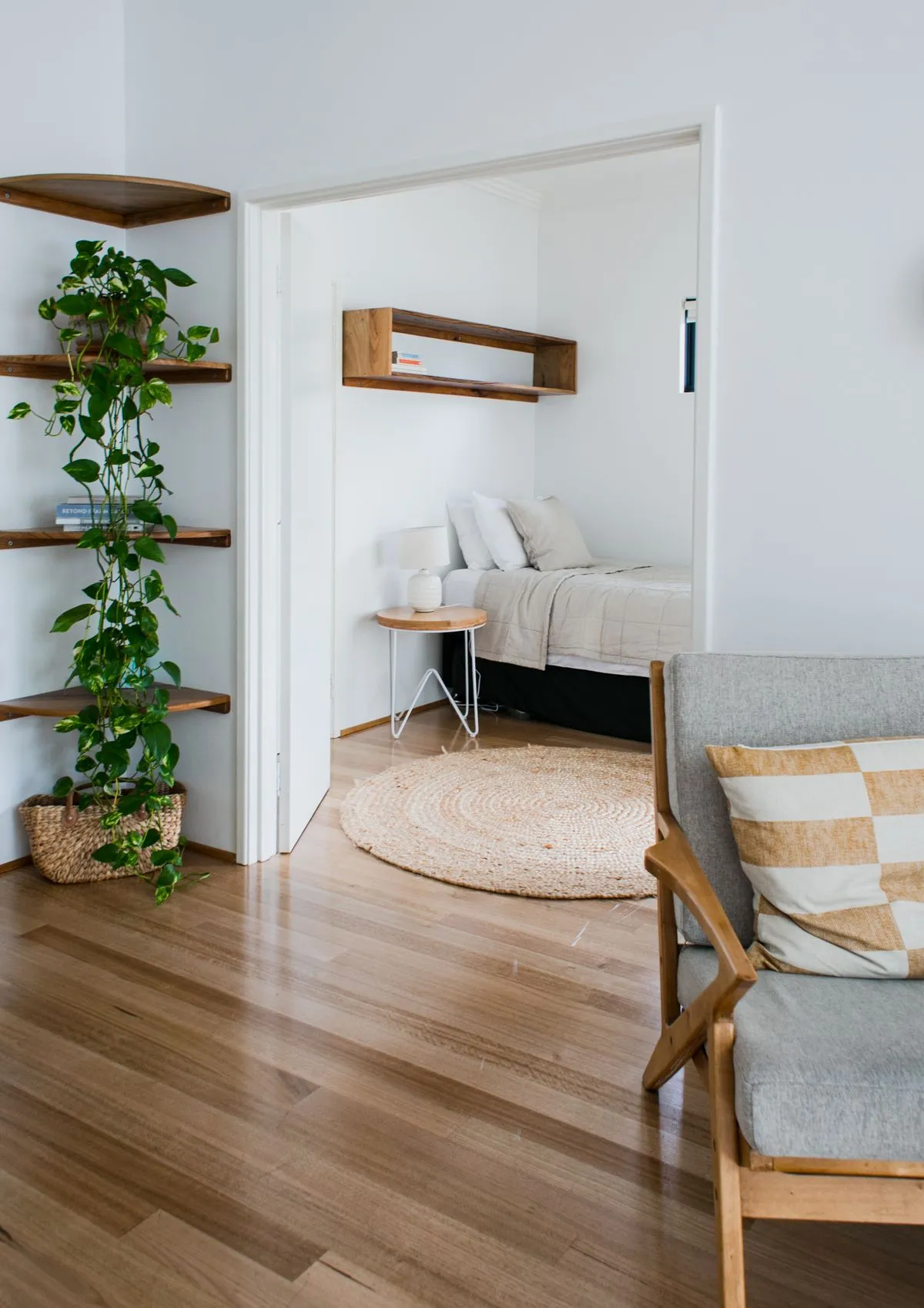
Tip 10 — If a plant fades, move it to the brightest spot for a month instead of buying a replacement
If a plant fades, move it to the brightest spot in the room for a month instead of buying a replacement. A drooping pothos or a pale snake plant is usually asking for more light, not for a new owner — and a month in the brightest corner, by the window or on the sill, is often enough to bring it back. Move it, water it once, wipe its leaves, and then leave it alone for the month; a plant that is moved every week never settles, and a plant that is fussed over daily gets watered to death. The photo shows the bright spot itself — plants gathered where the light is strongest, in a bright bedroom — which is where a fading plant belongs for its month of recovery.
If the plant has not improved after a month in the brightest spot, it is telling you the room is too dark for it, and that is the time to swap it for a tougher survivor — not the time to buy the same plant again. One move, one month, and most fading plants come back; the ones that do not were never the right plant for the room.

FAQ
What plants survive in a low-light bedroom?
Snake plant, pothos, ZZ plant and peace lily are the reliable survivors — they tolerate dark corners, north-facing windows and missed waterings. Buy one healthy plant first, and only add more once the first one is thriving.
How do I test if a bedroom corner has enough light for a plant?
Do the shadow test: hold your hand a foot above the spot at midday. A soft, fuzzy shadow means low light, which suits snake plant, pothos and ZZ. No shadow at all means the spot is too dark even for them — choose a brighter corner or skip the plant there.
Are snake plants, ZZ plants and pothos safe around pets?
No — snake plant, ZZ plant and pothos are all toxic to cats and dogs if eaten, according to the ASPCA. If you have pets, choose pet-safe alternatives instead: spider plant, parlor palm or cast iron plant, and keep any toxic plant out of reach.
Do bedroom plants purify the air?
Not in any way you would notice. Plants do release small amounts of oxygen — snake plant and ZZ release a little at night — but you would need far more plants than a bedroom can hold to match one open window. Keep a plant because it calms the room and looks good, not because it cleans the air.
How often should I water a low-light bedroom plant?
Check once a week: push a finger an inch into the soil, and water only if it is dry. Overwatering kills more low-light plants than darkness does, so in winter stretch the check to every ten days and always empty the saucer after watering.
My bedroom plant is fading — should I buy a new one?
Move it to the brightest spot in the room for a month first, water it once, wipe its leaves, and leave it alone. Most fading plants recover with more light; if it has not improved after a month, swap it for a tougher survivor rather than buying the same plant again.
Final Thoughts
Small bedroom plant ideas that survive low light work when you pick the right plant and then mostly leave it alone: a snake plant, pothos, ZZ or peace lily, one per zone, hung or placed where it gets the light there is, watered once a week after a finger-in-the-soil check, rotated and wiped once a month. Do the shadow test before you buy, skip the sun-lovers in a north-facing room, and check pet safety first — spider plant, parlor palm and cast iron plant are the safe swaps if you have cats or dogs. One plant that lives beats five that die, and a plant that lives makes the whole room feel calmer.
Save this post on Pinterest for your next plant, and read our earlier plant ideas next: Small Bedroom Plant Ideas That Keep Air Fresh, Cozy Small Bathroom Plant Ideas For Humid Rooms, Small Living Room Plant Ideas That Add Real Calm, and Small Bedroom Window Ideas That Bring More Light.
More inspiration: Toxic and Non-Toxic Plants and Small Bedroom Ideas.
Written from small-room living experience — every idea here is practical for a tiny bedroom, with a no-drill option wherever drilling is a problem.
Last updated 18 Nov 2026.
Refresh in 3–6 months: re-check which plants are thriving and which need a month in the brightest spot, and wipe the leaves again.