

Cozy Small Lounge Layout Ideas That Feel Bigger

A small lounge can feel cramped even when it has everything you need, and the problem is usually the layout rather than the size of the room. When seating blocks the walkway, the sofa faces a blank wall, or storage eats the only open corner, the whole space feels tight and restless. The good news is that a few calm layout shifts can change how the room feels without buying new furniture or knocking down a wall.
Here are 10 cozy small lounge layout ideas that help a tight living room feel bigger, softer, and more welcoming, one small change at a time.
1. Float the Sofa a Little Off the Wall
Pulling the sofa even a few centimetres away from the wall can make a small lounge feel less boxed in and more intentional. The small gap lets light and air move behind the seat, and it stops the room from looking like every piece of furniture is pressed to the edges. If the back of the sofa will show, keep it tidy with a slim console, a folded throw, or a low basket beside it.
Start with a small shift rather than a full rearrangement, then walk the room to check the flow. You want a clear path from the door to the main seat without squeezing past a corner. When the sofa feels settled but not stuck, the rest of the layout becomes easier to arrange around it.

2. Choose One Clear Focal Point
A small lounge feels calmer when the eye has one place to land, whether that is the sofa, a window, a fireplace, or a low media unit. When every wall competes for attention, the room feels busy even when it is tidy. Pick the most useful focal point for how you actually live, then angle the main seating gently toward it.
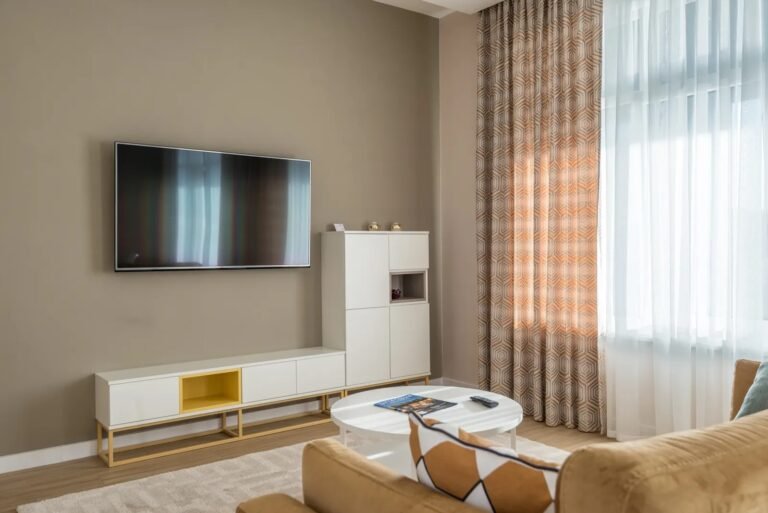
Keep the second focal point quiet rather than removing it completely. A television can sit a little lower or to one side, a window can stay dressed with simple curtains, and a shelf can hold fewer pieces. When one centre holds the room, the layout feels settled and the lounge feels larger than its floor area.

3. Keep Walkways Wide and Obvious
A lounge feels bigger when you can move through it without thinking, so protect one main walkway even if it means shifting a chair or shrinking a side table. Aim for a clear path that connects the door to the seating area and onward to the kitchen or hallway. When the path is obvious, the room feels open and the furniture feels placed on purpose.
Try walking the route with a laundry basket or a mug in hand to test it honestly. If you have to twist, lift, or step around a leg, the walkway is too tight. A small lounge does not need wide empty space, only one easy route that stays clear every day.

4. Use a Small Rug to Anchor the Seating
A rug that is too small can make a lounge feel scattered, while a rug that fits under the front legs of the sofa and chairs pulls the seating into one calm zone. The rug does not need to cover the whole floor, only enough to define where people sit and talk. A flat, low-pile rug works best in a small room because it keeps the floor feeling level and easy to clean.
Choose a soft neutral tone that blends with the sofa rather than a loud pattern that cuts the floor into pieces. If the rug has a border, keep it simple so the eye moves across the room instead of stopping at the edge. A well-placed rug makes even a tiny lounge feel like a finished room.

5. Swap a Bulky Armchair for a Slim Accent Chair
One oversized armchair can swallow a small lounge, so try a slim accent chair with open legs and a narrow back instead. The lighter shape leaves more floor visible, which makes the room feel airier, and it is easier to move when guests arrive. A chair that can turn toward the sofa or the window gives the layout more options without adding bulk.
Look for a chair that matches the seat height of the sofa so conversation feels even. A small side table beside it is enough for a book or a cup, and a soft cushion keeps it comfortable. When the second seat feels light, the whole lounge feels less crowded.

6. Place Seating to Catch the Best Light
Natural light makes a small lounge feel larger, so place the main seat where daylight falls during the time you use the room most. A chair near a window becomes a natural reading spot in the morning, while the sofa can sit where evening light softens the room. Avoid pushing tall furniture in front of the only window, because it blocks light and makes the wall feel heavy.
If the window faces a dull view, keep the glass clear and dress it with light curtains that pull fully to the sides. A small mirror opposite or beside the window can bounce light deeper into the room without adding clutter. When light reaches the seating, the lounge feels warm and open even on grey days.

7. Keep the Centre Low and Clear
A small lounge feels taller when the centre of the room stays low, so choose a low coffee table or a flat ottoman rather than a tall, heavy table. The low centre leaves a clear sightline across the room, which makes the floor feel wider. An ottoman with storage inside gives you a footrest, extra seating, and a hidden spot for throws or remotes.
Leave a little breathing room around the centre piece so knees and feet can move easily. If you need a surface for drinks, a small tray on the ottoman works better than a second table. When the middle of the room stays calm, the lounge feels spacious without feeling empty.

8. Use Corners for Quiet Functions
Corners are often wasted in a small lounge, yet they are ideal for one quiet job each, such as reading, charging, or storing. A corner chair with a small lamp becomes a reading nook, while a corner basket can hold blankets without blocking the main seating. Giving each corner one purpose stops the room from gathering random clutter.
Keep corner additions low and close to the wall so they do not push into the walkway. A small plant or a floor lamp can soften a corner without taking floor space. When corners work quietly in the background, the centre of the lounge stays free and the layout feels balanced.

9. Let Vertical Space Hold the Storage
When floor space is tight, let the walls carry more of the storage so the floor stays open for living. A single tall shelf or a pair of small wall shelves can hold books, baskets, and a few calm objects without needing a wide cabinet. Keep the lowest shelf within easy reach and the highest shelf for things you rarely need.
Avoid filling every wall from floor to ceiling, because too much high storage can make the room feel closed in. Leave one wall mostly clear and use vertical storage only where it helps daily life. When storage goes up, the floor feels wider and the lounge feels easier to tidy.

10. Leave One Patch of Empty Floor
The most overlooked layout idea for a small lounge is to leave one patch of floor deliberately empty. That open patch gives the eye a place to rest, makes the room easier to clean, and leaves space for a yoga mat, a child to play, or a guest to stretch out. Empty does not mean unfinished, it means the room has room to breathe.
Choose the emptiest corner or the space beside the sofa and protect it from creeping storage. If the patch keeps filling up, move the extra item to a closed basket or another room. When one part of the floor stays open, the whole lounge feels calmer and more generous.

Final Thoughts
A small lounge does not need more space to feel cozy, only a layout that protects light, flow, and one calm centre. Start with the sofa position and the walkway, then add one or two of these ideas at a time. When the layout feels easy to move through and easy to tidy, the lounge will feel bigger every day.
More from CozyCraftly: cozy fall living room decor ideas on a budget, cozy reading nook ideas for small spaces, and cozy studio apartment decorating ideas.
Where should the sofa go in a small lounge?
Put the sofa against the longest wall or float it a few centimetres off the wall, facing the room’s focal point rather than blocking the door. Leave a clear walkway of at least 60 centimetres in front of it, and avoid pushing it into a corner that traps light. The best spot lets you sit, see the room, and move through it easily.
How can I make a small lounge feel bigger without removing furniture?
Pull furniture slightly away from the walls, use one rug to anchor the seating area, and keep the middle of the room clear. Choose low furniture with visible legs, hang curtains high and wide, and use a large mirror opposite a window. These changes open sight lines, so the room feels larger without losing a seat.
Should a small lounge have a rug?
Yes, one rug that is large enough for the front legs of the sofa and chairs to sit on will make the lounge feel grounded and bigger. A rug that is too small chops the room into pieces, while a rug that is too large can swamp it. Measure the seating area first, and choose a low-pile rug in a calm colour.
How do I fit a TV in a small lounge without it taking over?
Mount the TV on the wall at seated eye level, or place it on a slim low console, and keep the area around it simple. Hide cables in a channel or behind the console, and avoid a large entertainment unit that eats floor space. If the TV is not the focal point, angle the seating so conversation still works when it is off.
What is the best layout for a lounge with a fireplace?
Place the sofa facing the fireplace, with chairs angled in from the sides, so the fire is the natural focal point and conversation flows around it. Keep the hearth clear, use a rug to define the seating group, and put a lamp near each chair. Avoid placing the sofa with its back to the fireplace, which wastes its warmth and charm.



3 Comments