
Small Kitchen Cleaning Ideas That Keep It Fresh
Small kitchen cleaning ideas that keep it fresh start with a simple truth: a tiny kitchen does not stay fresh by deep-cleaning once a month. It stays fresh with small nightly habits. In a small kitchen, one dirty pan fills the sink, one greasy hob fills the room with smell, and one cluttered counter makes the whole room feel dirty — so the cleaning has to be little and often, not big and rare. An empty sink, a wiped hob, and a counter cleared before every meal do more than any single deep clean.
The ideas below are built in that order: the nightly reset first, then the daily habits, then the weekly sweep and the monthly deep clean. None of them takes more than a few minutes, and together they keep the kitchen smelling fresh and looking calm.

Key Takeaways
- The nightly sink reset is the whole system: an empty, wiped sink every night means the kitchen starts clean every morning.
- Wipe the hob while it is still warm and wipe grease the same day — cold grease is ten times harder to shift.
- Keep one cleaning caddy in one spot, so the spray and cloths are always where the cleaning happens.
- Clean the fridge one shelf at a time each week, rotate the tea towels daily, and give the kitchen a twenty-minute deep clean once a month.
Tip 1 — Sink empty + wiped nightly
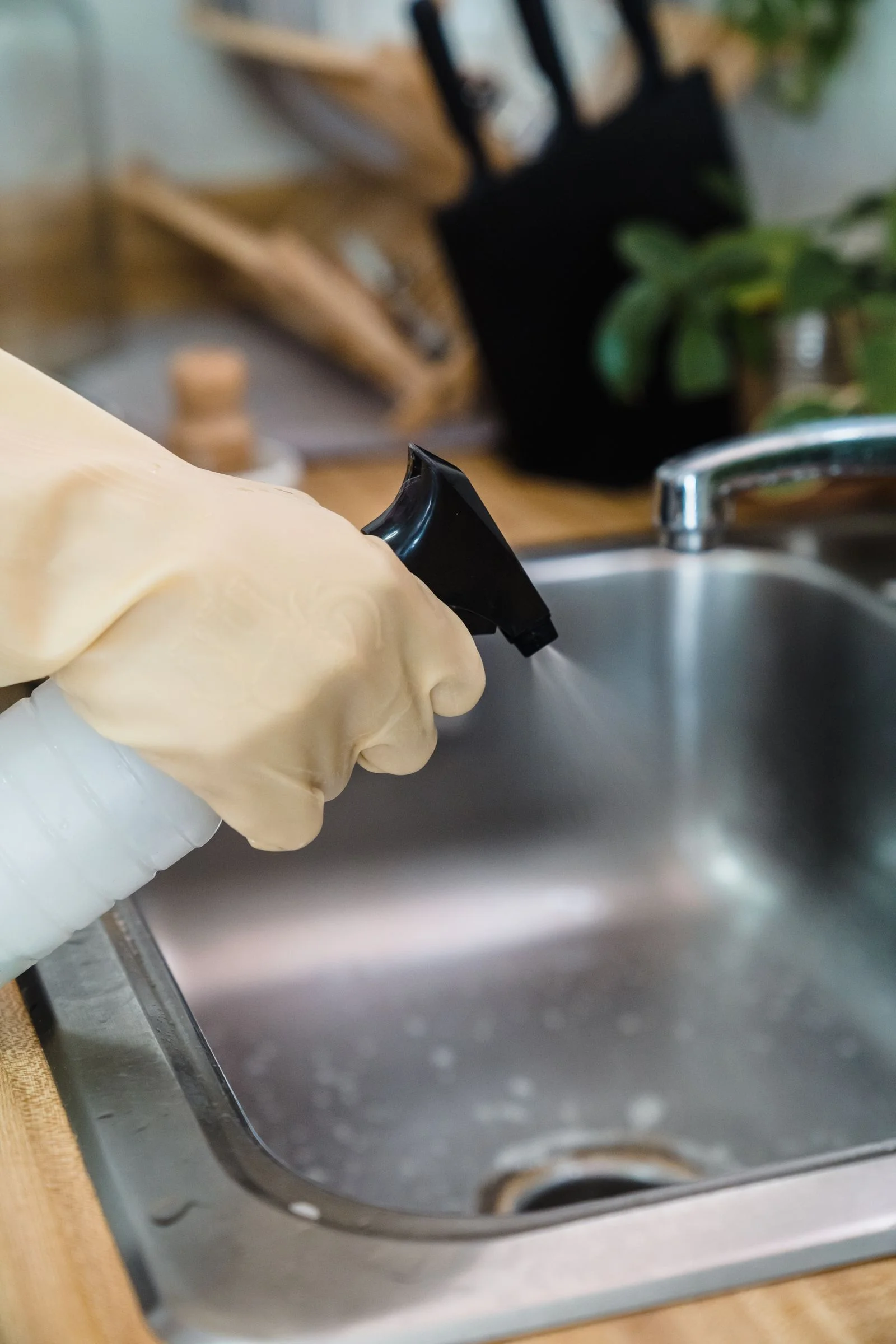
An empty sink every night is the single habit that keeps a tiny kitchen fresh, because the sink is the first thing you see in the morning and the last thing you use at night. Wash the dishes after dinner, wipe the sink dry, and the kitchen starts the next day clean instead of starting it with yesterday’s mess. The photo shows a gloved hand spraying cleaner into an empty stainless steel kitchen sink — the nightly wipe in action.
Make it a rule, not a choice: no dishes left in the sink overnight, ever. A sink full of water and plates breeds smell in a small room fast, and a tiny kitchen has nowhere for that smell to go. Two minutes at night — wash, dry, wipe — and the morning starts with a kitchen that feels new.
Tip 2 — Hob wiped warm
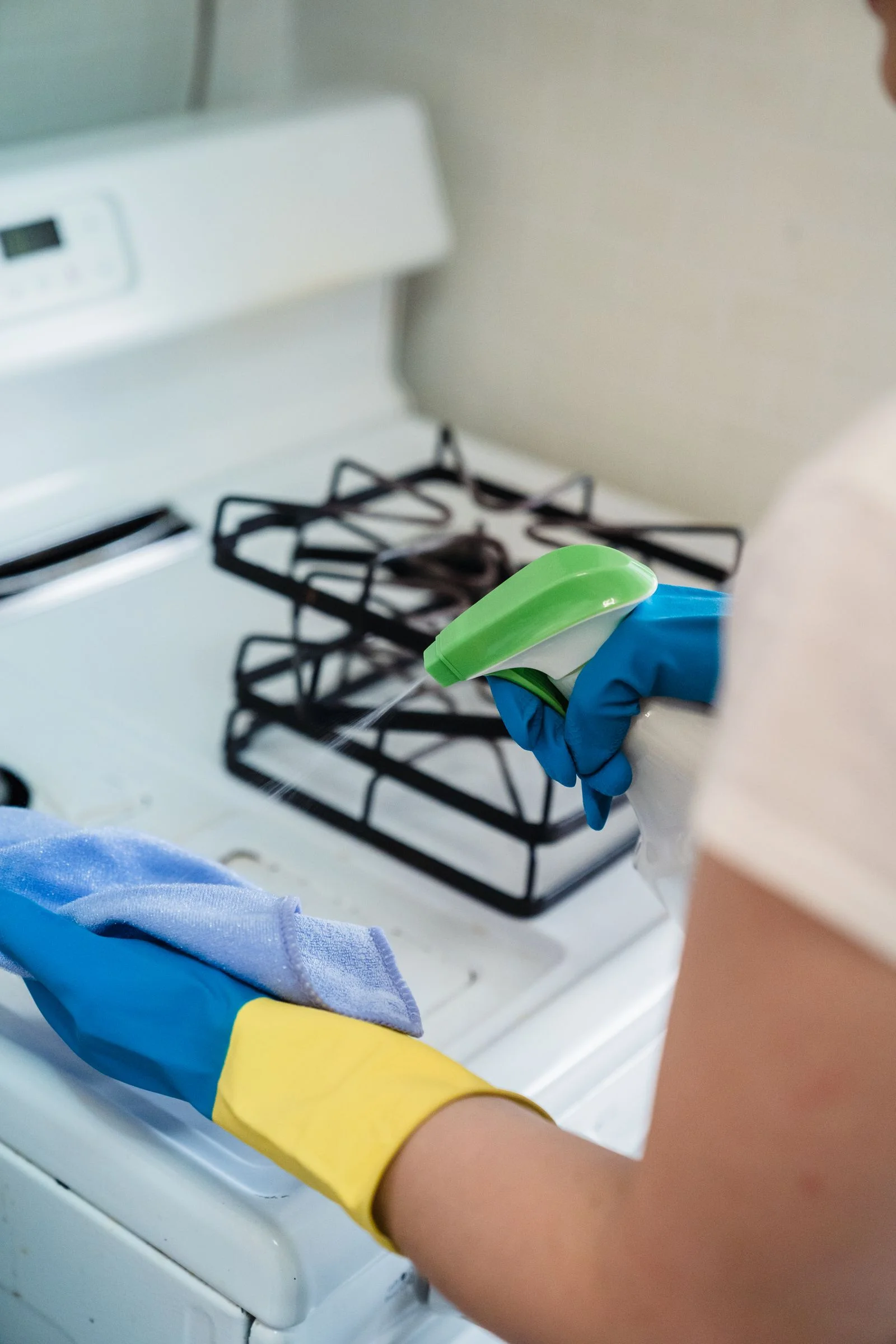
Wipe the hob while it is still warm, and the spills come off with one pass of a cloth. Leave the spills until the hob is cold, and the same spill needs scrubbing, a scraper, and ten minutes you do not have. The photo shows gloved hands spraying and wiping a gas stove hob, the cleaner going on while the hob is still warm from cooking.
Wait until the hob is warm, not hot — a few minutes after the flame goes off, when you can hold a hand near it without flinching. A damp cloth and a drop of washing-up liquid is enough for most spills; keep a dedicated hob cloth by the stove so you never have to hunt for one. Wipe the knobs and the edges too, where the grease hides.
Tip 3 — One cleaning caddy in one spot
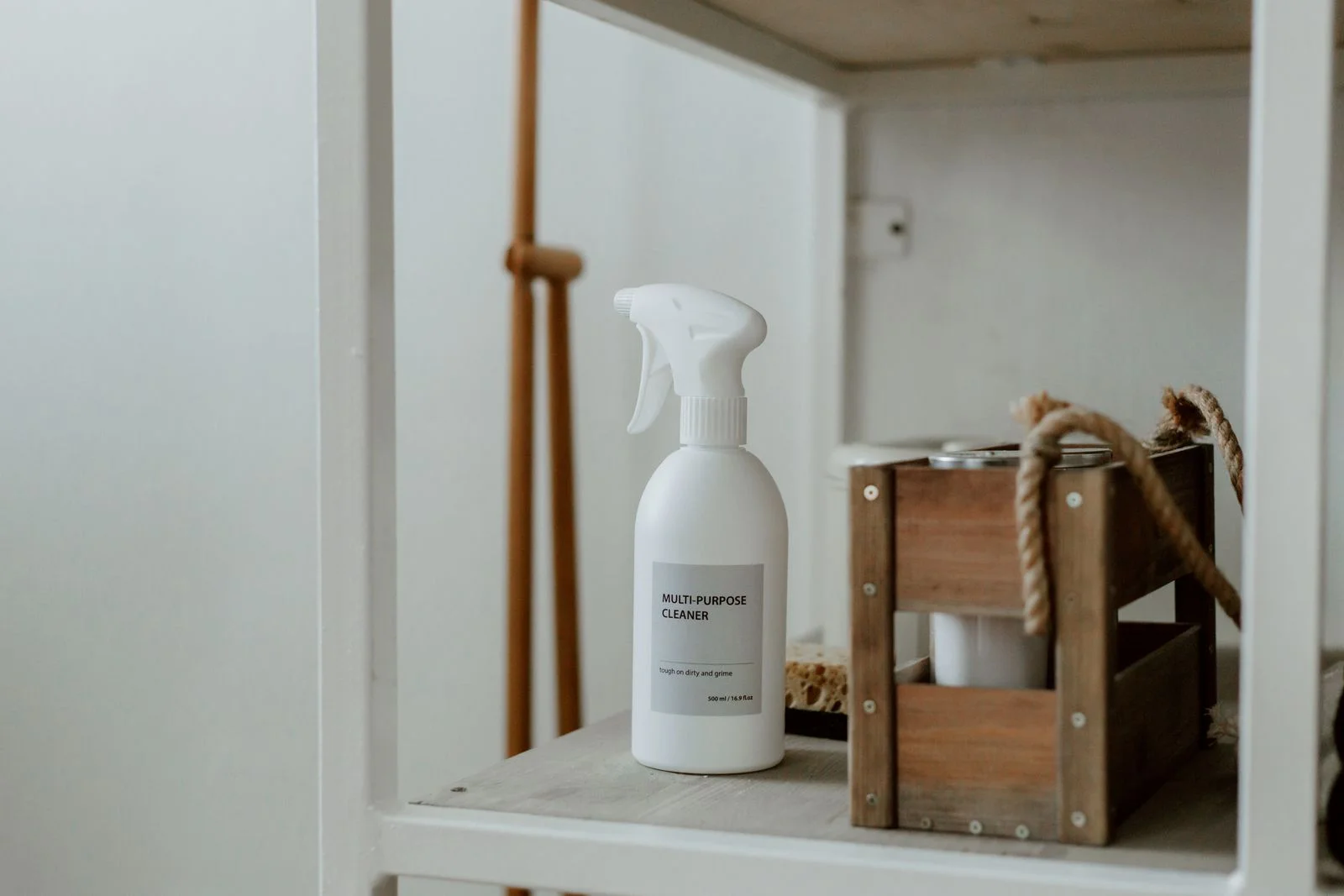
One cleaning caddy in one spot is the difference between cleaning and not cleaning: if the spray and the cloths are always in the same place, the cleaning happens; if they are scattered across three cupboards, it does not. Keep a small caddy — a spray bottle, a cloth, a sponge, a brush — under the sink or on one shelf, and carry it to the job instead of hunting for supplies. The photo shows a spray cleaner bottle and a wooden cleaning caddy on a white shelf, everything in one place.
Keep the caddy light: one all-purpose spray, one cloth for surfaces, one sponge for the sink, and nothing else. A caddy crammed with twelve products is a cupboard, not a caddy, and it never leaves its shelf. Restock it when the spray runs low, not when it runs out — an empty caddy is the same as no caddy.
Tip 4 — Bins on a fixed day
Bins on a fixed day keep a tiny kitchen from smelling like a bin, because the rubbish never sits long enough to turn. Pick one day a week for the main bin and one for the recycling, put them on the calendar, and take the bags out on that day whether they look full or not. The photo shows a hand putting paper bags into a labelled recycling bin — sorting the rubbish into the right bin, which is the habit the fixed day is built on.
Sort as you go: a small bag for recycling by the bin, so the sorting happens when the rubbish is made, not when the bag is full. Rinse the containers that held food before they go in the recycling, and wipe the bin itself once a week with a cloth — a clean bin smells like nothing, and a dirty bin smells like everything. In a tiny kitchen, the bin is never far from the food, so the bin has to stay fresh.

Tip 5 — Weekly fridge sweep, one shelf at a time
A weekly fridge sweep, one shelf at a time, keeps the fridge fresh without ever needing a full empty-and-scrub. Pick one shelf a week, pull everything off it, wipe it down, throw out what has gone past its best, and put back only what is still good. The photo shows a hand holding disinfecting wipes in front of an open fridge — the weekly sweep, wipes in hand, one shelf at a time.
Work top to bottom over the month, so every shelf gets its turn and none is forgotten. Check the dates as you go: the jar at the back that expired three months ago is the smell you have been blaming on the bin. Keep a small box for the things that need using up this week, at eye level, and the sweep gets shorter every time.

Tip 6 — Grease wiped the same day
Grease wiped the same day comes off with a cloth; grease left for a week needs a scraper. The splash on the hob, the film on the tiles behind the stove, the drip down the side of the pan — wipe them all on the day they happen, while they are still soft. The photo shows a gloved hand wiping grease from a dirty gas stove with a cloth, the same-day wipe catching the grease before it sets.
Use a hot, damp cloth with a drop of washing-up liquid, and wipe the splashback and the hob surround as well as the hob itself — grease travels further than the pan it came from. In a tiny kitchen, the grease is never far from the next meal, so the wipe has to happen before the next meal starts. Two minutes today saves twenty minutes on Sunday.

Tip 7 — Boards washed after raw food
Boards washed after raw food is the one cleaning rule that is about safety, not tidiness. A board that held raw chicken or raw fish must be washed with hot water and soap before it touches anything else — no wiping it with a cloth and using it for the salad. The photo shows cutting boards and containers drying by the kitchen sink, washed and left to dry properly instead of being stacked away damp.
Keep two boards: one for raw meat and fish, one for everything else, in different colours if you can. Wash the raw-food board first, while the food is still cooking, so it is clean and dry by the time the salad needs a board. Let the boards dry standing up, not flat in a pile — a damp board stacked in a cupboard smells, and a dry board does not.

Tip 8 — Tea towels rotated daily
Tea towels rotated daily keep the kitchen fresh, because a damp tea towel is a smell in waiting. Swap the towel every morning, hang the used one to dry properly, and wash the whole set at the end of the week. The photo shows neatly folded blue and white kitchen towels stacked on a wooden stool, the clean set ready to be rotated in one at a time.
Keep five or six towels, not two: one in use, one drying, and the rest clean in the drawer. A towel that is used for drying hands, drying dishes, and wiping the counter is doing three jobs and carrying three days of damp — give each job its own towel, and the kitchen stays fresher for it. Martha Stewart’s advice is to replace kitchen towels weekly at the least; daily rotation goes further, and in a tiny kitchen you will notice the difference.

Tip 9 — 2-minute counter clear before meals
Two minutes of counter-clearing before every meal is the habit that keeps the kitchen usable, because a tiny kitchen has no spare counter — if the counter is covered, there is nowhere to cook. Before you start a meal, clear the counter to bare surface: the post, the drying dishes, the fruit bowl that has crept across the worktop, all of it moved to its home. The photo shows a woman wiping a granite kitchen counter with spray and cloth, the counter being cleared and wiped before the cooking starts.
Give everything on the counter a home that is not the counter: the fruit in a bowl on one shelf, the drying dishes on the rack, the post in a basket by the door. A clear counter is not a tidy counter for its own sake — it is the workspace the meal needs. Two minutes before, and the cooking is twice as fast.

Tip 10 — Monthly 20-minute deep clean
Once a month, give the kitchen twenty minutes of deep cleaning — not an hour, twenty minutes, timed. Pick one zone a month: the oven, the cupboard interiors, the tiles and grout, the top of the cupboards. The photo shows hands spraying and wiping a white kitchen counter clean, the deep-clean wipe going over the surface properly instead of the quick daily pass.
Set a timer and work in order: top to bottom, inside to outside, so the dirt falls onto surfaces you have not cleaned yet. Twenty minutes a month, every month, keeps the kitchen from ever needing the dreaded full-day clean — and in a tiny kitchen, twenty minutes is enough, because there is not much kitchen to clean. Put the date on the calendar and treat it like an appointment.

Final Thoughts
Small kitchen cleaning ideas that keep it fresh work when the cleaning is little and often: an empty sink every night, a hob wiped while it is warm, one cleaning caddy in one spot, and bins taken out on a fixed day. Sweep the fridge one shelf at a time, wipe the grease the same day, wash the boards after raw food, and rotate the tea towels daily. Clear the counter before every meal and give the kitchen twenty minutes once a month. The kitchen does not get bigger — it just stays fresh, and the freshness takes minutes, not hours.
How often should I clean a small kitchen?
A little every day and a bit more once a week: wipe the sink and hob nightly, clear the counter before every meal, sweep the fridge one shelf a week, and give the kitchen a twenty-minute deep clean once a month. Little and often beats one big clean in a tiny kitchen.
How do I keep a small kitchen smelling fresh?
Empty the sink every night, take the bins out on a fixed day, wipe grease the same day it happens, and rotate the tea towels daily. Most kitchen smells come from damp towels, old grease and a bin that sat too long — fix those three and the room stays fresh.
What is the fastest nightly kitchen reset?
Wash the dishes, wipe the sink dry, wipe the hob while it is still warm, and clear the counter to bare surface. Two to five minutes, in the same order every night, and the kitchen starts clean every morning. Make it a rule, not a choice: no dishes left in the sink overnight, ever.
How often should I clean the fridge?
Sweep one shelf a week with a wipe, checking dates as you go, so every shelf gets cleaned once a month. A full empty-and-scrub is only needed if something spills or smells — the weekly shelf sweep stops it getting to that point.
How often should I change kitchen tea towels?
Daily, in a kitchen that is used every day: swap the towel each morning and wash the set at the end of the week. A damp towel left for days is one of the fastest ways a small kitchen starts to smell.
What should a monthly kitchen deep clean cover?
One zone a month, in twenty minutes: the oven, the cupboard interiors, the tiles and grout, or the tops of the cupboards. Work top to bottom and inside to outside, and the kitchen never needs a full-day clean. Set a timer for twenty minutes and work in that order every month.
Save this post on Pinterest for your next kitchen refresh, and read our earlier small kitchen ideas next: Small Kitchen Counter Ideas That Stay Clear Daily, Small Kitchen Storage Ideas That Save Every Inch, Small Kitchen Pantry Ideas Without A Pantry Room, and Renter-Friendly Small Kitchen Ideas On A Budget.
Written from small-room living experience — every idea here is practical for a tiny kitchen, with a no-drill option wherever drilling is a problem.
Last updated 16 Nov 2026. Refresh in 3–6 months: re-check the cleaning caddy supplies and the tea towel stock, and replace worn cloths and sponges.


2 Comments