

Small Living Room Decor That Stays Clutter Free
A small living room can look styled and lived-in at the same time — the trick is making sure the styling never becomes clutter. In a compact space, three extra cushions and a crowded coffee table are the difference between cozy and chaotic, and once the room tips over, tidying feels like a whole project rather than a five-minute job.
The ten ideas below keep your decor working hard and your surfaces calm. Most of them are renter-friendly, cost little or nothing, and are designed around one simple principle: if everything has a hidden home, the pretty things you do show can breathe.
Key Takeaways
- Hide 80% behind closed doors and lids.
- Keep open shelves to three to five grouped items.
- Give every surface a tray and every zone a basket.
- Keep decor off the floor and the coffee table two-thirds clear.
- Run a weekly 10-minute declutter on the same day.
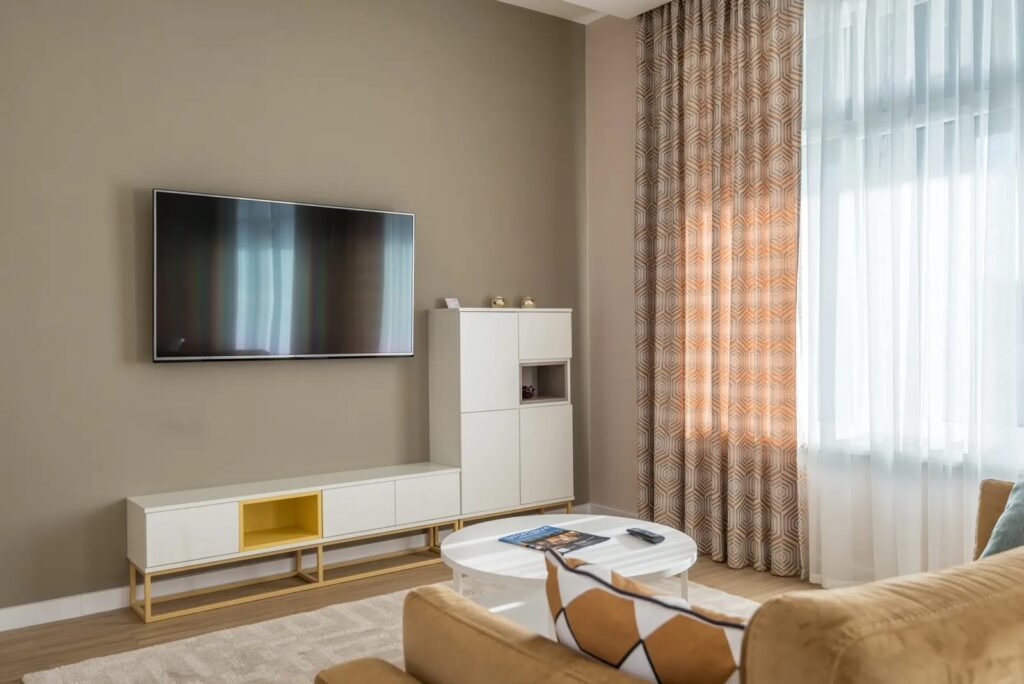
1. Let closed storage do the heavy lifting (doors and lids for 80% of your stuff)
A small living room stays calm when most of what you own is invisible. Aim for roughly 80% of your living room things to live behind closed doors or under lids — remotes in a drawer, throws in a sideboard cupboard, games and chargers in boxes on shelves. A sideboard, a cabinet, or even a lidded ottoman quietly absorbs the everyday mess so the room itself never has to.
The visible 20% is your decor: the things you chose because you love them. When only your favourites are out, each one gets noticed instead of disappearing into a crowd of stuff. If you do not have a sideboard yet, make it your first living room purchase — in a small space, one piece of closed storage is worth more than three pretty shelves.

2. Keep open shelves to three to five items, grouped
Open shelving looks wonderful in a small living room — until it fills up. The rule that keeps it beautiful is simple: three to five items per shelf, always arranged in groups rather than scattered. A plant, two books stacked flat, and one candle reads as styled; eleven small things reads as storage you forgot to hide.
Grouping is what makes few items feel like enough. Try the triangle trick: one tall item, one medium, one small, with a little breathing room around them. Leave at least one shelf section completely empty — that empty space is what tells the eye the shelf is decorated, not just full.

3. Put one tray on every surface
A tray is the cheapest peace-maker in a small living room. Give every surface — the coffee table, the side table, the windowsill if you use it — exactly one tray, and let it be the official home for the small things that migrate: remote controls, a candle, lip balm, a coaster. Without a tray, those items scatter; with one, they look intentional.
Choose trays with a low lip so things stay put when the table gets bumped, and keep the tray itself small enough that it can only hold a handful of items. When friends come over, one tray can be lifted away in a single move — instant tidy room, zero reorganizing.

4. Give every zone its own labelled basket (one basket per zone)
Baskets are the friendliest closed storage you can buy, and labels are what stop them becoming junk baskets. Divide your living room into small zones — the reading corner, the sofa side, the TV area — and give each zone one basket labelled for what lives there: “throws,” “magazines,” “kids’ bits.” One basket per zone means everything has a clear address.
A simple tag tied to the handle works, or a strip of masking tape on the side for a renter-friendly label that peels off cleanly. The rule to enforce is ruthless but simple: if it does not fit the label, it does not go in the basket. Labelled baskets make tidying a family job anyone can do without asking where things go.
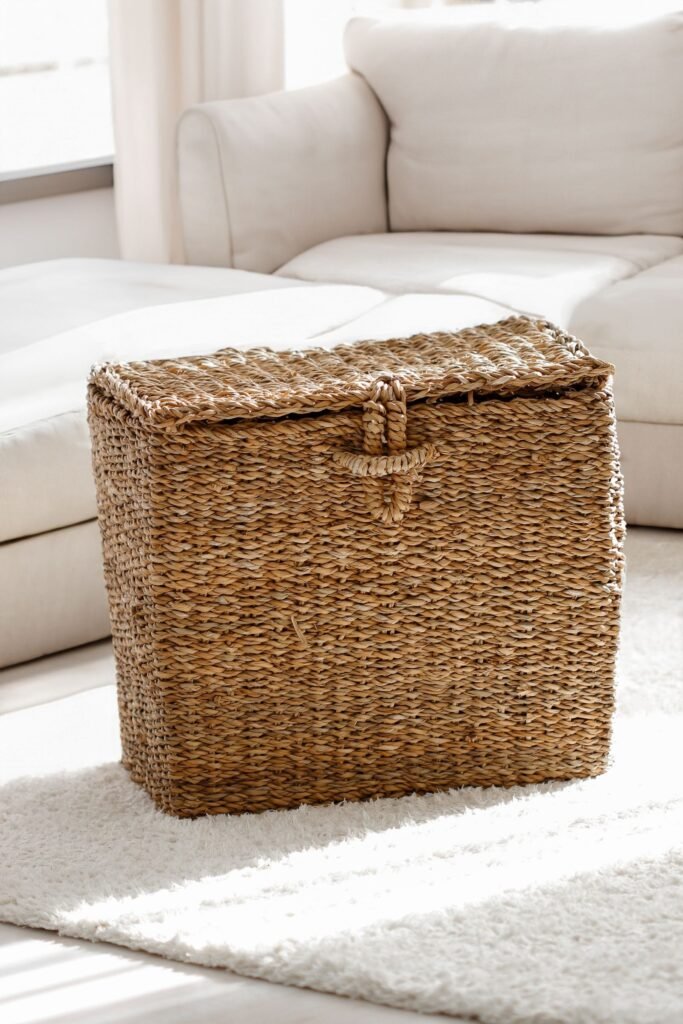
5. Keep decor off the floor — everything gets a shelf, a hook, or a basket
Nothing shrinks a small living room faster than floor clutter. Baskets piled beside the sofa, blankets heaped in corners, a leaning stack of books on the carpet — each one eats floor space and makes the room feel smaller than it is. Make it a hard rule: no decor lives on the floor. Every single item gets a shelf, a hook, or a basket home.
This one habit also makes cleaning effortless, because a quick vacuum run never requires moving furniture or piles first. If a basket currently lives on the floor, find it a shelf spot or swap it for a lidded ottoman that doubles as seating. Clear floor is the fastest way to make a small room feel twice as big.

6. Rotate decor with the seasons instead of adding more
The urge to buy something new each season is exactly how a small living room fills up. Rotation gives you the same fresh feeling for free: pack autumn and winter pieces — warm throws, candles, darker cushions — into one box, and spring and summer pieces — light throws, a small vase, pale cushions — into another. When the season changes, swap the boxes.
Because nothing is ever added, the total amount of decor never grows. Store the off-season box out of daily reach, on top of a wardrobe or under the bed, so it never competes for shelf space. Four swaps a year, and your room always feels new without getting any fuller.
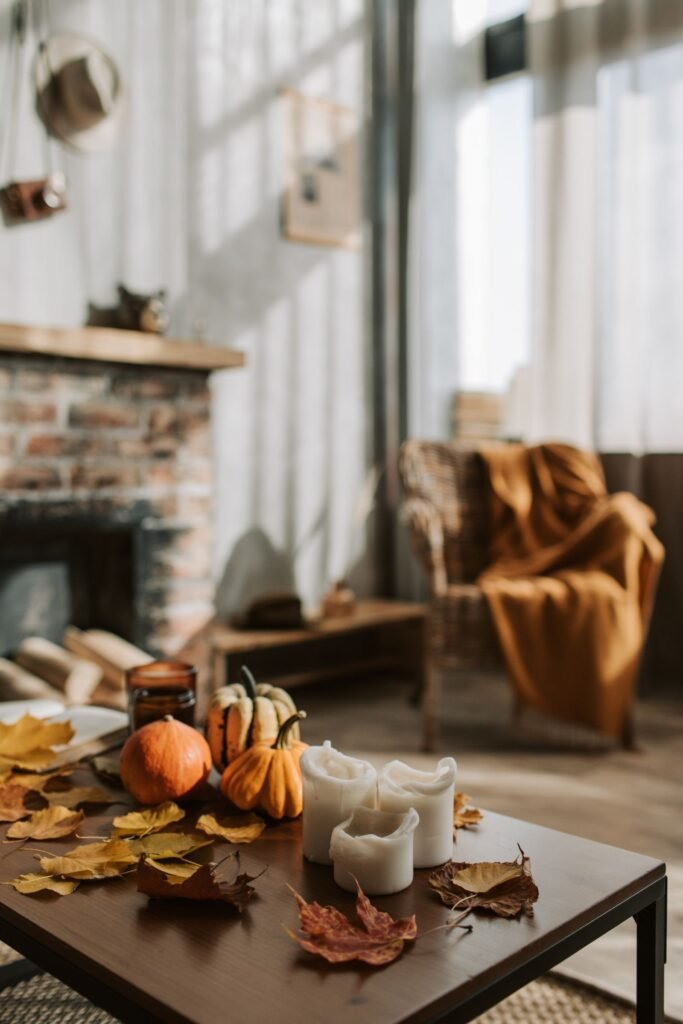
7. Choose one statement cushion or throw, not five competing patterns
Cushions are the fastest way to decorate a sofa and the fastest way to make it look busy. In a small living room, five competing patterns shrink the sofa visually and make the whole room feel noisy. Instead, pick one statement piece — a textured throw or one bold-patterned cushion — and keep everything else plain and in the same colour family.
The restraint pays off: your eye rests instead of racing, and the room reads calm even at its cosiest. If you already own a cushion collection, store the spares with your seasonal rotation box rather than squeezing them all onto one sofa.

8. Keep the coffee table two-thirds clear
The coffee table is the landing strip of a small living room — drinks, feet, books, and laptops all compete for it. The rule that keeps it beautiful and useful: at any moment, two-thirds of the surface should be empty. That leaves room for one tray with a couple of items and genuine free space to set things down.
Enforcing the ratio is easier than it sounds. When the table fills up, it usually means the tray is overflowing or items have drifted in from elsewhere — both fixed in under a minute by returning things to their homes. A mostly-clear coffee table is also the single biggest visual signal that a small room is under control.
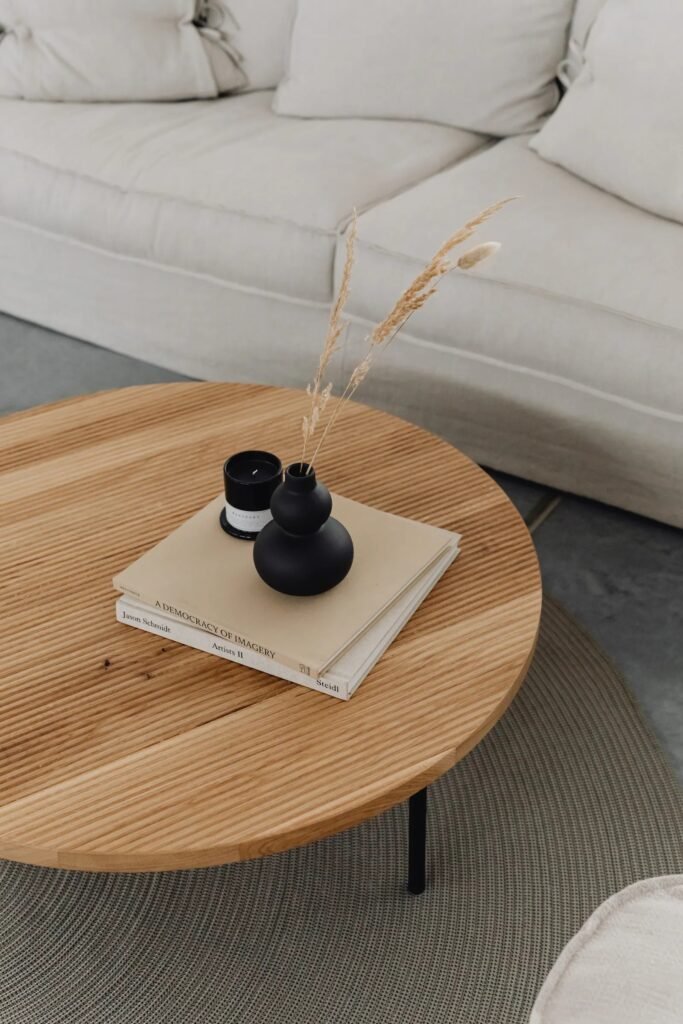
9. Create a landing spot tray by the door for keys and post
Clutter is born at the doorstep. Keys, post, sunglasses, and receipts land on the first flat surface they find — usually the living room — and then spread. A small landing-spot tray on the console or shelf nearest your door catches it all before it ever reaches the sofa area. Keys in, post in, done.
Keep the tray shallow and small so it cannot become a junk drawer in disguise, and sort the post into it daily: recycle, action, file. This single habit protects your living room from the slow creep of entryway clutter better than any storage purchase.

10. Run a weekly 10-minute declutter on the same day
Even with every system above, small drift is inevitable. The fix is a weekly 10-minute declutter, done on the same day each week — Sunday evening, say. Set a timer, walk the room, and return every stray item to its tray, basket, or closed-storage home. Because everything already has a place, ten minutes is genuinely enough.
The fixed day matters more than the duration. Same-day-every-week turns tidying into a rhythm instead of a reaction, and catching drift weekly means you never face a whole-afternoon reset. Pair it with something pleasant — music, a candle — and it stops feeling like a chore at all.

Final Thoughts
A clutter-free small living room is not about owning less or decorating less — it is about giving every item a job and a home. Closed storage hides the busy 80%, trays and baskets keep the visible 20% corralled, and the weekly reset keeps the whole system honest. Start with just one idea — the sideboard, the tray, or the landing spot — and your living room will start staying calm on its own. For more small living room ideas, see Cozy Small Living Room Ideas For Work From Home, Small Living Room Ideas For Family Movie Nights and Cozy Small Living Room Ideas For Tiny Apartments. Save this post on Pinterest so you can find these clutter-free ideas again, and read Small Living Room Ideas For Family Movie Nights next for more cozy small living rooms.
How much decor should stay visible in a small living room?
About 20% — keep roughly 80% of your living room things behind closed doors or under lids: remotes in a drawer, throws in a sideboard cupboard, games and chargers in boxes. The visible 20% is your decor, the things you chose because you love them. One piece of closed storage is worth more than three pretty shelves.
How many items belong on open shelves?
Three to five items per shelf, always arranged in groups rather than scattered: a plant, two books stacked flat and one candle reads as styled, while eleven small things reads as storage you forgot to hide. Try the triangle trick — one tall item, one medium, one small — and leave one shelf section completely empty.
What is the easiest first clutter-free habit?
Put one tray on every surface and a basket in every zone. Give the coffee table, the side table and the windowsill exactly one tray each, so remotes, candles and coasters have an official home. Then give each zone — the reading corner, the sofa side, the TV area — one labelled basket for what lives there.
How do I keep the coffee table clear?
Keep two-thirds of the surface empty at any moment, leaving room for one tray with a couple of items and genuine free space to set things down. When the table fills up, it usually means the tray is overflowing or items drifted in from elsewhere — return them to their homes in under a minute.
How often should I declutter a small living room?
Once a week for ten minutes, on the same day each week — Sunday evening, say. Set a timer, walk the room and return every stray item to its tray, basket or closed-storage home. The fixed day matters more than the duration: catching drift weekly means you never face a whole-afternoon reset.


5 Comments