
Small Living Room Ideas For Hosting Guests Well
Small living room ideas for hosting guests well start with one simple truth: a small room can host well — it just hosts differently. You cannot fit twelve chairs and a buffet, and you do not need to. What guests remember is not the size of the room; it is whether they had somewhere comfortable to sit, something to drink without asking, and a host who was in the room with them instead of running back and forth to the kitchen. Flexible seats, a drinks tray, and a clear table do that better than extra furniture ever will.
The ideas below are built for a room that is a living room every day and a gathering place on some evenings: seats that appear and disappear, surfaces that move, and a fifteen-minute tidy that makes the room ready before the doorbell rings.
Last updated 15 Nov 2026. Refresh in 3–6 months: re-check the spare seats and blanket basket before the next gathering, and restock the drinks tray.

Key Takeaways
- Seat people in a loose circle facing each other, not in rows facing the TV — conversation needs eye contact, not a screen.
- Flexible seating wins: poufs, floor cushions and folding chairs appear when guests arrive and disappear when they leave.
- Put the drinks where the guests are — a tray on a side table or a rolling cart — so the host stays in the room.
- Do the fifteen-minute tidy before anyone arrives: clear table, lights on, music on, blanket basket out, coats sorted.
Flexible seating, poufs and floor cushions
The best guest seating in a small living room is the seating that is not there most of the time. Poufs and floor cushions stack in a corner or under a side table all week, then pull out onto the rug when guests arrive — an extra seat each, at no permanent cost in floor space. The photo shows two large patchwork floor cushions stacked on a patterned rug by a window, ready to be pulled out, with no sofa in frame — the cushions waiting for the evening, not in use yet.
Keep two or three poufs or cushions, not ten: a small room with too many seats feels crowded before anyone sits down. Floor cushions suit guests who are comfortable sitting low; keep one folding chair for anyone who is not, and the room works for everyone.

Drinks station on a tray
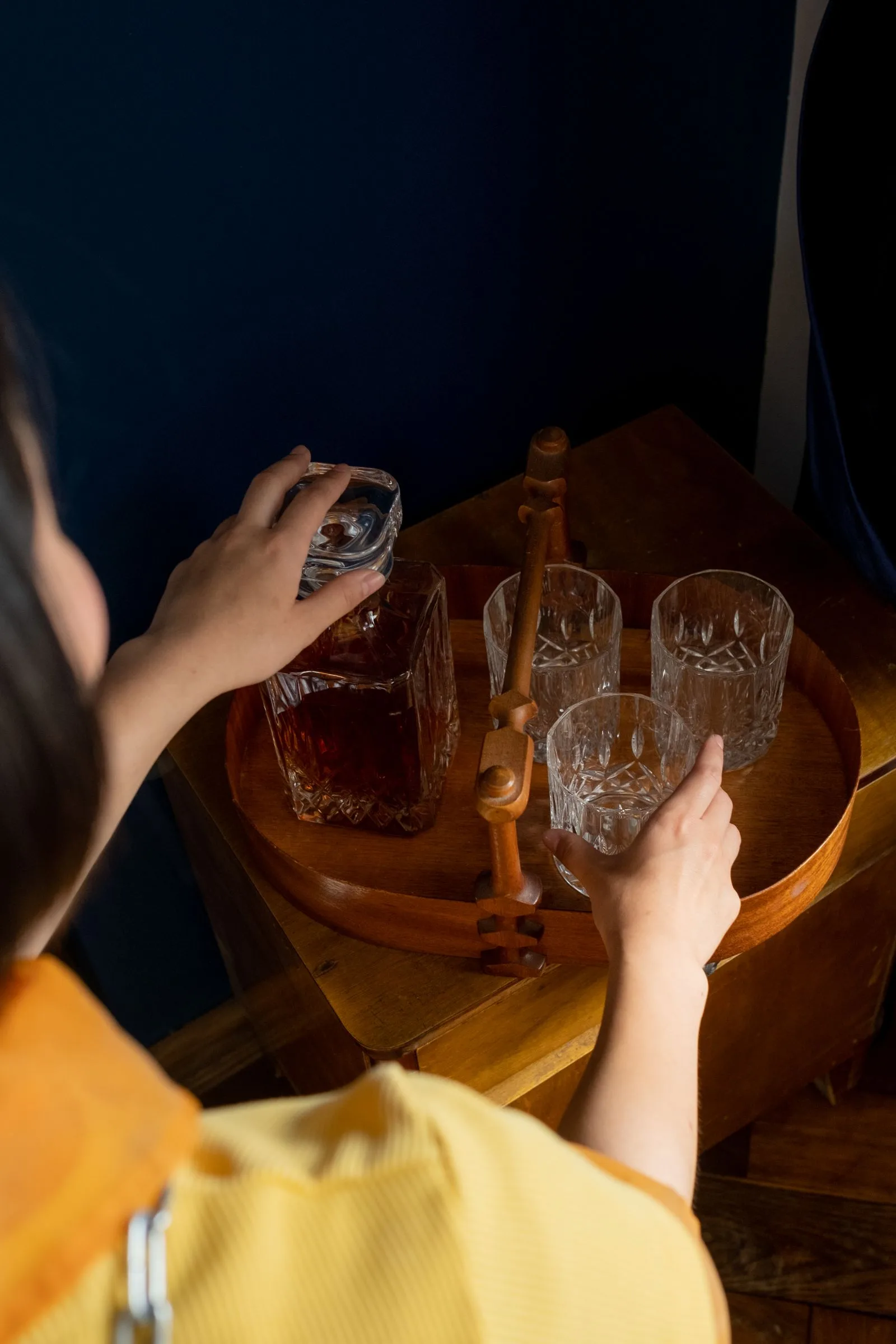
A drinks station keeps the host in the room. Set a tray on a side table or a small rolling cart — glasses, a decanter or a jug, water, and the bottle — and guests help themselves instead of waiting for you to disappear into the kitchen every twenty minutes. The photo shows a woman arranging crystal glasses and a decanter on a round wooden tray on a side table — the drinks station being set out before the guests arrive.
Keep the tray to one place and one job: drinks only, no snacks, no remotes, no mail. A rolling cart works even better in a small room, because it can sit beside the seating while guests are there and roll back to its corner when they leave.
Clear the coffee table for snacks
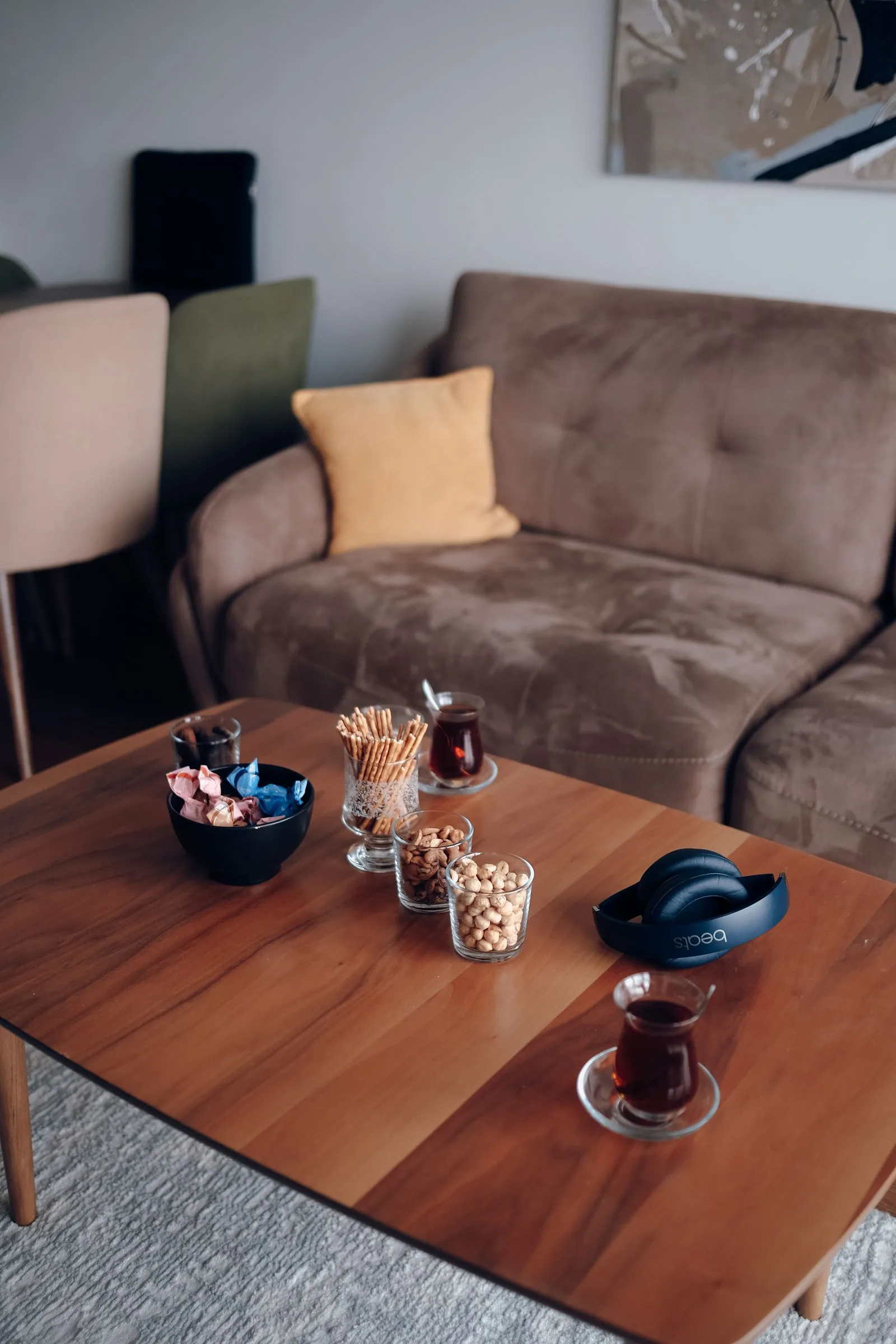
Guests need somewhere to put a glass down, and in a small living room that somewhere is the coffee table — which means the table has to be clear before they arrive. Set out small bowls of snacks, nuts and glasses of tea, and leave a third of the surface empty for the glasses guests are holding. The photo shows a wooden coffee table set with bowls of snacks, nuts and glasses of tea in front of a brown sofa — and a pair of headphones sitting on the table too, which is exactly what the pre-guest tidy is for: clear those before anyone arrives.
Serve snacks in small bowls rather than big ones, and keep the food bite-size so nobody needs a plate and a fork. When the table is clear, the room feels ready; when it is covered in the day’s clutter, the guests feel like an interruption.
Extra lighting for evening guests
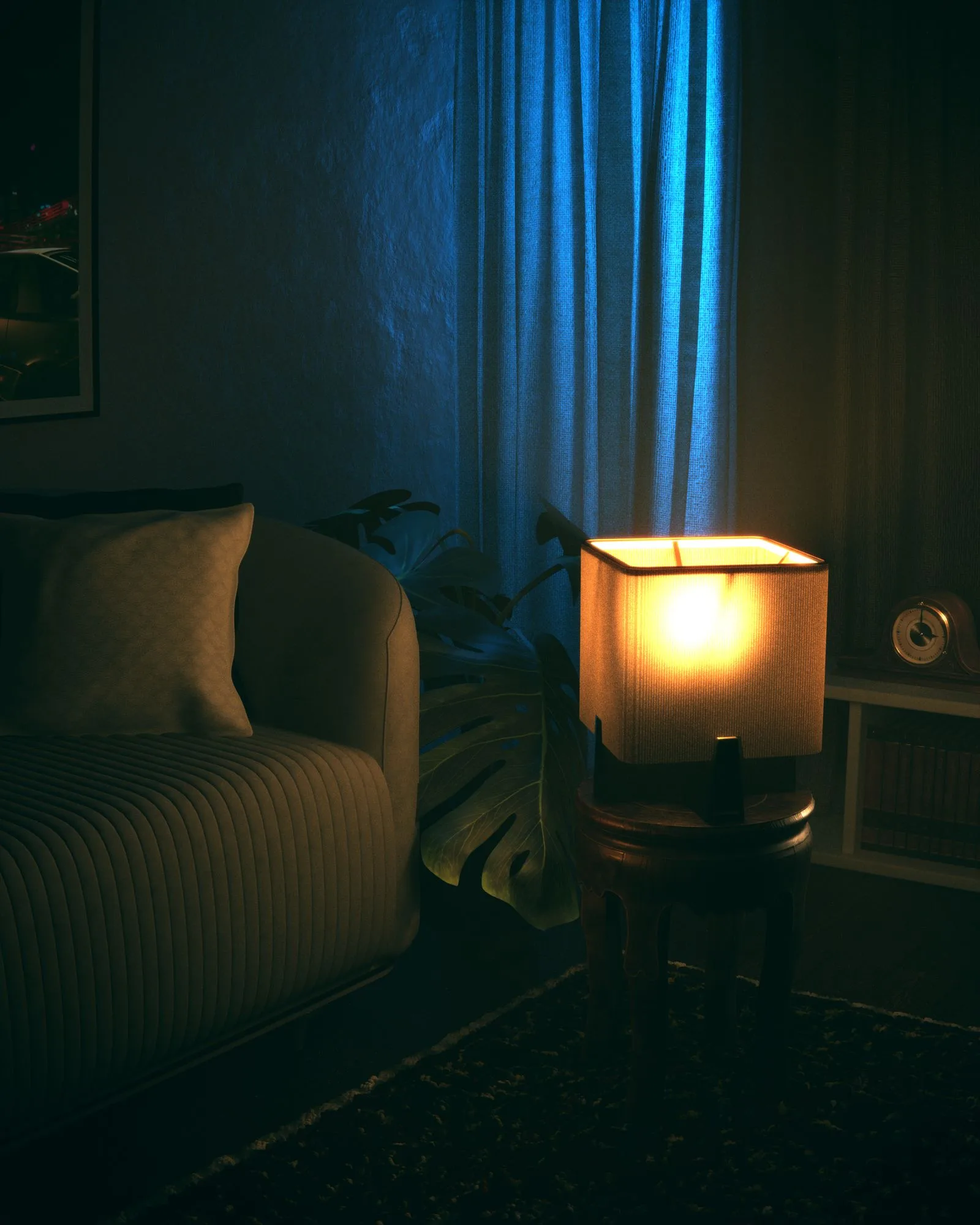
Evening guests arrive when the light is gone, and a small living room with one lamp feels like a cave — too dark to read a face, too dim to feel welcoming. Add a second light before they arrive: a table lamp on the side table, a floor lamp in the corner, or a string of warm fairy lights along a shelf. The photo shows a dim evening living room with a sofa and a glowing table lamp beside blue curtains — one warm lamp glowing in the dark, and the room still asking for a second one.
Keep the light warm and low, never the big ceiling light: lamps at seating height make faces look good and the room feel intimate. A dimmer helps, if you have one — turn the lights down a little once everyone is settled, and the room feels like an evening, not an office.
Guest blanket basket ready
Some guests run cold, and in a small room the heating is never quite even — one corner is warm, one chair is by the window, and someone is always a little chilly. A basket of folded blankets and throws beside the sofa solves it without a word: guests help themselves, nobody has to ask, and the room feels cared for. The photo shows a wicker basket filled with folded plaid and floral blankets and throws beside a chair — the basket ready, the blankets folded and waiting.
Keep the basket by the sofa, not in another room, and keep it to three or four throws — a basket overflowing with twelve blankets is a storage problem, not a welcome. Wash the throws after a gathering, fold them back into the basket, and the next evening is already prepared.

Rug defines the gathering zone
In a small living room, the rug is the room: it marks where the gathering happens, pulls the seating together into one zone, and tells guests where to sit without anyone having to say it. A rug big enough for the front legs of the sofa and chairs turns scattered furniture into a circle, and the circle turns strangers into a conversation. The photo shows a grey sofa with colourful cushions in front of a bright geometric rug — the colourful rug clearly marking out the seating zone in front of the sofa.
Keep the rug big enough for the circle — the front legs of every seat on it — and keep the pattern calm enough that it does not fight the cushions. In an open-plan space, the rug is even more important: it separates the living area from the dining area without a wall.

Music ready
Music should be playing when the doorbell rings, not ten minutes later while the host fiddles with a speaker. Set it up before the guests arrive — a playlist on the phone, a small Bluetooth speaker on the shelf, or a record on the turntable — and keep it low enough to talk over. The photo shows a vintage turntable, a wooden speaker and vinyl records in a living-room corner with plants — a vinyl setup rather than a phone and a small speaker, but the rule is the same: the music is ready before the doorbell, not after.
Pick the playlist in advance and keep it long, so it never stops mid-conversation and nobody has to DJ. Low and warm beats loud and clever: the music is the background, the guests are the foreground.

Small plates, space-saving serving
A small living room has no buffet, no sideboard, no dining table for the snacks — so serve like a small room: small plates, small bowls, food that fits in one hand. A plate of cookies and a mug on a small side table beside the sofa is a serving station that takes no floor space at all, and every guest has a place to set things down within reach. The photo shows a plate of cookies and a mug on a small round marble side table beside a grey sofa — one small plate, one mug, one compact table, and the serving is done.
Use side tables and nesting tables as serving points around the room instead of piling everything on the coffee table: one for drinks, one for snacks, one for plates. Guests serve themselves without queuing, and nobody has to reach across anyone else to get a biscuit.

Entryway clear for coats and shoes
The first thing guests see is the entryway, and the first thing they need is somewhere to put their coat. Clear the hooks by the door, leave the bench or a chair free for bags, and line the shoes up neatly instead of letting them pile. The photo shows a tidy minimalist hallway with coat hooks holding coats, a round mirror, a bench and shoes by the wall — the coats on the hooks, the shoes lined up below, the mirror and bench in a clear hallway.
Designate one place for coats and one for shoes before the guests arrive, and keep the walkway from the door to the living room clear — no bags, no shoes, no vacuum in the path. A guest who trips over the hallway remembers the hallway, not the evening.

Fifteen-minute pre-guest tidy
Fifteen minutes before the guests arrive, do the tidy — not a deep clean, a tidy. Clear the coffee table, fold the throws, fluff the cushions, put the mugs in the kitchen, check the bathroom has a clean towel and enough toilet paper, and put the music on. The photo shows the result: a tidy bright small living room with a cream sectional sofa, a clear coffee table and a rug — a clean, welcoming room, ready for guests, with nothing left to apologise for.
Do it in the same order every time, and keep a small checklist by the door if it helps: table, cushions, lights, music, bathroom, coats. Fifteen minutes, done properly, is the difference between a host who is relaxed when the doorbell rings and a host who is still hoovering.

How many guests can a small living room hold?
Count the seats, not the floor: the sofa, the armchair, and two or three flexible extras like poufs, floor cushions or folding chairs. If the walkways disappear when everyone sits down, the room is full — in most small living rooms that is four to six guests, not ten.
What seating works best for guests in a small room?
Light, movable, stackable seating: poufs, floor cushions, folding chairs and nesting stools. They appear when guests arrive and disappear when they leave, so the room stays a living room the rest of the week.
How do I serve food without a dining table?
Serve small plates and bite-size food, and spread the serving points around the room: snacks on the coffee table, drinks on a tray or a rolling cart, plates on side tables and nesting tables. Guests serve themselves without queuing, and nobody needs a fork.
Where do guests put their coats in a small home?
On the hooks by the door, on a cleared chair, or in a basket by the entryway — one place, decided before they arrive. Clear the hooks and the bench before the guests come, and keep the walkway from the door to the living room free.
How do I keep the room from feeling crowded?
Keep the walkways clear, seat people in a loose circle on the rug, and put the drinks in one place instead of spreading them around. One rug zone, one drinks station, and music low enough to talk over — the room feels full of people, not full of things.
What should I do 15 minutes before guests arrive?
Clear the coffee table, fold the throws, fluff the cushions, put the mugs away, turn the lamps on, start the music, and check the bathroom has a clean towel. Fifteen minutes, in the same order every time, and the room is ready before the doorbell rings.
Final Thoughts
Small living room ideas for hosting guests well work when the room is flexible and the host is in the room, not in the kitchen: poufs and floor cushions that appear when they are needed, a drinks tray where the guests are, a clear coffee table for snacks, a blanket basket by the sofa, and a rug that marks out the gathering zone. Music playing before the doorbell, small plates instead of a buffet, coats sorted at the door, and a fifteen-minute tidy before anyone arrives. The room does not get bigger — it just hosts better.
Save this post on Pinterest for your next gathering, and read our earlier living room ideas next: Small Living Room Seating Ideas That Feel Cozy, Small Living Room Ideas For Family Movie Nights, Small Entryway Storage Ideas For Tiny Hallways, and Cozy Small Living Room Ideas For Tiny Apartments.
Written from small-room living experience — every idea here is renter-friendly and needs no renovation.
Further reading: HGTV’s 10 tips for throwing an amazing party in a small space and IKEA’s small living room decorating ideas show more flexible seating and serving ideas for the same small space.
Frequently Asked Questions
How can I serve drinks without a bar cart in a small living room?
Use a tray on a side table, a window sill, or a stool near the seats, so guests can help themselves without the host leaving the room. Keep the tray to drinks only, and place it within arm’s reach of the circle. A rolling cart helps if you have one, but a tray in one place works just as well.
What lighting makes evening guests feel welcome in a small room?
Use two or three warm lamps at seating height, rather than one bright ceiling light. Lamps make faces look good, soften the corners, and stop the room feeling like a cave. Turn them on before the doorbell rings, keep the light low and warm, and add one small lamp near the drinks tray.
How many blankets should I keep ready for guests?
Keep three or four throws in a basket by the sofa, so cold guests can help themselves without asking. Fold them neatly, so the basket looks inviting rather than messy, and wash them after a gathering if they were used. Keep the basket in the room, not in another room, so nobody has to leave the conversation to fetch one.
How loud should music be when guests are talking?
Keep music low enough that nobody has to raise their voice, and choose a long playlist in advance, so it never stops mid-conversation. Put the speaker in a corner, away from the main seats, and let it fill the room gently. If you can hear every word of the song, it is too loud for talk.
How big should the rug be for a gathering in a small living room?
Choose a rug large enough for the front legs of every seat in the circle to sit on it. That marks the gathering zone, pulls the seating together, and stops chairs drifting apart. Keep the pattern calm, so the rug defines the zone without shouting, and leave the walkway around it clear for guests moving to the drinks tray.


One Comment