
Small Bedroom Colour Ideas That Make It Feel Bigger
Small bedroom colour ideas that make it feel bigger start with one simple truth: in a small room, colour is space. The eye reads a wall, a ceiling and a wardrobe door as separate pieces when they are painted different colours — and every separate piece makes the room feel a little smaller. Paint them the same colour and the edges disappear, the walls seem to step back, and the room feels bigger without a single piece of furniture moving.
The ideas below use colour the way a good tailor uses a single fabric: one light colour doing most of the work, one accent for personality, and matching tones everywhere the eye travels. Every idea is cheap, most are renter-friendly, and all of them work in a bedroom barely big enough for the bed.

Key Takeaways
- Paint the ceiling, walls, skirting and wardrobe doors the same light colour so the room’s edges disappear.
- Keep one light colour on every wall and use only one accent colour, repeated in small doses.
- Match the bedding and cushions to the wall colour in tones, not exact matches, so the bed blends in.
- Test any colour at night under lamplight as well as in daylight before you commit to the whole room.
Paint the ceiling the same colour as the walls
A white ceiling with coloured walls draws a hard line around the top of the room, and in a small bedroom that line makes the ceiling feel low and the walls feel short. Paint the ceiling the same colour as the walls and the line disappears — the eye travels up without stopping, and the room feels taller than it is.
Use the same tin of paint for both, in a light colour, and keep the finish flat or matt so it does not shine. If you rent and cannot paint the ceiling, a ceiling in a warm white close to the wall colour still softens the line, even if it is not an exact match.

Keep one light colour on every wall
Four walls in four different colours chop a small bedroom into four small pieces. One light colour on every wall does the opposite: the room reads as a single calm space, and the eye glides around it without stopping. Pale sage, soft cream, light grey-blue and warm white all work — the lighter the colour, the more light it bounces back into the room.
Pick the colour from something you already own, like the bedding or a favourite cushion, so the room has a starting point. Buy a tester pot first, paint a large patch, and live with it for a few days before you buy the full tin.

Use one accent colour only
One accent colour gives a small bedroom personality; three accent colours give it a headache. Choose a single accent — a deep green, a warm terracotta, a dusty blue — and use it in small, repeated doses: a cushion, a throw, a lampshade, a picture frame. The repetition is what makes it feel designed rather than random.
Keep the accent to roughly one tenth of the room. When every small thing shares one colour, the eye reads the room as tidy and calm, even when the room itself is full of everyday life.

Match the bedding to the wall colour
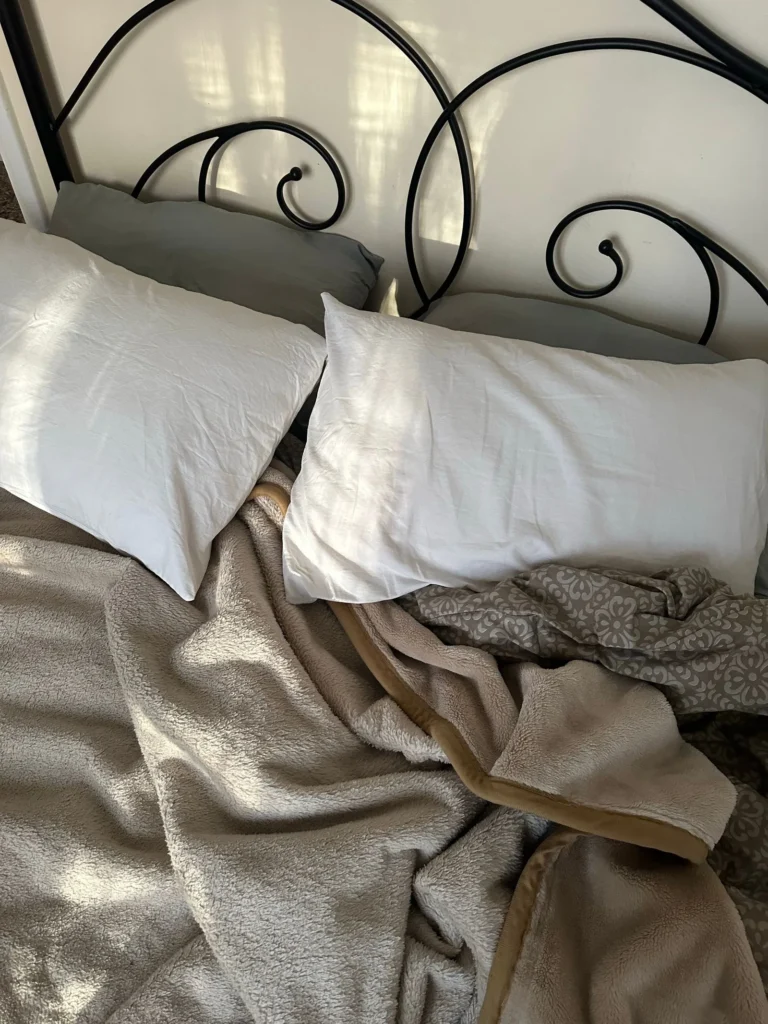
The bed is the biggest thing in a small bedroom, so its colour decides how big the room feels. Bedding in the same colour family as the walls lets the bed blend into the room instead of standing out as a big block. A sage wall with sage-green bedding, or a cream wall with cream bedding, makes the bed feel like part of the room, not an object filling it.
You do not need an exact match — tones are enough. A slightly deeper or paler version of the wall colour on the duvet cover works beautifully, and a white or cream flat sheet folded back over the top keeps the bed looking fresh.

Choose light floors and a light rug
Dark floors make a small bedroom feel smaller because the floor reads as a dark hole the room sits in. Light wood, pale laminate or a light rug over a darker floor lifts the whole room — the floor bounces light back up, and the room feels airier from the moment you walk in.
If you cannot change the floor, a large light rug does most of the same work. Choose one big enough to sit under the front half of the bed and reach into the middle of the room, in a pale neutral that matches the walls.

Mirror the light colour across the room
Colour works best in a small bedroom when it repeats. A pale colour that appears on the walls, then again on the bedding, then again on a curtain or a cushion, ties the room together — the eye follows the same colour around the room and reads it as one space instead of many separate things.
Repeat the wall colour in at least three places, but keep each repeat soft: the duvet, one cushion and the curtains are enough. Too many exact matches look flat, so let each repeat be a slightly different tone of the same colour.

Paint the wardrobe doors the wall colour
A wardrobe in a different colour from the walls is a big dark box standing in the middle of the room. Paint the wardrobe doors the same colour as the walls and the box disappears — the wardrobe becomes part of the wall, and the room feels a whole wardrobe wider.
This works best with a flat or eggshell finish that matches the wall’s sheen, so the doors do not shine differently in the light. If you rent, ask first — many landlords are happy with a same-colour repaint, since it is easy to reverse and it makes the room look better.

Use tonal cushions, not contrast
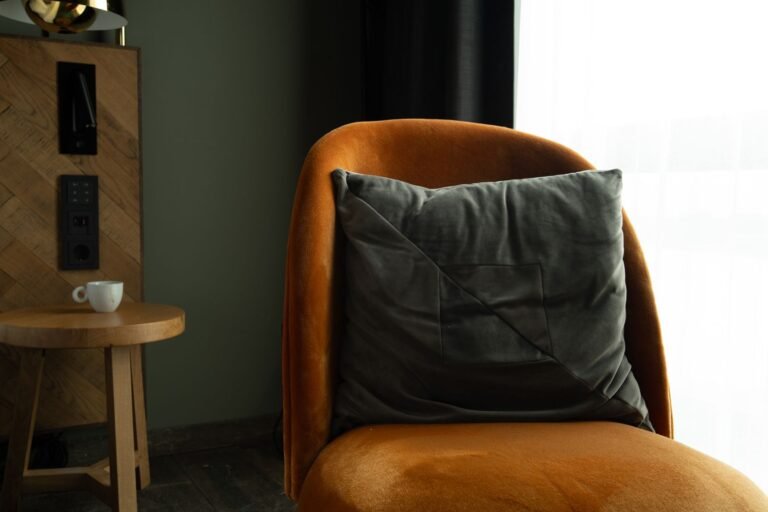
Cushions in sharp contrast with the bedding — a bright red cushion on a white bed — pull the eye to one spot and make the bed feel like the whole room. Tonal cushions in shades of the same colour family do the opposite: they add texture and softness without breaking the room into pieces.
Choose two or three cushions in tones of the wall colour — one a little deeper, one a little paler, one in a different texture like linen or knit. The bed looks layered and inviting, and the room keeps its calm, single-colour feel.

Paint the skirting the same as the wall
Skirting boards in bright white against a coloured wall draw a hard line around the bottom of the room, and in a small bedroom that line chops the walls short. Paint the skirting the same colour as the walls and the line disappears — the wall runs all the way to the floor, and the room feels taller.
Use the same paint as the walls but in a slightly tougher finish, like eggshell, so the skirting survives hoovering and scuffs. It is a small job — one evening with a brush — and it changes how the whole room reads.

Test the colour at night as well as day
A colour that looks pale and airy in daylight can turn grey and gloomy under a warm lamp at night — and a bedroom is used most at night. Before you commit to a colour, paint a large test patch and look at it in daylight, in the evening lamplight, and first thing in the morning.
If the colour goes muddy or cold at night, it is the wrong colour for a bedroom, however lovely it looks at noon. A good bedroom colour stays soft and warm under lamplight, because that is the light you actually live in.

What colour makes a small bedroom look bigger?
One light colour on the walls, ceiling, skirting and wardrobe doors — pale sage, soft cream, light grey-blue or warm white. A single light colour removes the hard edges between surfaces, so the eye glides around the room and it feels larger. Avoid using several different colours, which chop the room into smaller pieces.
Should I paint the ceiling the same colour as the walls?
Yes, in a small bedroom it is one of the most effective tricks. A white ceiling against coloured walls draws a hard line that makes the ceiling feel low. The same colour on both removes the line, the eye travels up without stopping, and the room feels taller.
Is one accent colour enough for a small bedroom?
Yes — one accent, repeated in small doses, gives the room personality without clutter. Use it on a cushion, a throw and a small object, keeping it to about a tenth of the room. Three or more accents compete with each other and make a small room feel busy.
Does dark paint make a small bedroom feel smaller?
Not always, but it is a gamble. A deep colour on every surface can feel cosy and cocooning, yet it absorbs light and can make a dim room feel cramped. Light colours are the safer choice, especially in bedrooms with one small window or little daylight.
Should bedding match the wall colour?
Match the colour family, not the exact shade. Bedding in the same tonal range as the walls lets the bed blend into the room instead of standing out as a big block. A slightly deeper or paler version of the wall colour works well, with a cream or white sheet folded back for freshness.
How do I test a bedroom paint colour properly?
Paint a large patch — at least a metre wide — and look at it in daylight, evening lamplight and morning light before buying the full tin. A colour that looks pale at noon can turn grey under a warm lamp, and the bedroom is used most at night.
Final Thoughts
Small bedroom colour ideas work when colour stops chopping the room into pieces: one light colour on the walls, ceiling, skirting and wardrobe doors, bedding in the same family, and a single accent repeated in small doses. Test the colour at night before you commit, and let light floors and tonal cushions do the rest. The room does not get bigger — it just stops feeling small.
Save this post on Pinterest for your next bedroom refresh, and read our earlier small bedroom ideas next: Small Bedroom Layout Ideas That Feel Much Bigger, Small Bedroom Lighting Ideas For Soft Evenings, Small Bedroom Sleep Ideas That Bring Deeper Rest, and Small Bedroom Corner Ideas For Calm Slow Mornings.
More inspiration: IKEA’s tips for a small-space bedroom makeover and Apartment Therapy’s 47 small bedroom design ideas.
Written from small-room living experience — every idea here is renter-friendly and needs no renovation.
Last updated 12 Nov 2026.
Refresh in 3–6 months: re-check the colour in winter light, and swap the accent if the room’s mood changes.



2 Comments