Small Bedroom Rug Ideas That Warm The Floor
Small bedroom rug ideas that warm the floor start with one simple truth: a bare floor makes a small bedroom feel cold and unfinished, and one rug fixes both. Your feet touch the floor before your eyes take in the room, so a warm rug underfoot changes the whole first impression — the room feels softer, quieter and finished, even before anything else changes. The sizing rule is simple: a rug of about 5 by 7 feet, extending about 20 inches beyond each side of the bed, so your feet land on warmth the moment you get up. The ten ideas below are ordered from the one rug that fits to the habits that keep it fresh, and every one of them works in a rented room with nothing fixed to the floor. One rug, in a warm neutral, and the cold floor stops being the first thing you notice.

Credit: Pexels 7168109, Curtis Adams
Key Takeaways
- Size the rug to the bed: about 5×7 ft, extending about 20 in beyond each side, covering the front two-thirds of the bed.
- Warm neutrals underfoot, colour on the bed — the rug is the calm base, not the statement.
- A low-pile, washable rug wins in a room you walk barefoot in, and it never trips the door.
- Two small rugs, one each side of the bed, beat one huge one — and rotate the rug twice a year so wear stays even.
Tip 1 — One rug that fits the bed’s front two-thirds, not a postage stamp
Buy one rug that fits the bed’s front two-thirds, not a postage stamp in the middle of the floor. A rug that is too small looks like an afterthought — a little island of pattern floating between the bed and the door — while a rug that runs under the front legs of the bed and out to where your feet land ties the whole room together. The rule is about 5 by 7 feet for most small bedrooms, extending about 20 inches beyond each side of the bed, so the rug is there wherever your feet go in the morning. Measure the bed and the room before you buy: the rug should start under the front legs of the bed and end where you stand to get dressed. If the room is too small for a 5 by 7, go smaller on the length, not on the width — the rug must still reach both sides of the bed. One rug that fits, and the floor is warm where it matters.

Credit: Pexels 7031869, Max Vakhtbovych
Tip 2 — A low-pile rug cleans easier and never trips the door
Choose a low-pile rug, because it cleans easier and never trips the door. A thick, shaggy rug in a small bedroom is a chore: it traps dust, it needs a deep vacuum, and its edge catches the door every time it swings. A low, flat rug vacuums in minutes, shakes out over the balcony, and lets the door swing clear over its edge — the room stays easy to live in, which is the whole point of a small bedroom. Feel the pile before you buy: press your hand into it, and if your fingers sink, the rug will trap dust and trip the door. A flat weave, a low cotton pile or a thin wool rug all work, and all of them dry fast if they ever get wet. Low pile, easy clean, clear door, and the rug never gets in the way.
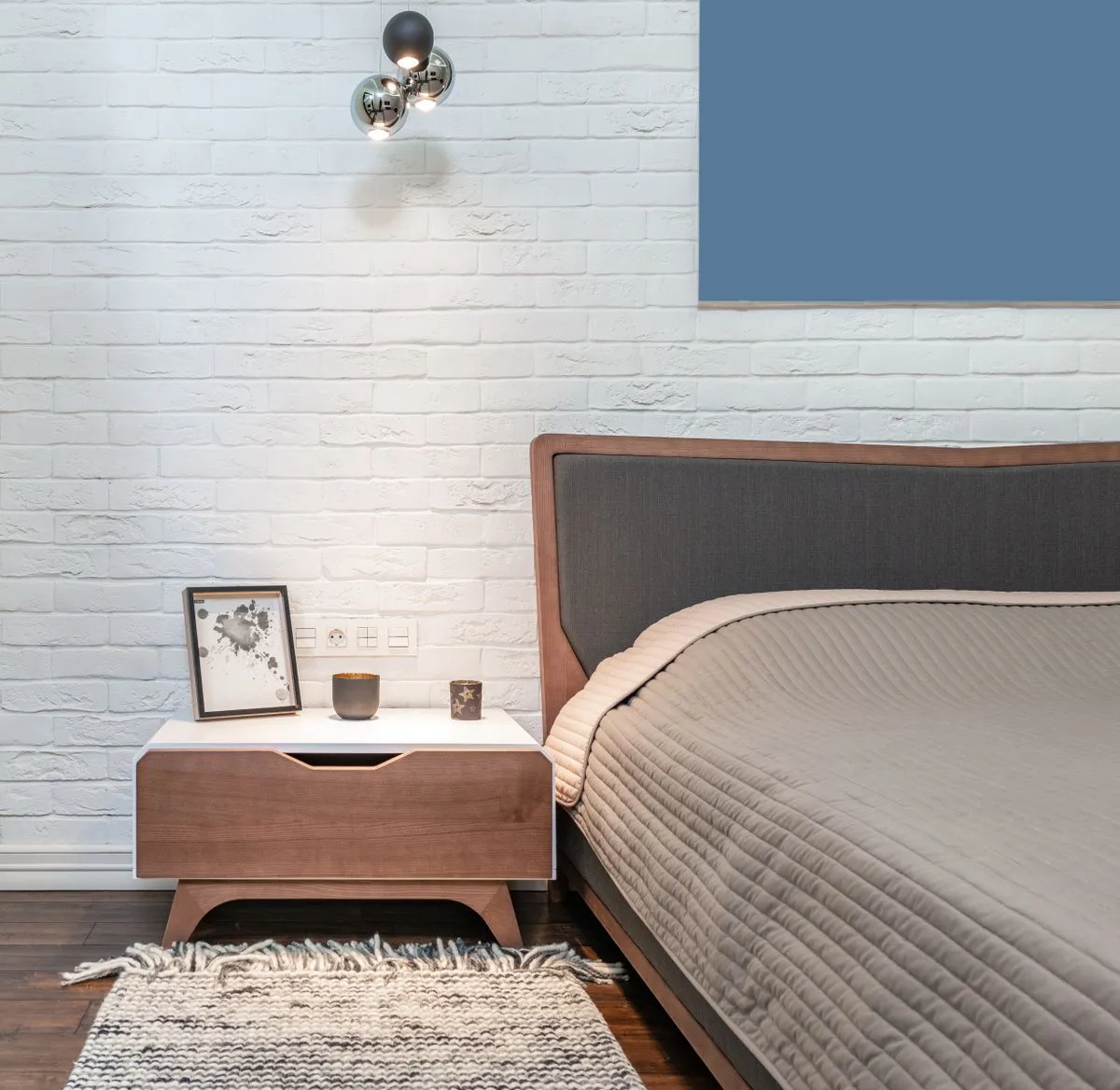
Credit: Pexels 7018259, Max Vakhtbovych
Tip 3 — Layer a small soft rug over a flat base for warmth without bulk
Layer a small soft rug over a flat base, and you get warmth without bulk. A flat, low-pile rug covers the floor and takes the wear, and a smaller, softer rug on top — by the bed, where your feet land — gives you the softness to step onto in the morning. The layer adds warmth and texture without the thickness of one big shaggy rug, and it costs less, because the soft top rug can be small. Keep the top rug smaller than the base, and centre it where your feet land when you get out of bed. A top rug that is too big slides, bunches and trips you, while a small one stays put — a rug pad underneath helps both layers stay in place. One flat base, one soft top, and the floor is warm without being thick.

Credit: Pexels 8849247, Los Muertos Crew
Tip 4 — Warm neutrals underfoot, colour on the bed
Keep warm neutrals underfoot and put the colour on the bed, because the rug is the calm base and the bed is the statement. A rug in oatmeal, sand, warm taupe or soft grey grounds the room quietly, and the bedding — dusty rose, soft blue, sage or clay — does the colour work above it. A brightly coloured rug, by contrast, fights the bedding for attention, and a small room has no space for two statements. This rule also protects your money: a neutral rug lasts through every bedding change, while a coloured rug locks you into one scheme. Buy the rug once in a warm neutral, and change the colour on the bed whenever the season changes. Neutrals underfoot, colour on the bed, and the room never argues with itself.

Credit: Pexels 26655209, Andrea Davis
Tip 5 — A washable rug wins in a room you walk barefoot in
Buy a washable rug, because it wins in a room you walk barefoot in. A bedroom rug takes everything your feet bring in — dust from the floor, the odd spill, the morning coffee — and a rug you cannot wash slowly becomes a rug you do not want to step on. A machine-washable rug goes in the wash with the bedding, comes out fresh, and goes back on the floor the same day, so the room stays clean underfoot all year. Check the label before you buy: “washable” should mean machine-washable at home, not dry-clean only, and the rug should dry flat without shrinking. A washable rug is usually thinner and lighter, which suits a small bedroom anyway — it folds for storage and never trips the door. One washable rug, and bare feet always land on something clean.

Credit: Pexels 7147299, Max Vakhtbovych
Tip 6 — Keep the rug clear of the wardrobe door swing
Keep the rug clear of the wardrobe door swing, because a rug under a swinging door is a rug that bunches, trips you and wears out in one spot. Check the swing before you lay the rug down: open the wardrobe doors fully, and mark where they reach on the floor. The rug should stop short of that line, so the doors swing clear over the floor and the rug stays flat. A rug that the door catches will fold, curl and become a trip hazard within a week. If the room is too small to keep the rug clear of the doors, choose sliding wardrobe doors, or cut the rug’s corner — a rug that is a little short is better than a rug the door fights every morning. Measure the swing, lay the rug short of it, and the doors and the rug stop arguing.

Credit: Pexels 7031870, Max Vakhtbovych
Tip 7 — Two small rugs, one each side of the bed, beat one huge one
Buy two small rugs, one each side of the bed, instead of one huge one — because two small rugs do the job better in a small room. Each rug sits where a sleeper’s feet land, so both sides of the bed get warmth without a single large rug that has to be manhandled under the bed, vacuumed in one piece and paid for in one go. Two small rugs are also easier to wash, easier to replace, and easier to move when the room changes. This is now a standard small-bedroom format, not a novelty, and it works because it puts the warmth exactly where the feet are. Match the two rugs — same size, same colour, same pile — so the bed looks balanced from the doorway. A runner shape suits the sides of a bed well, because it is long enough for two feet and narrow enough to fit the gap. Two small rugs, one each side, and both sleepers step onto warmth.

Credit: Pexels 4946766, Maria Orlova
Tip 8 — A rug under the bed’s front legs anchors the whole room
Slide the rug under the bed’s front legs, and it anchors the whole room. A rug that touches the bed — starting underneath the front legs and running out into the room — ties the bed and the floor together, so the room reads as one planned space instead of a bed sitting on a bare floor. A rug that floats in the middle of the room, touching nothing, looks lost, and a rug that stops short of the bed looks like it was put down in the wrong place. Leave the back legs off the rug if the room is tight: the front legs are the ones that matter, because they are the ones you see. A rug pad under the rug stops it creeping out from under the bed, and the bed’s weight holds the back edge in place. One rug, under the front legs, and the room has an anchor.

Credit: Pexels 7031833, Max Vakhtbovych
Tip 9 — If the floor is cold, a rug and slippers beat a heater
If the floor is cold, a rug and a pair of slippers beat a heater — because the cold you feel in a bedroom is mostly the cold under your feet. A rug warms the floor you stand on, slippers warm the feet that stand on it, and together they cost almost nothing and use no electricity at all. A heater, by contrast, warms the air, dries it out, and costs money every night — and it does nothing for the shock of a cold floor at 7am. Keep the slippers by the bed, on the rug, so they are the first thing your feet find in the morning. In the coldest months, the rug plus slippers plus warm 2700K lamplight make the room feel cosy without touching the thermostat. A rug, a pair of slippers, and the cold floor stops being a problem.

Credit: Pexels 6763376, Tima Miroshnichenko
Tip 10 — Rotate the rug twice a year so wear stays even
Rotate the rug twice a year, so wear stays even and the rug lasts twice as long. The part of the rug you walk on every morning — the strip beside the bed, the path to the door — wears thin, fades and flattens, while the part under the bed stays new. Turn the rug end to end, or flip it if it is reversible, and the worn strip moves to the quiet side while the fresh side takes the traffic. Put the rotation on the same day as the seasonal bedding swap, so the two jobs become one habit: new coverlet, turned rug, same morning. A rug that is rotated twice a year wears evenly, keeps its colour, and lasts years longer than one that is never moved. Two turns a year, and the rug stays even.

Credit: Pexels 13722068, Andrea Davis
FAQ
What size rug should I put under a small bedroom bed?
About 5 by 7 feet, extending about 20 inches beyond each side of the bed and covering the front two-thirds of the bed. The rug should start under the front legs and end where your feet land when you get out of bed — that is the size that ties the room together.
Are two small rugs better than one big rug beside the bed?
In a small bedroom, yes. Two small rugs, one each side of the bed, put warmth exactly where each sleeper’s feet land, and they are easier to wash, move and replace than one huge rug that has to be manhandled under the bed. Match them in size, colour and pile so the bed looks balanced.
Should a bedroom rug be low-pile or high-pile?
Low-pile. A flat rug vacuums in minutes, shakes out easily, dries fast, and never trips the door. A thick shaggy rug traps dust, needs a deep vacuum, and its edge catches the door every time it swings — a real problem in a small room.
What colour rug suits a small bedroom?
A warm neutral — oatmeal, sand, warm taupe or soft grey. The rug is the calm base of the room, and the colour belongs on the bed, in the bedding and the throw. A neutral rug also lasts through every bedding change, while a coloured rug locks you into one scheme.
Can I wash a bedroom rug?
Yes, if you buy a washable one — check the label says machine-washable at home, not dry-clean only. A washable rug goes in the wash with the bedding, comes out fresh and goes back on the floor the same day, which matters in a room you walk barefoot in.
How often should I rotate a bedroom rug?
Twice a year, end to end, on the same day as the seasonal bedding swap. The strip beside the bed wears thin while the part under the bed stays new, so turning the rug moves the wear to the quiet side and the rug lasts years longer.
Final Thoughts
Small bedroom rug ideas that warm the floor work when the rug fits the bed: about 5 by 7 feet, extending about 20 inches beyond each side, starting under the front legs and covering the front two-thirds. Keep it low-pile so it cleans easily and never trips the door, washable so bare feet always land on something clean, and warm neutral underfoot with the colour on the bed. Two small rugs, one each side, beat one huge one; a soft layer over a flat base adds warmth without bulk; and a rug plus slippers beats a heater on a cold morning. Rotate it twice a year, keep it clear of the wardrobe doors, and the floor stops being cold — and the room finally feels finished.
Save this post on Pinterest for your next rug hunt, and read our earlier rug and layout ideas next: Small Living Room Rug Ideas That Define Each Zone; Small Bedroom Layout Ideas That Feel Much Bigger; Cozy Small Bedroom Ideas That Feel Like A Retreat; Small Bedroom Mirror Ideas That Make It Feel Bigger; and Small Bedroom Headboard Ideas For Small Rooms.
More inspiration: Rugs; Bedroom Furniture.
Written from small-room living experience — every idea here is practical for a tiny bedroom, with a no-drill option wherever drilling is a problem.
Last updated 18 Nov 2026.
Refresh in 3–6 months: re-check the rug for wear and rotate it, and wash the washable rug before the new season.