
Small Kids Corner Ideas With Toy Baskets
Small kids corner ideas with toy baskets start with one rule: a kids’ corner works when tidying is part of the play, not a chore after it. Two or three low woven baskets at floor level, one kind of toy per basket, and a small rug that marks the boundary — toys stay on the rug, not the whole room — and the child can see exactly where everything goes. Keep only 6–10 toys out at a time, rotate them every week or two, and the corner feels new without a single new toy. The whole setup costs very little — baskets, a rug and a floor cushion — and takes an afternoon.
The ten ideas below build that corner step by step, from the baskets at floor level to the five-minute tidy routine that ends every day. Everything is sized for a child, nothing needs building work, and the corner stays in the living room, where the family actually is. Work through them in order, and the play corner cleans itself up.
Key Takeaways:
- Two or three low woven baskets at floor level, one kind of toy per basket, so the child can see where everything goes.
- One small rug marks the boundary — toys stay on the rug, not the whole room.
- Keep only 6–10 toys out at a time and rotate them every week or two, so the corner feels new.
- Anchor every shelf and storage unit to the wall, and finish with a five-minute tidy routine every day.
Tip 1 — Two or three low woven baskets at floor level
Two or three low woven baskets at floor level are the whole storage system, because a child can only tidy what a child can reach. Put the baskets on the floor, not on a shelf, and give each one a single job: blocks in one, soft toys in one, cars in one. A child who can see into a basket can put a toy back into it, and a child who cannot see into it will leave the toy on the floor. Woven baskets are light enough for a child to carry, soft enough not to hurt, and sturdy enough to survive being tipped over daily.
Label each basket with a picture, not a word, so a child who cannot read yet still knows where things go. A drawing of a block on the blocks basket and a drawing of a car on the cars basket turns tidying into a matching game. Two or three baskets, one kind of toy each, and the corner starts to clean itself.
Tip 2 — A small rug marks the boundary
A small rug marks the boundary of the play corner, and the rule is simple: toys stay on the rug, not the whole room. A child understands a rug as a room inside the room — this is where play happens, and outside the rug is the family’s floor. Choose a rug big enough for the child and the baskets, roughly the size of a small blanket, and in a colour or pattern the child picks, so the boundary feels like theirs. A rug also softens the floor for knees and elbows, which is half its job.
Keep the rug flat and low, with no curled corners to trip on, and wash it or shake it outside once a week. When a toy rolls off the rug, it goes back on the rug — that is the only rule the corner needs, and a child learns it in a day. One rug, one boundary, and the living room stays a living room.

Tip 3 — Low open shelves, not a tall bookcase
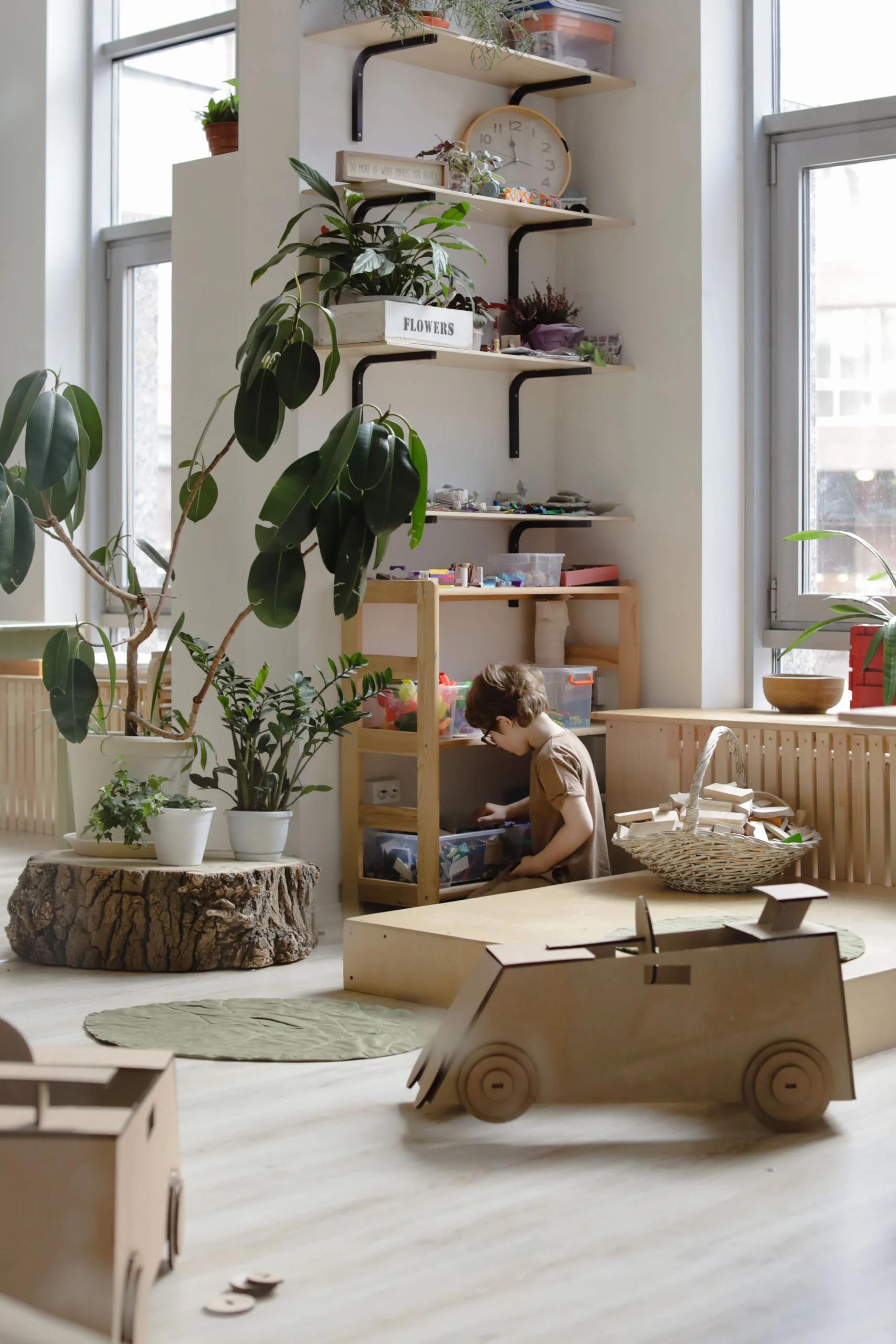
Low open shelves, not a tall bookcase, are the right shelves for a kids’ corner, because a child cannot reach a tall bookcase and will climb it instead. Shelves at a child’s height — low enough that every toy on them is visible and reachable without standing on anything — let the child choose a toy and put it back without help. Keep the shelves open, with no doors to pinch fingers, and keep the heaviest things on the lowest shelf so nothing can fall from above. The photo shows neatly organised storage with clothes, toys and storage together, rather than low open shelves at child height — the height to copy is the lowest shelf, where a child can reach everything without climbing.
Anchor every shelf and storage unit to the wall, with no exceptions, and keep furniture away from windows and blind cords. A shelf a child can pull over is the one danger in this whole corner, and a wall anchor costs almost nothing. Low shelves, anchored to the wall, and the corner is safe as well as tidy. For child-sized pieces, browse IKEA’s Children’s Furniture range.

Tip 4 — One basket by the door for the going-out toys
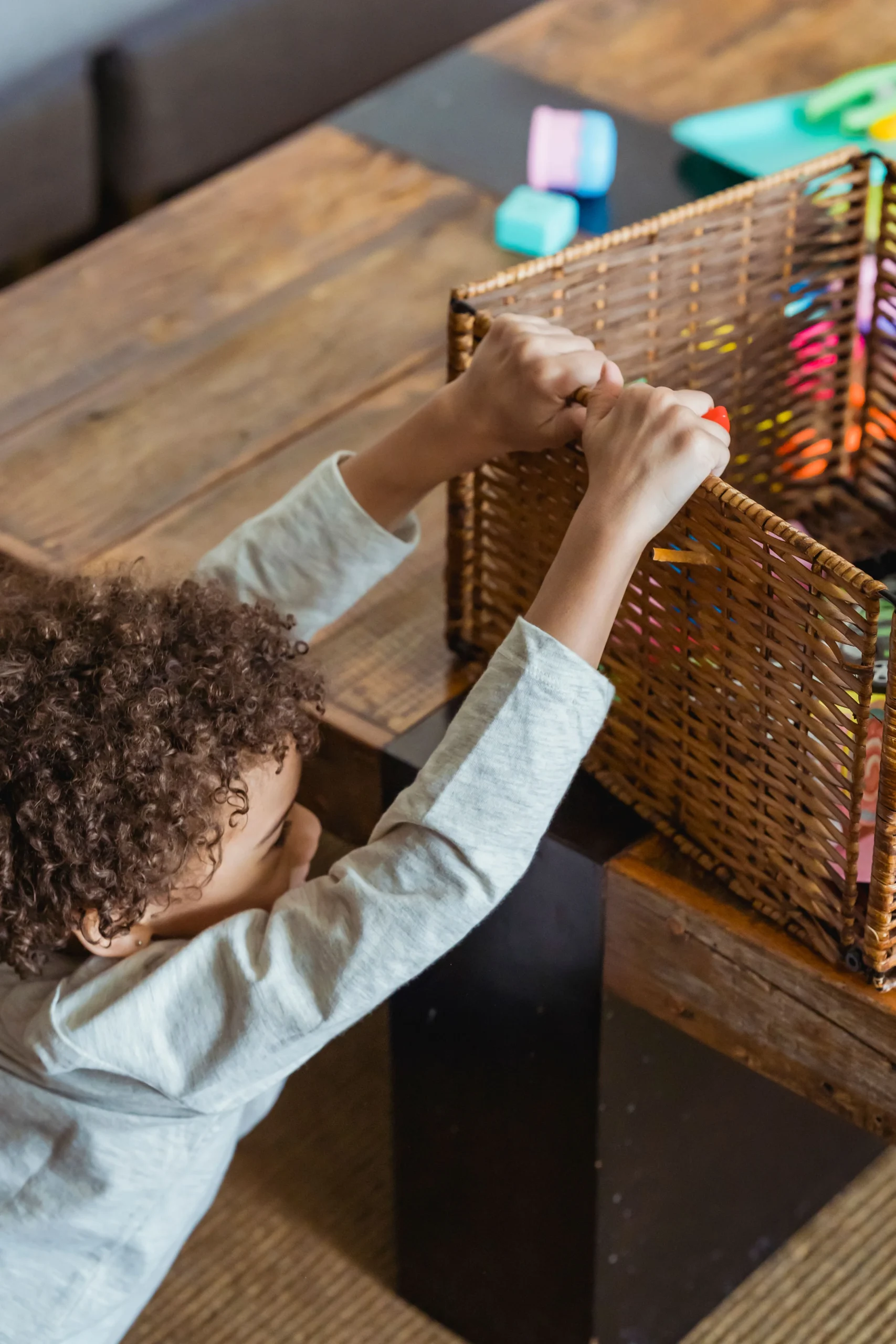
One basket lives by the door for the going-out toys, because the toys a child takes outside should never have to travel through the whole house. A small basket by the front door holds the ball, the bucket, the favourite car — the three or four things that leave the house and come back again. When it is time to go out, the child picks up the basket; when they come home, the basket goes back by the door, toys and all. The photo shows a child near a wicker basket of toys on a wooden table, not a basket placed by a door — the spot to copy is the hallway by the front door, where the basket is the first thing a child reaches for.
Keep the going-out basket small on purpose, so it can only hold a few toys and the child has to choose. If the basket overflows, a toy has to stay home — that is the rule, and children accept it faster than adults do. One basket by the door, and the going-out toys never spread through the living room.
Tip 5 — A floor cushion, not a chair
A floor cushion, not a chair, is the seat for a kids’ corner, because children sit on the floor anyway. A chair is too tall, too hard to climb into, and too easy to tip over; a floor cushion is exactly the height a child wants, soft enough to fall onto, and easy to drag to wherever the play is happening. Choose a cushion with a washable cover, because it will be sat on, stood on, and occasionally eaten on. The photo shows plush toys on a play mat with animal designs, with no floor cushion in it — the cushion belongs on the mat itself, where the child sits to play.
Keep one cushion in the corner always, and a second one stacked beside it for a friend or a sibling. When the play is done, the cushions stack in the corner and the floor is free again. One cushion, on the floor, and the corner has a seat that actually gets used.

Tip 6 — Rotate the toys monthly, so the corner feels new
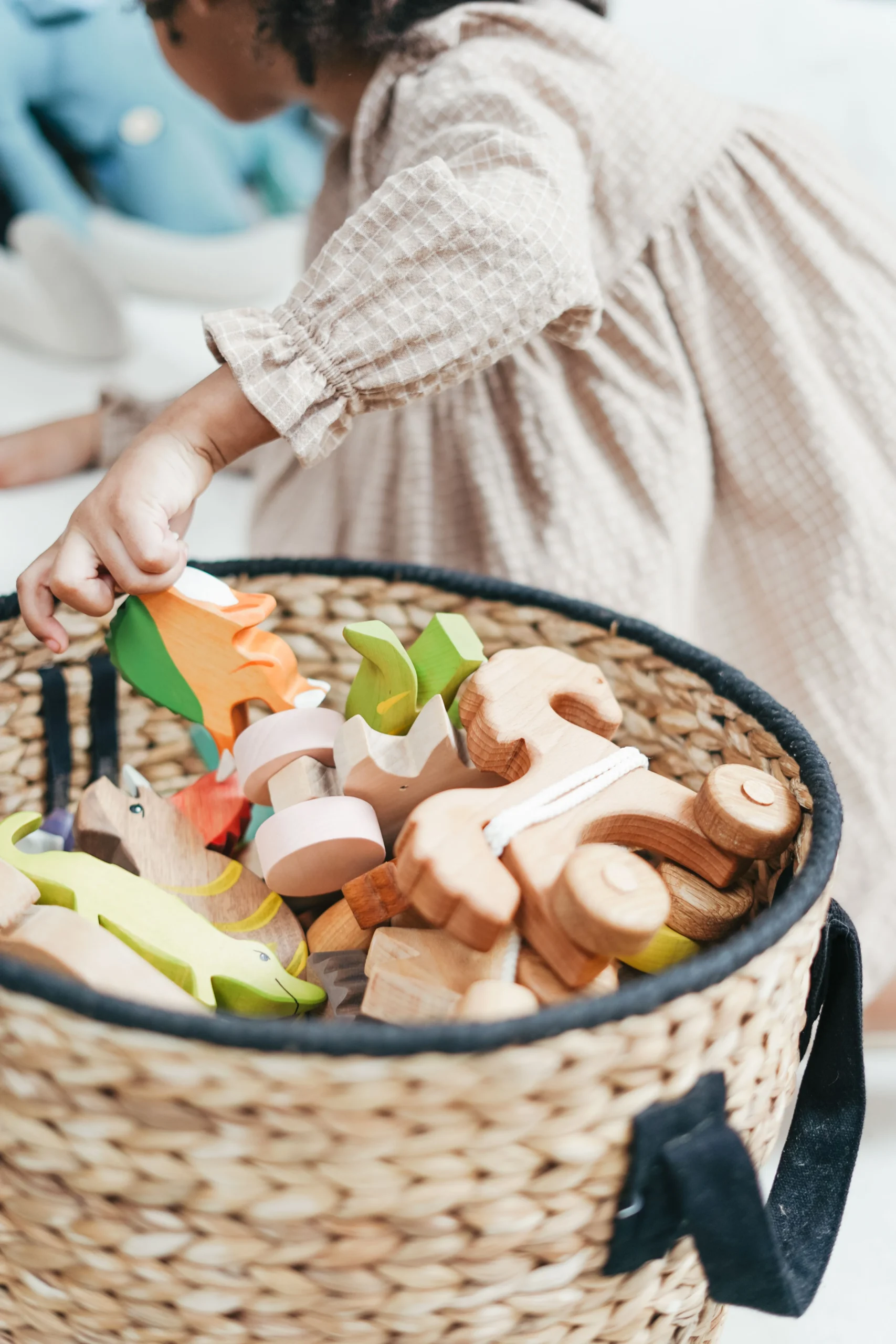
Rotate the toys every week or two — half in the cupboard, half out — so the corner feels new without buying anything. A toy a child has not seen for a fortnight is a new toy, and a shelf holding 6–10 toys is far more inviting than a crowded shelf holding fifty. Put the rest in a closed box in a cupboard, swap a few toys out each week, and watch the child rediscover toys they had forgotten. The photo shows a young boy organising toys into a wicker basket in a sunlit bedroom, and the rotation itself is not something a photo can show — the basket is where the swapped toys go, and the cupboard is where the rest wait their turn.
Keep the rotation simple: one box out, one box in, every week or two, on the same day. Let the child choose which toys go away and which come back, so the rotation feels like choosing, not losing. Fewer toys out, rotated often, and the corner stays fresh all year. For the cupboard boxes, IKEA’s Storage & Organization range has low-cost options.

Tip 7 — A small table at knee height for drawing
A small table at knee height is the drawing table, not the dining table, because a child draws better at a table built for a child. For most 2–3-year-olds, that means a seat around 21 cm high and a table around 40 cm high — low enough that feet touch the floor and elbows rest naturally on the table. Put the table in the corner beside the baskets, with crayons and paper in one basket underneath, so drawing starts without a single trip across the room. A table at the right height also means the dining table stays clean, which is a gift for the whole family.
Choose a table with a wipeable top, because paint, glue and felt tips all land on it eventually. When the drawing is done, the paper goes in the basket and the table is clear again. One small table, at knee height, and the corner has a place for making things.

Tip 8 — Keep the corner in the living room, not hidden away
Keep the corner in the living room, not hidden away in a spare room, because children play where the family is. A play corner in a room nobody uses is a play corner nobody uses, and the toys in it will migrate to the living room anyway — carried one by one, and left there. Put the corner in the living room, beside the sofa, and the child plays within sight of the family while the adults get on with their evening. The photo shows a young girl playing with dolls and toys in a cozy indoor playroom, not a living-room corner — the spot to copy is the corner beside the sofa, where the play happens in the family’s sight.
Accept that the living room will look like a family lives in it, because it does. The rug and the baskets keep the play contained, and the corner looks intentional rather than messy. One corner, in the living room, and the child plays where the family is.

Tip 9 — A five-minute tidy song routine
A five-minute tidy routine — baskets back, rug straight — ends every day, and a song makes it a game instead of a chore. Pick one short song, play it every evening, and tidy while it plays: toys into their baskets, baskets back on the rug, rug straightened, cushion stacked. When the song ends, the tidying ends, whether it is finished or not — the time limit is what makes it feel possible to a child. A routine that takes five minutes and ends with a song is a routine a child will ask for.
Do the routine at the same time every day, right before bath time or bedtime, so it becomes part of the evening rather than an interruption to it. Praise the tidying, not the mess, and the child learns that putting things away is part of playing, not the punishment for it. One song, five minutes, and the corner is ready for tomorrow.
Tip 10 — If a toy has no basket, it does not live in the corner
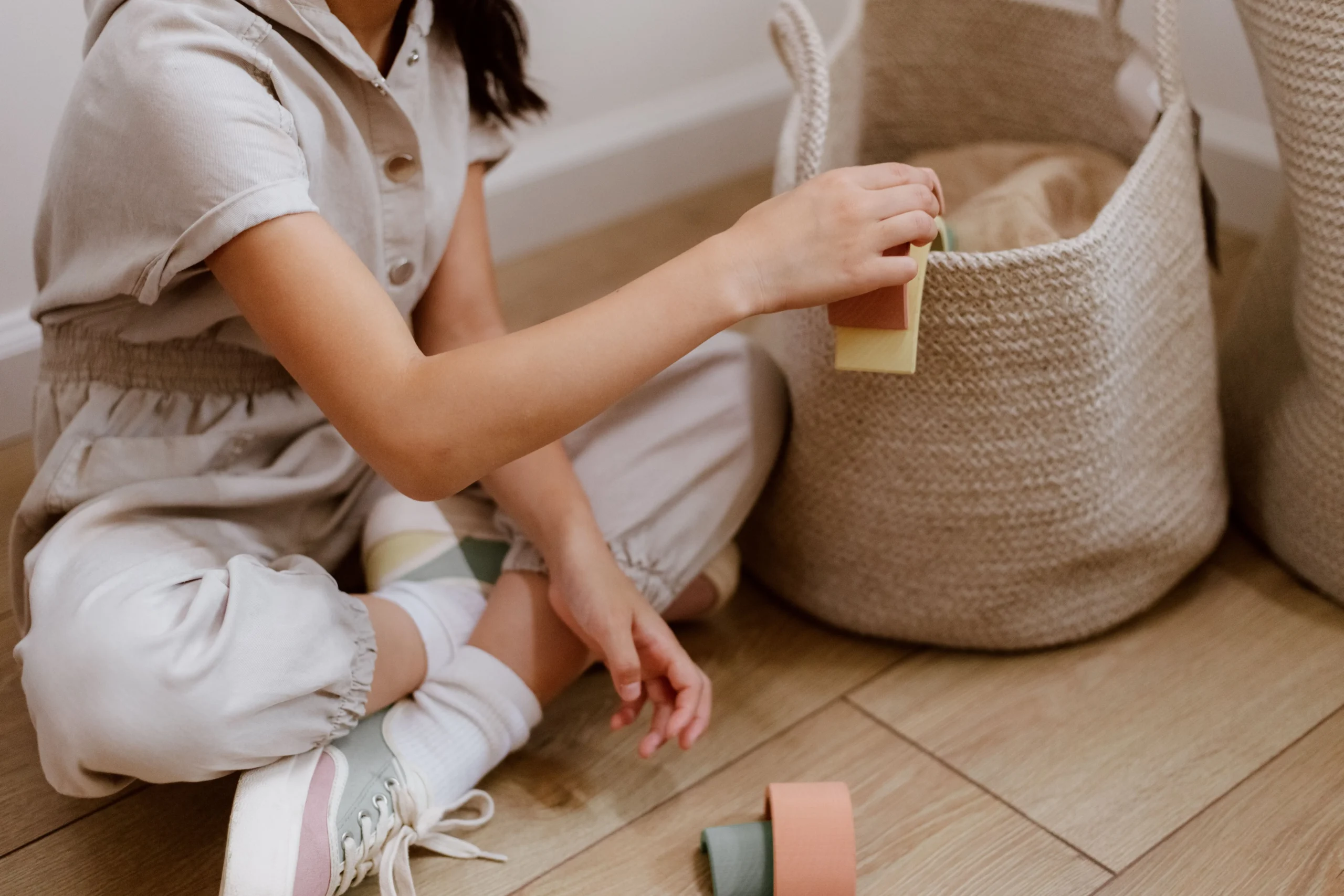
If a toy has no basket, it does not live in the corner — that is the one rule that keeps the corner from growing. Every toy in the corner belongs to a basket, and when the baskets are full, a toy has to leave before a new one arrives. The rule is easy for a child to understand and easy for an adult to enforce, because it is a fact about space, not a punishment: the corner holds three baskets, and three baskets hold only so much. The photo shows a child’s hand reaching for colourful wooden toys in a woven basket, and the one-basket rule itself is not something a photo can show — the basket is the rule, made visible.
Apply the rule at birthdays and holidays, when new toys arrive fastest, and let the child choose which old toy leaves. A corner that never grows is a corner that never needs a clear-out, and a child who chooses what stays learns to value what they have. One rule, three baskets, and the corner stays the size it started.

Frequently Asked Questions
How many toys should be out in a kids’ corner?
Keep only 6–10 toys out at a time, on a low open shelf or in two or three baskets. A small basket of well-chosen toys is more inviting than a crowded shelf, and rotating the rest every week or two makes the corner feel new without buying anything.
How often should I rotate my child’s toys?
Every week or two — half in the cupboard, half out, swapping a few toys on the same day each week. A toy a child has not seen for a fortnight feels new again, and the child can choose which toys go away and which come back.
How do I keep toys from spreading all over the living room?
Mark the corner with a small rug and make the rule simple: toys stay on the rug. Two or three low baskets at floor level, one kind of toy per basket, give every toy a visible home a child can reach.
How do I make a kids’ corner safe?
Anchor every shelf and storage unit to the wall, keep furniture away from windows and blind cords, and use low open shelves a child can reach without climbing. Woven baskets are light and soft, and a floor cushion beats a chair a child can tip over.
What size table does a toddler need for drawing?
For most 2–3-year-olds, a seat around 21 cm high and a table around 40 cm high, so feet touch the floor and elbows rest on the table. Put it in the corner beside the baskets, with crayons and paper in one basket underneath.
How do I get my child to tidy up?
Make it a five-minute routine with a song, at the same time every evening: toys into their baskets, baskets back on the rug, rug straight. When the song ends, tidying ends — and the rule “if a toy has no basket, it does not live in the corner” keeps the corner from growing.
Final Thoughts
Small kids corner ideas with toy baskets work when tidying is part of the play: two or three low woven baskets at floor level, one kind of toy per basket, a small rug that marks the boundary, and low open shelves a child can actually reach. Keep only 6–10 toys out, rotate them every week or two, and anchor every shelf to the wall — safety first, always. A basket by the door for the going-out toys, a floor cushion instead of a chair, a small table at knee height for drawing, and the corner in the living room where the family is. Finish with a five-minute tidy song every evening, and the rule that a toy with no basket does not live in the corner. The living room stays a living room, and the child gets a corner that is truly theirs.
Save this post on Pinterest for your next toy tidy-up, and read our earlier storage ideas next: Small Space Toy Storage Ideas To Hide The Mess, Small Kitchen Ideas For Cooking With Kids Safely, Small Bedroom Storage Ideas That Free Up Space, and Cozy Small Living Room Ideas For Tiny Apartments.
Written from small-room living experience — every idea here is practical for a tiny home with children, with a safety-first option wherever a child can reach.
Last updated 19 Nov 2026. Refresh in 3–6 months: re-check the basket sizes as the child grows, and re-anchor any shelf that has been moved.
Further reading: 35 Kids’ Room Storage and Organization Ideas
Further reading: 37 Smart Toy Storage Ideas


One Comment