
Small Pet Corner Ideas For Cozy Homes
Small pet corner ideas for cozy homes start with one simple truth: a pet needs one corner that is theirs. Bed, bowls and toys in one spot, and the rest of the home stays the family’s — the pet always knows where home is, and the family always knows where the pet’s things are. The corner does not need to be big: most cats and small-to-medium dogs need only 24 to 36 inches of clear floor, and that is a corner, not a room. Buy the washable layer first — a zip-off bed cover, a washable blanket — because a pet corner gets dirty faster than any other corner in the house.
The ten ideas below run from the bed to the nightly reset that keeps the corner fresh. One safety note runs through them all: snake plant and pothos are toxic to cats and dogs, so never put them in a pet corner — pet-safe plants only, such as areca palm, calathea and parlor palm — and keep food and litter in separate spots. Check the ASPCA’s Toxic and Non-Toxic Plants list before buying any plant for the corner.
Key Takeaways:
- One corner that is theirs: bed, bowls and toys in one spot, so the rest of the home stays the family’s.
- Most cats and small-to-medium dogs need only 24–36 in of clear floor — that is a corner, not a room.
- Buy the washable layer first (zip-off cover, washable blanket) — a pet corner gets dirty faster than any other corner.
- Pet safety: snake plant and pothos are toxic to cats and dogs — use pet-safe plants only (areca palm, calathea, parlor palm), and keep litter away from food.
Tip 1 — One bed that fits the corner exactly: measure the corner, not the pet shop display
Choose one bed that fits the corner exactly, and measure the corner, not the pet shop display. A bed too big for the corner pushes into the walkway and trips everyone who passes; a bed too small leaves the pet curled on the floor beside it, because pets stretch out when they sleep even if they curl up when they rest. Measure the corner’s two walls, leave room for the bowls and the basket, and buy the bed that fits the space you measured — not the one that looked right under the shop lights. The photo shows a beagle lying in a grey pet bed, seen from above — the corner itself is not in frame, but the bed that fits is the whole point.
Let the pet try the bed in the corner before you commit: put it down, watch where the pet settles, and move it a few inches until the pet chooses it over the sofa. A bed the pet chose is a bed the pet uses; a bed placed by guesswork is a bed the pet ignores.

Tip 2 — A washable bed cover wins: pet corners get dirty faster than any other corner
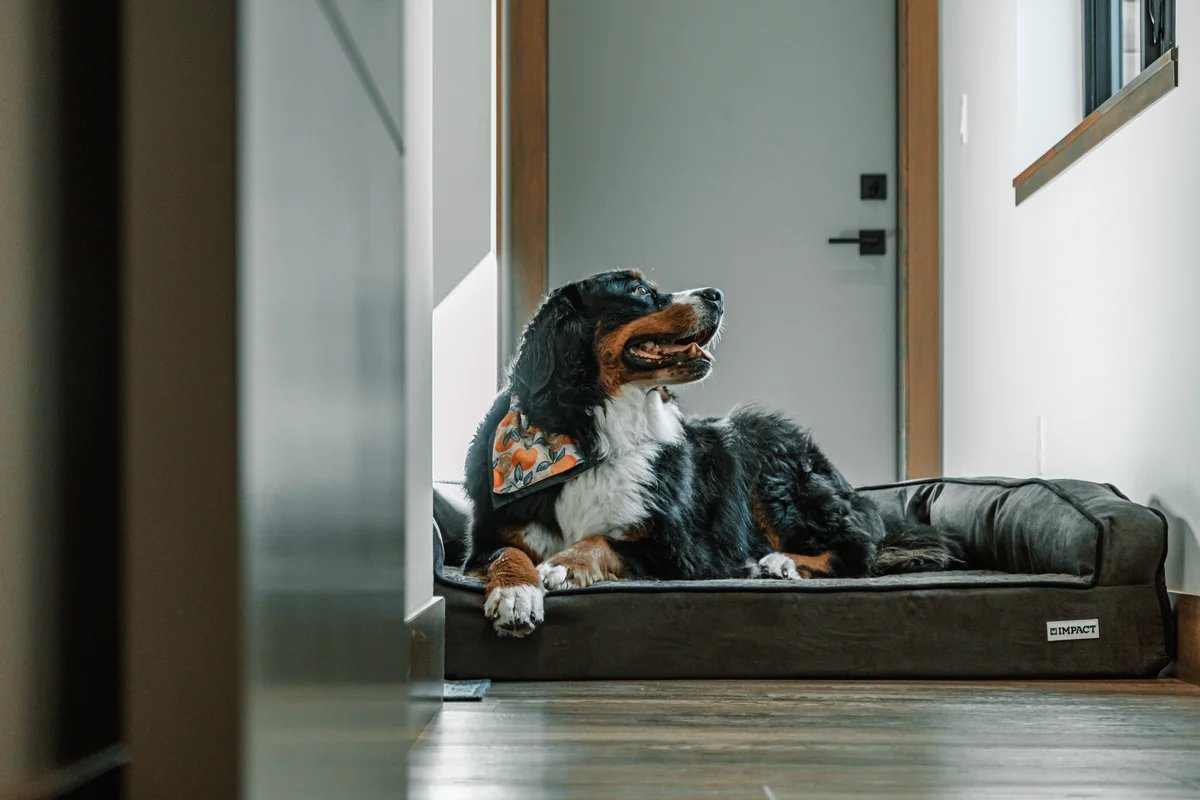
Choose a bed with a washable cover, because a pet corner gets dirty faster than any other corner in the house. Pets shed, pets drool, pets come in from the rain and go straight to their bed — and a bed that cannot be washed becomes a smell within a month. A zip-off cover that goes in the washing machine, and a washable blanket folded inside the bed, are the two layers that keep the corner fresh: wash both weekly, and the bed smells like laundry instead of like a pet. The photo shows a brown dog curled in a grey pet bed on a hardwood floor against a wall — the washable cover is a feature of the bed, not something the photo can show, but the dog curled in its own bed is the reason the cover matters.
Buy the washable layer first: a cheap bed with a washable cover outlasts an expensive bed without one, because the cover is what gets washed and the bed is what stays. Keep a spare cover, so the bed is never out of action on wash day — one on the bed, one in the wash, one in the cupboard.

Tip 3 — Bowls on a small tray or mat so food and water never spread across the floor
Put the bowls on a small tray or mat, so food and water never spread across the floor. A bowl on a bare floor slides: the pet pushes it while eating, water sloshes over the edge, kibble scatters, and the corner becomes a wet patch the whole room walks through. A tray or a rubber-backed mat under the bowls holds them still, catches the spills, and lifts out for a wash — the floor underneath stays dry. The photo shows a small white dog sitting next to two food bowls on a small mat on a patterned rug — bowls on a mat, exactly as they should be.
Choose a mat a little larger than the two bowls together, with a raised edge if the pet is a messy drinker, and keep it washable — a mat that cannot be washed becomes the smell. Never combine bed, food, toys and litter in one corner: cats do better with litter away from feeding areas, so the food corner and the litter corner are never the same corner.

Tip 4 — One basket for toys: when the basket is full, a toy leaves
Keep one basket for the toys, and when the basket is full, a toy leaves. Pet toys multiply like nothing else in a small home: a ball here, a rope there, a plush toy under the sofa, a chew in every room — and within a month the pet owns the whole house. One basket, in the pet corner, is the rule that stops it: every toy lives in the basket, the pet takes one out to play, it goes back when the play ends, and when the basket is full, a toy leaves before a new one arrives. The photo shows a black dog holding a plush toy in its mouth — the basket the toy lives in is not in frame, but the one-toy rule starts with the toy in the dog’s mouth.
Choose a basket the pet can reach into but cannot drag around the room — a woven basket with a wide mouth works, and a basket with a lid does not, because the pet will never open it. Rotate the toys monthly: half in the basket, half in the cupboard, so the corner feels new without a single new purchase.

Tip 5 — A hook on the wall holds the lead, so walks start at the corner, not a hunt
Put a hook on the wall in the pet corner, and it holds the lead — so walks start at the corner, not with a hunt through the house. Every dog owner knows the hunt: the lead is on the kitchen hook, or in the coat pocket, or under the sofa, and the dog is already at the door while the human searches. One hook, in the pet corner, ends it: the lead lives on the hook, the walk starts at the corner, and the dog learns that the hook means a walk is coming. The photo shows two Jack Russell Terriers leashed to a door handle, sitting on a doorstep, in a black-and-white photo — the leads hang on a door handle outdoors, not a wall hook in the pet corner, but the wall hook indoors does the same job.
Fix the hook at a height the human reaches easily and the pet cannot, beside the bed rather than across the room, so the whole walk routine — lead, coat, door — starts in one spot. If you rent, an adhesive hook rated for the lead’s weight does the same job with no holes.

Tip 6 — Keep the pet corner out of the main walkway: the pet rests, nobody trips
Keep the pet corner out of the main walkway, because the pet rests and nobody trips. A bed in the path between the kitchen and the door is a bed that gets stepped on, stepped over and stepped around — the pet never truly rests, because every passer-by is a disturbance, and the humans never walk freely, because the bed is always underfoot. The corner that works is the one nobody walks through: the end of the room, the side of the sofa, the quiet corner by the window — a spot the pet can sleep in for hours without a single footstep crossing it. The photo shows a white dog sleeping on white bed sheets — the walkway and the corner are not in frame, but the undisturbed rest is the same, a dog asleep without anyone passing by.
Watch the room for a day before you place the bed, and note the path everyone walks: the bed belongs in the corner the path never crosses. If the only free corner is on the walkway, move the bed a foot to the side, behind a piece of furniture, so the walkway passes in front of the corner rather than through it.

Tip 7 — A small blanket in the bed, washed weekly, keeps the corner smelling fresh
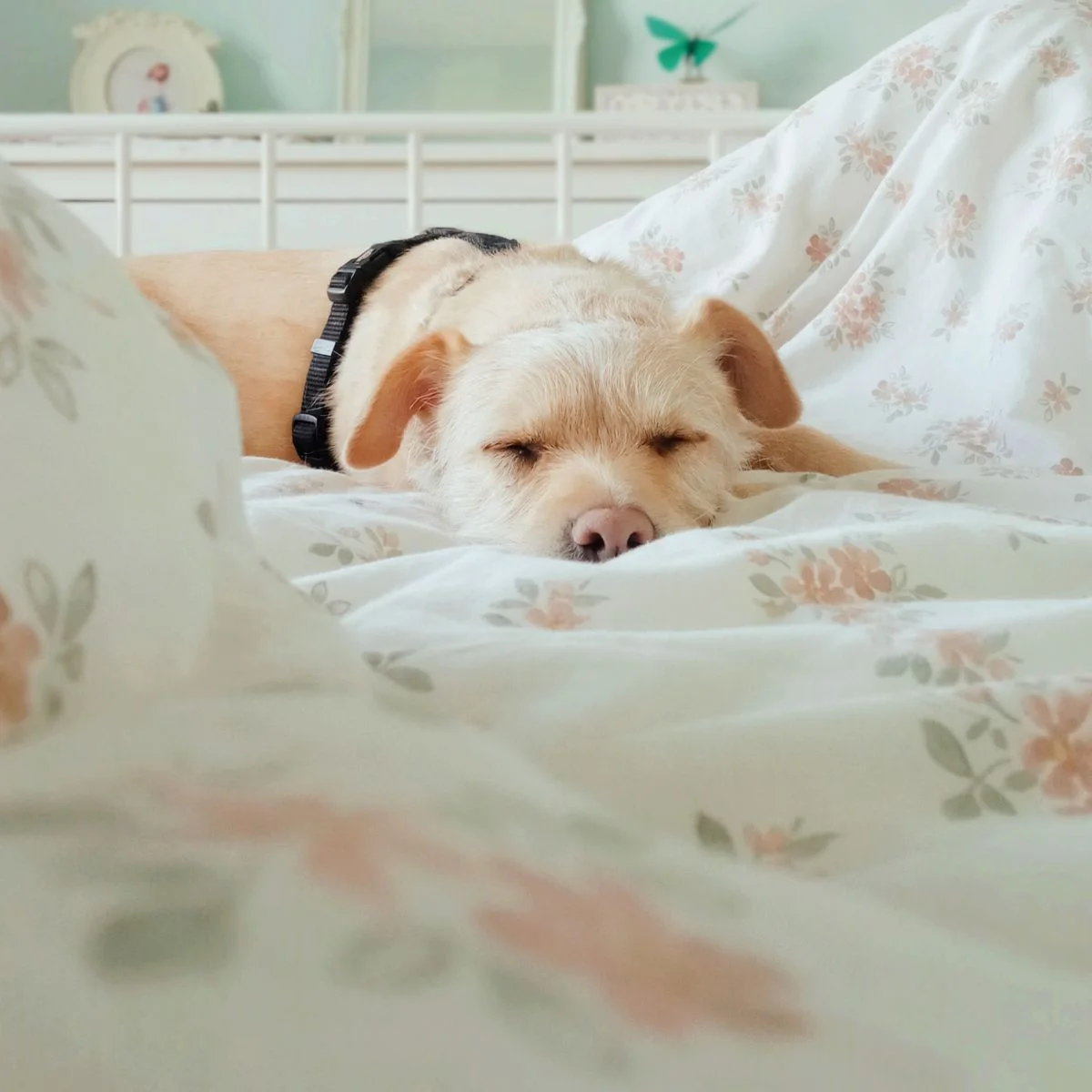
Put a small blanket in the bed, and wash it weekly, and the corner keeps smelling fresh. The blanket is the layer the pet actually lies on — it takes the shedding, the drool and the muddy paws, and it is the layer that can be washed without washing the whole bed. One small blanket, folded in the bed, washed with the bed cover every week, is the cheapest freshness a pet corner can buy: the bed underneath stays clean, the blanket takes the dirt, and the corner smells like laundry instead of like a pet. The photo shows a small light-coloured dog sleeping on floral-patterned bedding — the bed and its blanket blur into one here, which is exactly how a pet’s corner looks when it is in use, the blanket doing its job invisibly.
Choose a blanket in a colour that hides pet hair between washes — a mid-tone, not white and not black — and keep a spare, so the bed is never bare on wash day. A blanket slept on for a week carries the pet’s smell, a comfort to the pet, so wash it weekly rather than daily: fresh enough for the house, familiar enough for the pet.
Tip 8 — If the pet is a cat, one shelf above the bed is a perch, not storage
If the pet is a cat, put one shelf above the bed, and it is a perch, not storage. Cats need height, not floor: a cat that can climb to a shelf above its bed has a lookout, a safe spot and a warm place to sleep, all in the same corner. The shelf should be wide enough for the cat to lie on comfortably, fixed firmly to the wall with anchors rated for the cat’s weight, and kept clear — no books, no plants, no clutter — because a perch that holds storage is a perch the cat cannot use. The photo shows two cats sitting on an outdoor windowsill ledge of a building, with the street behind — the perch above the bed works the same way indoors, a high spot to watch from, though there is no bed or shelf above the ledge in the photo.
Keep the shelf at a height the cat can reach in one jump from the bed — about two to three feet above it — with a small blanket on it, so the perch is soft as well as high. Check the plants on that shelf with care: snake plant and pothos are toxic to cats and dogs, so the only plants near a pet corner are pet-safe ones — areca palm, calathea, parlor palm — and if in doubt, no plant at all.

Tip 9 — A window corner gives the pet a view: cats and dogs both watch the world from it
Put the pet corner by a window, and it gives the pet a view — cats and dogs both watch the world from it. A pet that can see out of the window is a pet that is entertained for hours: the birds, the people passing, the other dogs, the leaves moving — all of it is television for a pet, and a window corner is the screen. The bed goes under the window, or beside it, where the sun falls in the morning, and the pet gets the warmest, brightest spot in the room as well as the best view. The photo shows a close-up of a tabby-and-white cat with golden eyes lounging by a sunny window indoors — the window corner view, exactly as it should be.
Keep the windowsill clear so the pet can sit on it, and keep the curtains tied back during the day, so the view is never blocked. If the window is low, a small step beside the bed lets a small pet climb to the sill — and if the window opens, check the screen is secure, because a cat on a windowsill tests every gap.

Tip 10 — A 5-minute nightly reset: bed shaken, bowls washed, toys in the basket
Do a five-minute nightly reset — bed shaken, bowls washed, toys in the basket — and the pet corner stays fresh without a big clean. Five minutes, every night, is all it takes: shake the blanket outside the back door or over the bed, wash the bowls in the sink, pick up the toys scattered around the room and drop them in the basket, and wipe the mat under the bowls. The corner is tidy before bed, the pet sleeps in a fresh bed, and the morning starts with a clean corner instead of yesterday’s mess. The photo shows a French Bulldog and a Chihuahua on raised blue pet beds in a stylish room with a bookshelf — the nightly reset is a five-minute routine, not a scene, but the tidy room is what it leaves behind.
Keep the reset to five minutes and no more, because a reset that takes twenty minutes will not happen — and the five minutes that do happen every night beat the hour that never happens on a Sunday. Put a brush and a cloth beside the bowls, so the reset needs no trip to another room. Five minutes, every night, and the pet corner stays the freshest corner in the house. And if the pet is a dog that loves a den, the space under the stairs makes one of the most popular built-in pet beds — a low, quiet den in the corner nobody else uses. IKEA’s Pets range has the beds, bowls and baskets for a corner like this.

Frequently Asked Questions
How much space does a pet need in a small home?
Most cats and small-to-medium dogs need only 24 to 36 inches of clear floor for their corner — bed, bowls and toy basket in one spot. That is a corner, not a room, and it works best out of the main walkway, where the pet can rest undisturbed and nobody trips.
What is the best pet bed for a small corner?
One that fits the corner exactly — measure the corner, not the pet shop display — with a zip-off washable cover. Buy the washable layer first: a cheap bed with a washable cover outlasts an expensive bed without one, because the cover is what gets washed every week.
Which plants are safe near a pet corner?
Pet-safe plants only — areca palm, calathea and parlor palm are safe choices. Snake plant and pothos are toxic to cats and dogs, so never put them in a pet corner, and if you are unsure about a plant, keep it out of the corner entirely.
Should a pet’s food and litter be in the same corner?
No — do not combine bed, food, toys and litter in one corner. Cats especially do better with litter away from feeding areas, so the food corner and the litter corner should never be the same corner, and the smells stay apart.
Where should a pet corner go in a small home?
Out of the main walkway, ideally by a window, where the pet gets a view and morning sun. A window corner gives cats and dogs something to watch all day, and a quiet end of the room lets the pet sleep for hours without footsteps crossing it.
How do I keep a pet corner from smelling?
A washable bed cover and a small blanket in the bed, both washed weekly, plus a five-minute nightly reset — bed shaken, bowls washed, toys in the basket. The blanket takes the dirt, the cover takes the wash, and the corner smells like laundry instead of like a pet.
Final Thoughts
Small pet corner ideas for cozy homes work when one corner is truly the pet’s: a bed that fits the corner exactly, measured to the walls rather than the shop display, with a washable cover and a small blanket washed weekly. Bowls sit on a tray or mat so food and water never spread, one basket holds the toys with a one-in-one-out rule, a hook holds the lead so walks start at the corner, and the corner stays out of the walkway so the pet rests and nobody trips. A shelf above the bed is a perch for a cat, a window gives the pet a view, and a five-minute nightly reset — bed shaken, bowls washed, toys in the basket — keeps it fresh. Keep it safe: snake plant and pothos are toxic to cats and dogs, so pet-safe plants only, and litter always away from food.
Save this post on Pinterest for your next pet-corner setup, and read our earlier pet, plant and corner ideas next: Small Bedroom Plant Ideas That Keep Air Fresh, Small Bedroom Corner Ideas For Calm Mornings, Small Entryway Storage Ideas For Tiny Hallways, Small Under Stairs Corner Ideas That Work, and Small Botanical Corner Ideas For Tiny Rooms.
Written from small-room living experience — every idea here is practical for a tiny home, with a no-drill option wherever drilling is a problem.
Last updated 19 Nov 2026. Refresh in 3–6 months: wash the bed cover and blanket, check the bowls and the lead hook, and re-check any plants near the corner are pet-safe.



One Comment