
Small Kitchen Herb Garden Ideas For Tiny Windows
Small kitchen herb garden ideas for tiny windows start with a happy truth: a tiny window can grow a whole herb garden. You do not need a garden, a balcony, or even a big windowsill — you need one sunny sill, three small pots, and the habit of snipping little and often. Basil, mint and parsley in small pots on the sunniest sill give you fresh herbs for every meal, and the pots themselves make the kitchen look alive.
The ideas below are built in that order: which herbs to start with, where to put them, how to water and feed them, and how to keep them alive through winter. Start small — three pots, not ten — and the garden grows with you.

Key Takeaways
- Start with three: basil, mint in its own pot, and parsley — the three herbs you will actually use, and the three that grow well on a sill.
- Put the pots on the sunniest sill you have, rotate them weekly, and water only when the top inch of soil is dry.
- Snip little and often, and pinch the basil’s flower buds off — the plant makes leaves instead of flowers, and the harvest keeps coming.
- In winter, move the pots closer to the glass, water less, and give them every hour of light the window gets.
Tip 1 — Start with basil, mint and parsley
Start with basil, mint and parsley — the three herbs you will actually use, and the three that grow well on a kitchen sill. Basil for pasta and salads, mint for tea and desserts, parsley for everything else: three pots, three flavours, and a garden that earns its place on the sill from the first week. The photo shows five labelled potted herbs including mint and basil on a wooden table, the starter set laid out and labelled before it goes to the window.
Buy small plants, not seeds, for the first garden: a small plant in a pot is cooking within a week, while seeds take a month to become anything you can snip. Three pots is the right start — ten pots is a garden centre, and a tiny sill cannot hold it. Add a fourth herb only when the first three are thriving.

Tip 2 — Sunniest sill, rotate weekly
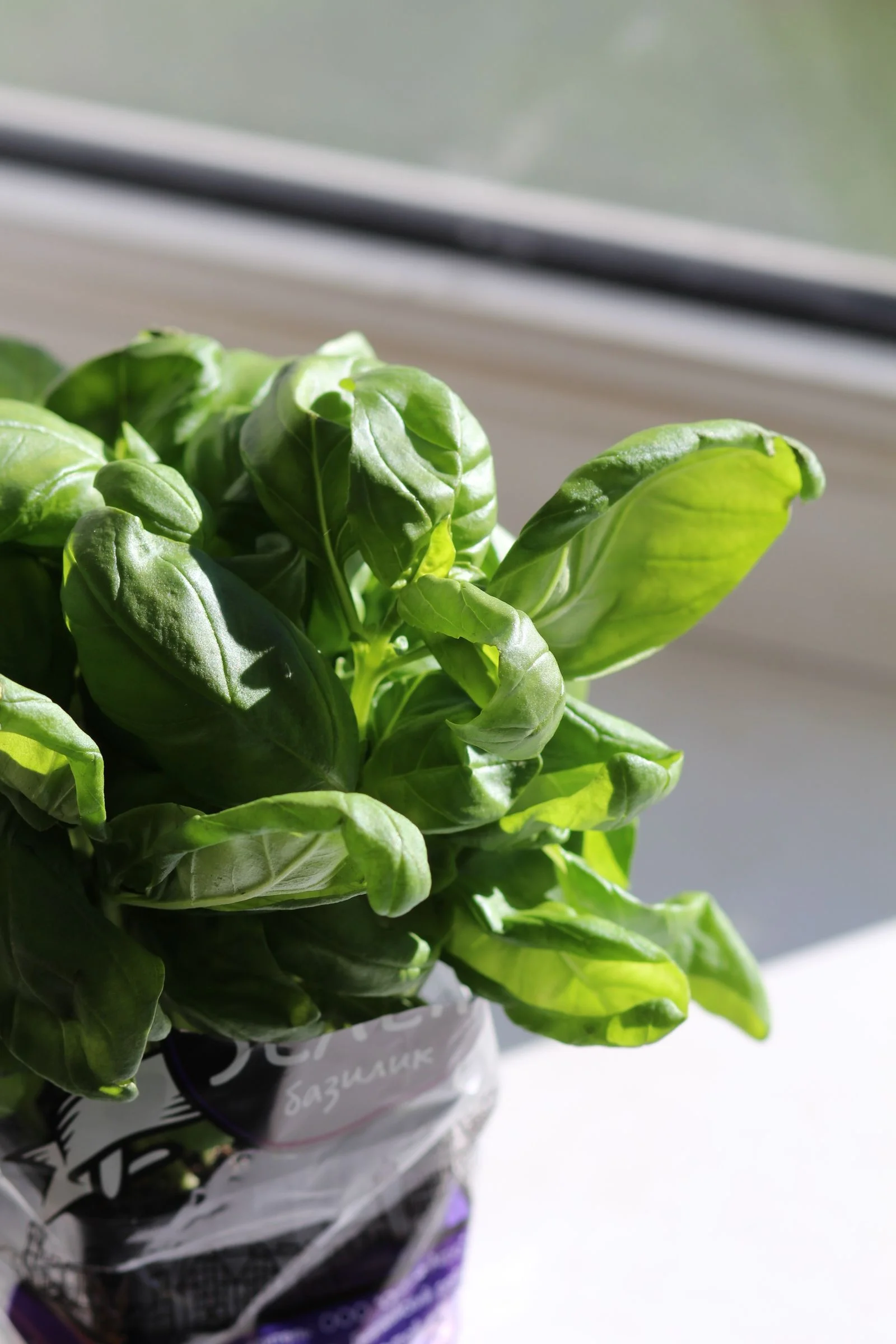
Put the pots on the sunniest sill you have, and rotate them weekly. Herbs need light more than they need anything else, so the sill that gets the morning sun is the garden — not the shady sill by the back door, and not the counter under the cupboard. The photo shows vibrant basil leaves in sunlight on a windowsill, the leaves turned toward the light exactly as a healthy plant should be.
Rotate each pot a quarter turn every week, so the plant grows evenly instead of leaning toward the glass. A plant that leans is a plant reaching for light it is not getting — turn it, and it straightens. If the sunniest sill is also the coldest, move the pots back from the glass at night in winter, and put them back in the morning.
Tip 3 — Small pots with saucers
Small pots with saucers are the right size for a tiny window: a small pot fits the sill, a saucer catches the water, and the sill stays dry. A pot that is too big crowds the window and holds soil that stays wet too long; a small pot dries out faster, which is what herbs prefer. The photo shows a small basil plant in a terracotta pot, the pot itself small enough for a narrow sill — and every pot like it needs a saucer underneath, to catch the water after watering and keep the sill dry.
Choose terracotta if you can: it breathes, it dries out between waterings, and it looks right on a kitchen sill. Put a saucer under every pot, no exceptions — a pot without a saucer drips onto the sill, and a wet sill in a tiny kitchen grows mould. One pot, one saucer, three pots on the sill, and the window stays dry.

Tip 4 — Water when the top inch is dry
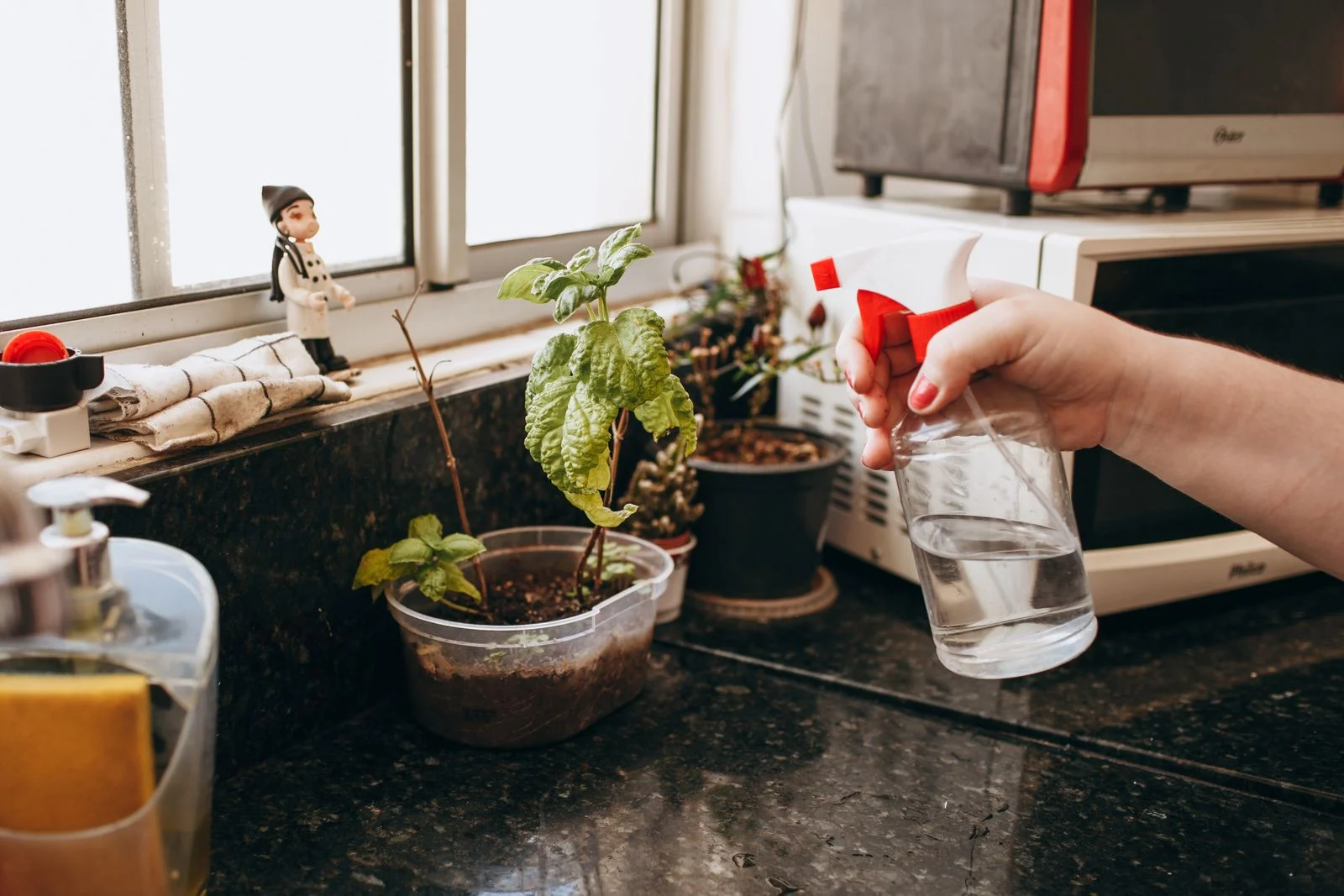
Water when the top inch of soil is dry, and not before. Push a finger into the soil up to the first knuckle: if it feels dry, water; if it feels damp, wait. Herbs die from overwatering far more often than from underwatering, and a tiny pot in a warm kitchen dries out fast — but it also stays wet for days if you water on a schedule instead of by feel. The photo shows a hand misting potted herbs by the kitchen window with a spray bottle, water going onto the leaves and the soil in a light, careful pass.
Water at the soil, not on the leaves, and water until a little runs into the saucer — then empty the saucer, so the pot is never sitting in water. Morning is the best time: the plant drinks all day, and the leaves dry before the evening. A spray bottle is fine for seedlings, but a small watering can at the soil is better for grown plants.
Tip 5 — Snip little and often
Snip little and often, and the plant keeps growing. Take a few leaves from the top of each stem, a little from every plant, every time you cook — and the plant branches out and makes more leaves, instead of growing tall and bare. The photo shows a hand pinching a leaf from a potted basil plant, the snip itself: one leaf, taken cleanly, leaving the stem to branch.
Never strip a plant bare in one cooking session: take a third at most, and leave the rest to grow back. Snip just above a pair of leaves, so two new shoots grow from the cut — that is how a small plant becomes a bushy one. Little and often is the whole harvest plan, and it works from the first week.

Tip 6 — Mint alone
Mint gets its own pot, always. Mint spreads by runners under the soil, and in a shared pot it will take over in a month — crowding out the basil, choking the parsley, and turning one pot into a mint pot with two dead neighbours. The photo shows a single mint plant in a terracotta pot with a mint tag, alone in its pot, exactly as it should be.
Give the mint the smallest pot on the sill, and keep it a little apart from the others so the runners cannot reach them. Mint is the most vigorous herb on the sill and the easiest to grow — which is precisely why it needs its own home. One pot, one mint, and the basil and parsley survive.

Tip 7 — Label your pots
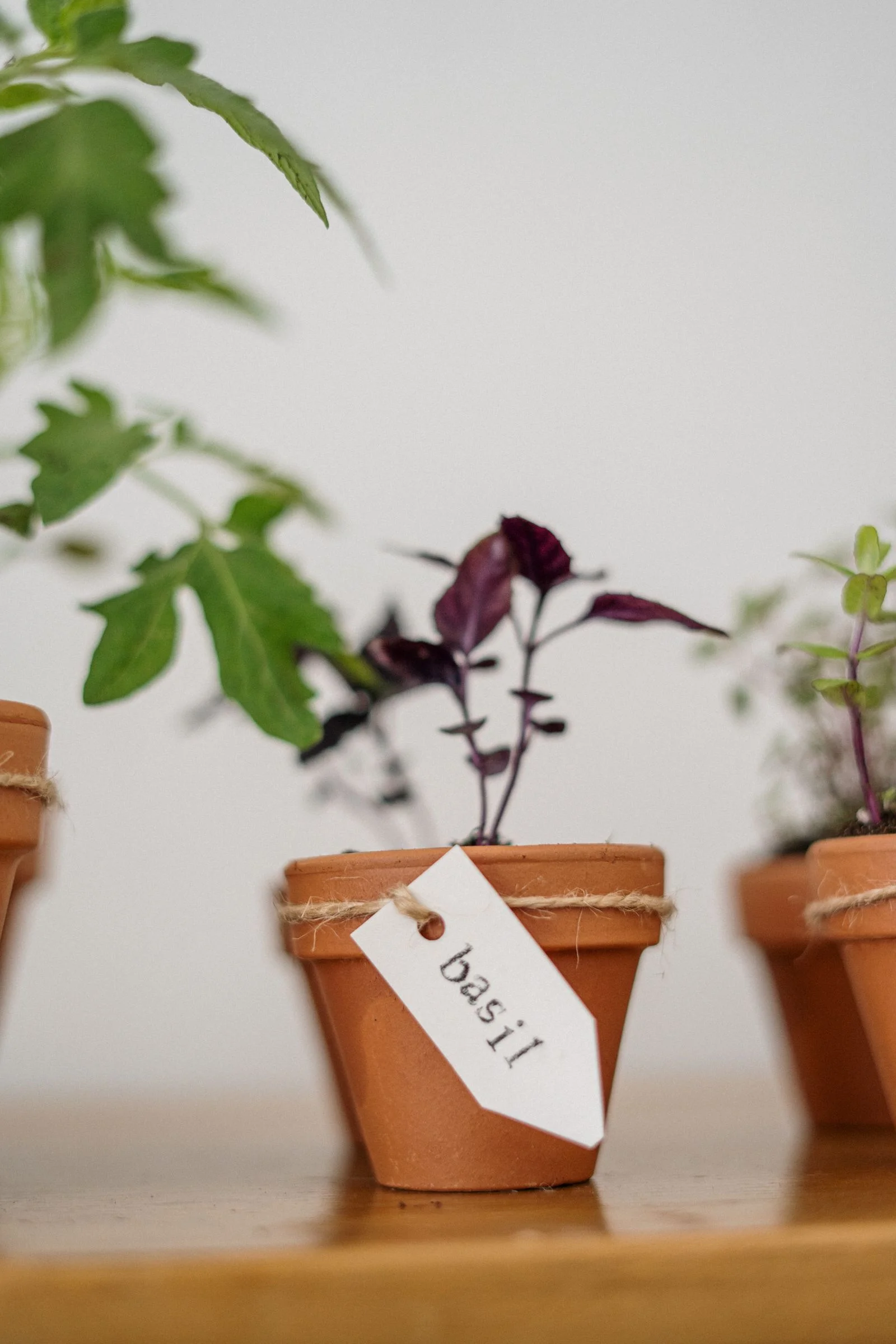
Label your pots, because basil and mint look alike when they are young, and parsley looks like a weed to anyone who did not plant it. A small wooden tag, a handwritten label on a stick, or a strip of masking tape on the pot — the label tells the household which herb is which, so the right leaves get snipped and the wrong plant does not get pulled out as a weed. The photo shows a close-up of a basil plant in a terracotta pot with a handmade basil label, the label readable and the plant clearly named.
Label at planting time, not later: a week after planting, the seedlings all look the same, and the label is the only thing that tells them apart. Keep the label simple — one word, in a hand you can read — and replace it when the ink fades. A labelled garden is a garden that gets used.
Tip 8 — Light monthly feed
Give the herbs a light monthly feed, and they keep producing. A weak liquid feed, half the strength on the bottle, once a month in the growing season — that is all a small pot needs, because the soil in a tiny pot runs out of food fast. The photo shows hands adding soil to a terracotta pot with a small trowel: hands in the soil, refreshing the pot — the same care a monthly feed gives, topping up what a small pot has used up so the herb keeps growing.
Feed only in spring and summer, when the plants are growing, and never in winter, when they are resting. Too much feed is worse than too little: a plant fed weekly grows soft, leggy leaves with little flavour. One light feed a month, and the herbs stay compact and tasty — and if you cook with the herbs the same week you feed them, wait a few days and snip after the feed has washed through.

Tip 9 — Pinch basil flower buds
Pinch the basil’s flower buds off, and the plant keeps making leaves. When basil flowers, it puts its energy into seeds instead of leaves, the leaves turn bitter, and the plant stops growing — so the moment you see a flower bud at the top of a stem, pinch it off between finger and thumb. The photo shows a lush basil plant growing in a terracotta pot, a healthy plant with plenty of leaves — exactly the kind of full, leafy plant that needs its flower buds pinched off, so it keeps making leaves instead of seeds.
Check the basil every few days in summer, when the buds come fast. Pinch the bud and the two leaves just below it, and the stem branches into two new shoots — so the pinching is not just maintenance, it is the harvest. A basil plant that is pinched regularly stays leafy for months; one that is left to flower is finished in weeks.

Tip 10 — Winter: closer to the glass, less water
In winter, move the pots closer to the glass and water less. The light is weaker, the days are shorter, and the plants are growing slowly — so they need every hour of light the window gives, and far less water than they needed in summer. The photo shows a basil plant in a red pot on a window sill with open shutters at dusk: the window and the basil, the shutters open to the evening light, and the dusk light reading as the winter light the plants have to live on.
Push the pots right up to the glass in winter, so they catch the low sun, and keep them away from the radiator — hot, dry air is worse for herbs than cold. Water half as often, only when the top inch is dry, and stop feeding until spring. The plants will grow slowly, and that is fine: a slow plant in winter is a living plant in spring, ready to grow again when the light returns.

Final Thoughts
Small kitchen herb garden ideas for tiny windows work when the garden is small and the habits are steady: basil, mint in its own pot, and parsley on the sunniest sill, in small pots with saucers, watered only when the top inch is dry. Snip little and often, label the pots, feed lightly once a month in summer, and pinch the basil’s flower buds off. In winter, move the pots closer to the glass and water less. The window does not get bigger — it just grows the herbs you cook with, and the kitchen smells like a garden.
What herbs grow best on a kitchen windowsill?
Basil, mint and parsley are the easiest start: they grow well in small pots, they are used in everyday cooking, and they recover fast from snipping. Mint needs its own pot, because it spreads and crowds out its neighbours. Buy small plants, not seeds, for the first garden.
How much sun do kitchen herbs need?
As much as the window gives — the sunniest sill in the kitchen, with the pots rotated weekly so they grow evenly. In winter, move the pots closer to the glass for every hour of light, and accept that they will grow more slowly.
How often should I water windowsill herbs?
Only when the top inch of soil is dry — push a finger in to the first knuckle and check. Water at the soil until a little runs into the saucer, then empty the saucer, and water half as often in winter.
Should I grow herbs from seed or buy plants?
Buy small plants for the first garden: a small plant is cooking within a week, while seeds take a month to become anything you can snip. Grow from seed later, once the first three pots are thriving. Start with three pots: basil, mint in its own pot, and parsley.
Why is my basil flowering?
Basil flowers when it is mature and warm, and flowering turns the leaves bitter and stops the growth. Pinch the flower buds off as soon as you see them, and the plant keeps making leaves for months. Check the basil every few days in summer, when the buds come fast.
How do I keep herbs alive in winter?
Move the pots closer to the glass, water less, stop feeding until spring, and keep them away from the radiator. The plants will grow slowly through winter and pick up again when the light returns in spring. Push the pots right up to the glass in winter, so they catch the low sun.
Save this post on Pinterest for your next kitchen refresh, and read our earlier small kitchen ideas next: Small Kitchen Cooking Ideas For Tiny Kitchens, Cozy Small Kitchen Breakfast Ideas To Start Calm, Small Kitchen Corner Ideas Cosy Coffee Mornings, and Small Kitchen Pantry Ideas Without A Pantry Room.
Written from small-room living experience — every idea here is practical for a tiny kitchen, with a no-drill option wherever drilling is a problem.
Last updated 16 Nov 2026. Refresh in 3–6 months: re-check the pots for root-bound plants, refresh the labels, and move the pots back out as the light returns in spring.




One Comment