
Small Living Room Curtain Ideas That Add Height
Small living room curtain ideas that add height start with one simple trick: hang the curtains higher than the window and let them run to the floor. A rod fixed just above the frame chops the wall in half and makes the window look small; a rod fixed close to the ceiling draws the eye up the whole wall, and the room feels taller even though nothing about the ceiling has changed. It is the cheapest height a small living room can buy — one rod, two panels, and a tape measure.
The ideas below work in that order: height first, then width, then fabric and colour. Measure the window and the wall before you buy, and keep the design simple — in a small room, a plain curtain hung well beats a fancy curtain hung badly.
Last updated 15 Nov 2026. Refresh in 3–6 months: re-check the rod fixings and hem length after washing, and swap the fabric weight when the season changes.

Key Takeaways
- Hang the rod close to the ceiling — about 10 to 15 centimetres above the frame, or as high as the ceiling allows — and let the panels run to the floor.
- Extend the rod 15 to 20 centimetres past the frame on each side, so the open curtains stack on the wall instead of covering the glass.
- Floor-length panels draw one unbroken vertical line from ceiling to floor; short curtains cut the wall and make the room feel smaller.
- Match the curtains to the wall colour for a seamless look, and keep the design simple — no heavy pelmets, no busy patterns.
Hang curtains high and wide
The single most effective curtain trick for a small living room is also the simplest: hang the rod high and make it wide. Fix the rod 10 to 15 centimetres above the window frame — or right up near the ceiling if the room allows — and extend it 15 to 20 centimetres past the frame on each side. The photo shows a minimalist living room with white sofas and floor-to-ceiling curtains spanning the whole window wall — the curtains run from ceiling to floor across the full wall, and the high-and-wide hang is clear at a glance.
When the curtains are open, they stack on the wall instead of covering the glass, so the window looks bigger and more light comes in. Measure twice before you drill: mark the rod height on the wall with painter’s tape and live with it for a day before you fix anything.

Light sheer curtains
Sheer curtains are the best friend of a small living room that needs light more than it needs privacy. They soften the daylight coming through the window without blocking it, so the room stays bright and airy while the window still feels dressed. The photo shows sun shining through elegant white sheer curtains in a cozy modern interior — the sheers tied back, daylight streaming through into the room.
Use sheers on their own in a room that faces a garden or a quiet street, where daytime privacy is not a worry. In a street-facing room, layer them: sheers for the day, heavier curtains drawn at night. Keep the sheers plain — no pattern, no heavy heading — so the light does the work.

Floor-length curtains
Short curtains cut a wall in half, and in a small room that cut makes the ceiling feel lower than it is. Floor-length curtains do the opposite: one unbroken vertical line from the rod to the floor, pulling the eye up the whole wall and making the room feel taller. The photo shows tall floor-length sheer curtains beside tall windows in a minimalist interior — a darker, moodier space that reads more like a stairwell or hall than a living room, but the line the curtains draw is the same.
Let the panels just touch the floor — a “kiss” of the floor, not a puddle — so they look tailored rather than sloppy, and they do not gather dust. If the curtains are too long, hem them; a curtain that pools on the floor in a small room looks like a mistake, not a style choice.

One colour with the walls
When the curtains are the same colour as the walls, the boundary between them disappears — and in a small room, removing a visual boundary makes the whole wall feel longer and the room feel bigger. A cream curtain on a cream wall, a soft grey on a soft grey wall: the eye moves across the room without stopping, and the window becomes part of the architecture instead of a framed hole in it. The photo shows a cream curtain knotted to one side against a matching cream wall in a bright living room corner with a plant and table — the curtain genuinely blends into the wall for a seamless look.
Choose a shade that matches the wall closely, not just roughly — a curtain a shade darker or lighter still reads as a contrast. If the walls are white, a warm white curtain works better than a bright white one, which can look grey against the wall.

Rod extends past the window
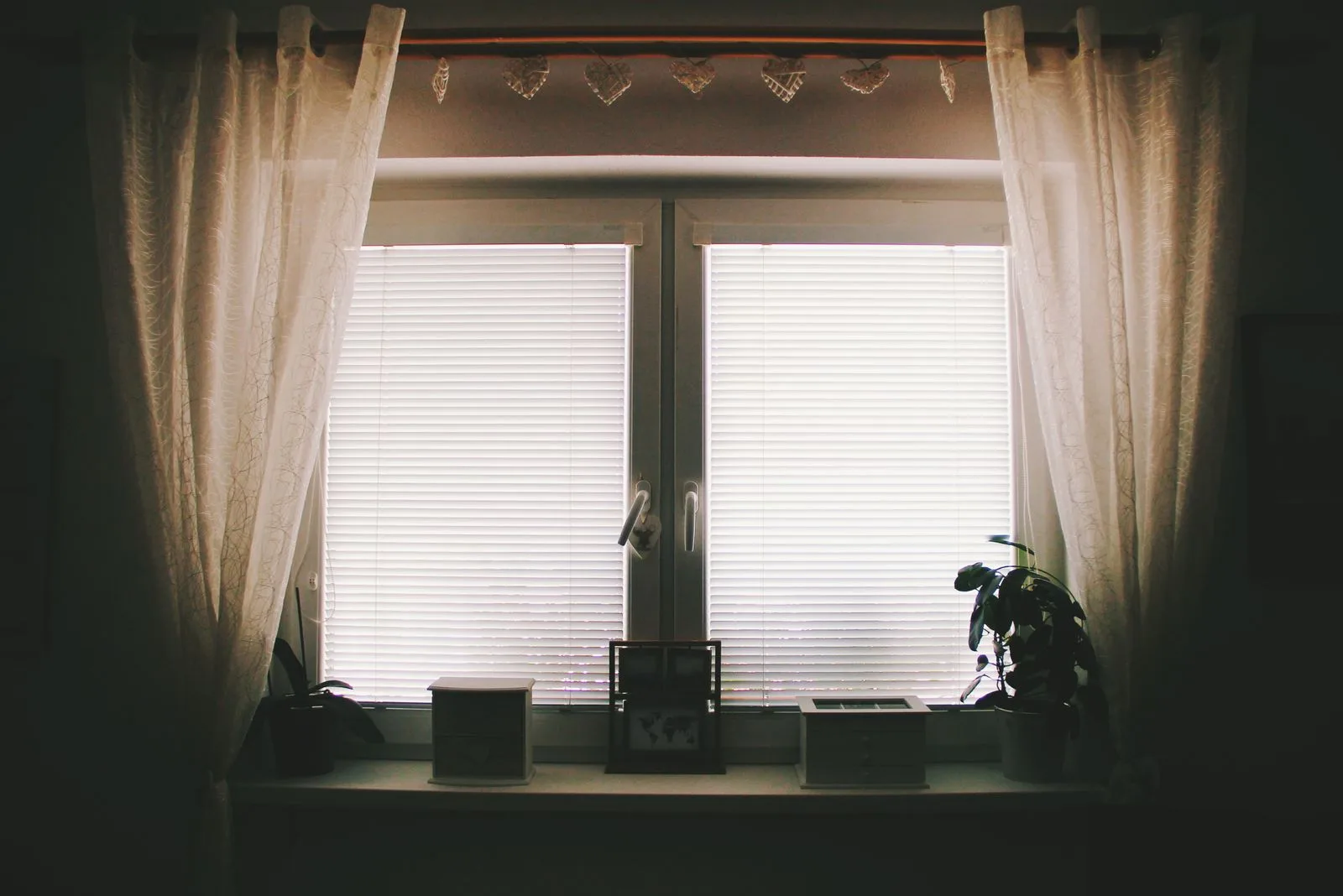
A rod that ends at the window frame wastes the trick: when the curtains are open, they bunch over the glass, the window looks smaller, and the room loses light. Extend the rod 15 to 20 centimetres past the frame on each side, and the open curtains stack on the wall, clear of the glass — the window looks wider, the room gets more daylight, and the wall feels longer. The photo shows a curtain rod extending well past the window frame with sheer curtains pulled to the sides over blinds — the rod clearly extends past the frame on both sides, with the curtains stacked clear of the glass.
This is the cheapest change in the whole post: a longer rod costs little more than a short one, and it works with the curtains you already own. Measure the frame, add 30 to 40 centimetres in total, and buy the rod to that length.
Layer sheers + heavier curtains
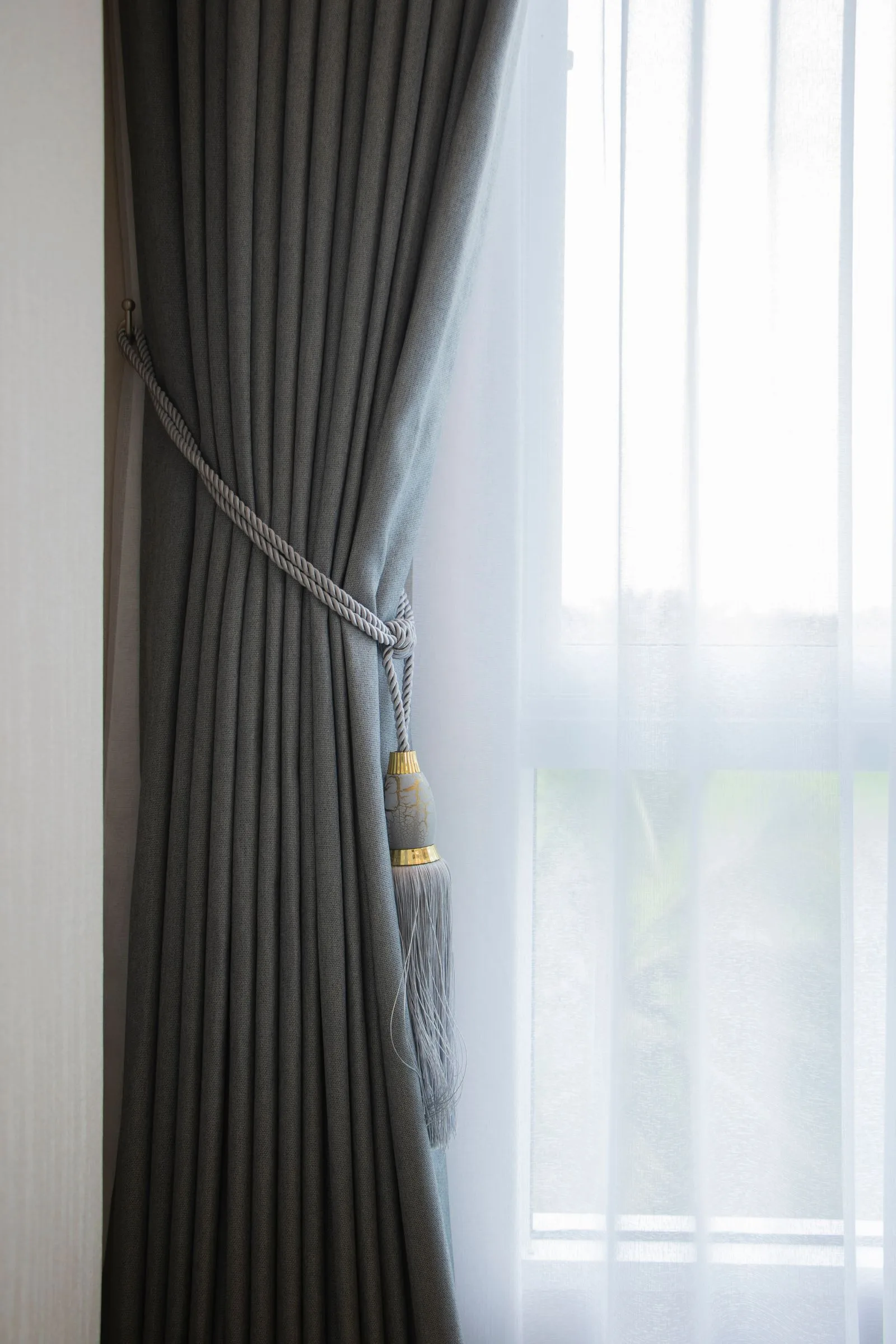
One layer of curtains can only do one job; two layers can do two. A sheer on the back rod lets daylight through and gives daytime privacy, and a heavier curtain on the front rod closes at night for warmth and darkness. The photo shows both layers clearly on one window: a soft grey drape tied back with a tassel over a sheer white curtain at a bright window — the heavier grey drape and the sheer white layer side by side.
Hang the sheer on a slim track or a second rod behind the main one, and keep the heavier panels plain so the two layers do not fight each other. In winter the heavier layer earns its keep: drawn at dusk, it blocks the draught from the window and keeps the room warmer.
No heavy pelmets, keep it simple
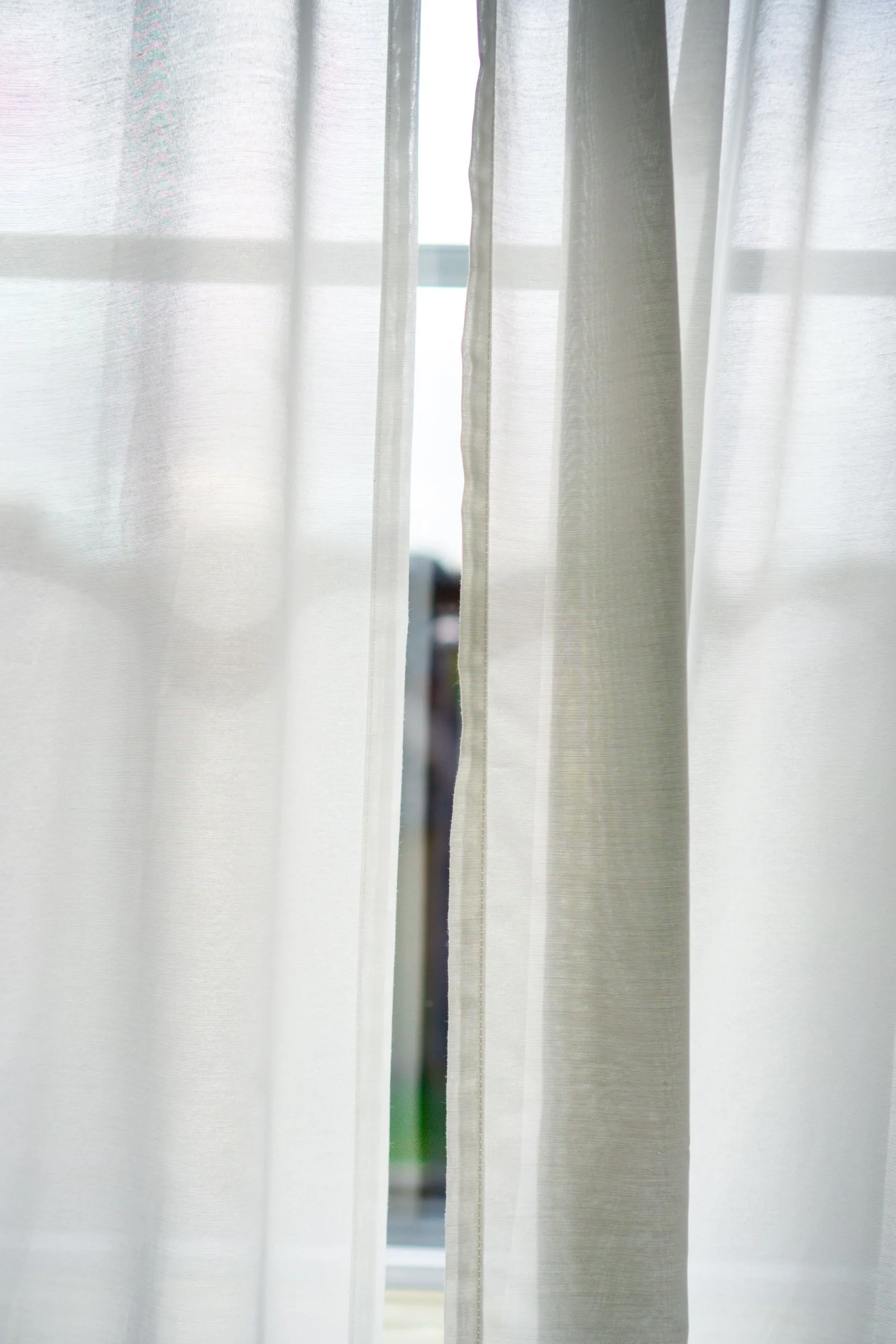
A heavy pelmet or a fussy valance is a horizontal band across the top of the window — and in a small room, a horizontal band is the last thing the wall needs, because it chops the height you just worked to create. Skip it. A plain rod, a simple heading, and panels that hang straight do more for a small room than any amount of decoration. The photo is a close-up of one plain white sheer curtain in soft daylight — simple and unadorned, with no valance and no room context, and the simplicity is the whole point.
If you want interest, get it from the fabric — a linen texture, a soft weave — not from the heading. Clean, minimal styles like wave or simple pleated curtains keep the window looking streamlined, and they are easier to wash and rehang, too.
Curtains to hide storage / divide a corner
A curtain does not have to hang on a window. Hung across a corner, it hides the storage behind it — the boxes, the vacuum, the drying rack — and turns an awkward angle into a calm wall. Hung across a room, it divides one space into two without a wall, a door, or any building work. The photo shows a beaded curtain used as a room divider screen — beaded rather than fabric, and a close-up with no storage or divided corner visible — but it shows the principle: a curtain can mark a boundary without a wall.
Use a ceiling track or a tension rod for a divider curtain, and choose a fabric heavy enough to hang straight — a light sheer will billow and look temporary. Keep the curtain the same colour as the wall and the storage behind it disappears; keep it a feature colour and it becomes the room’s divider by design.

A clean neat drape
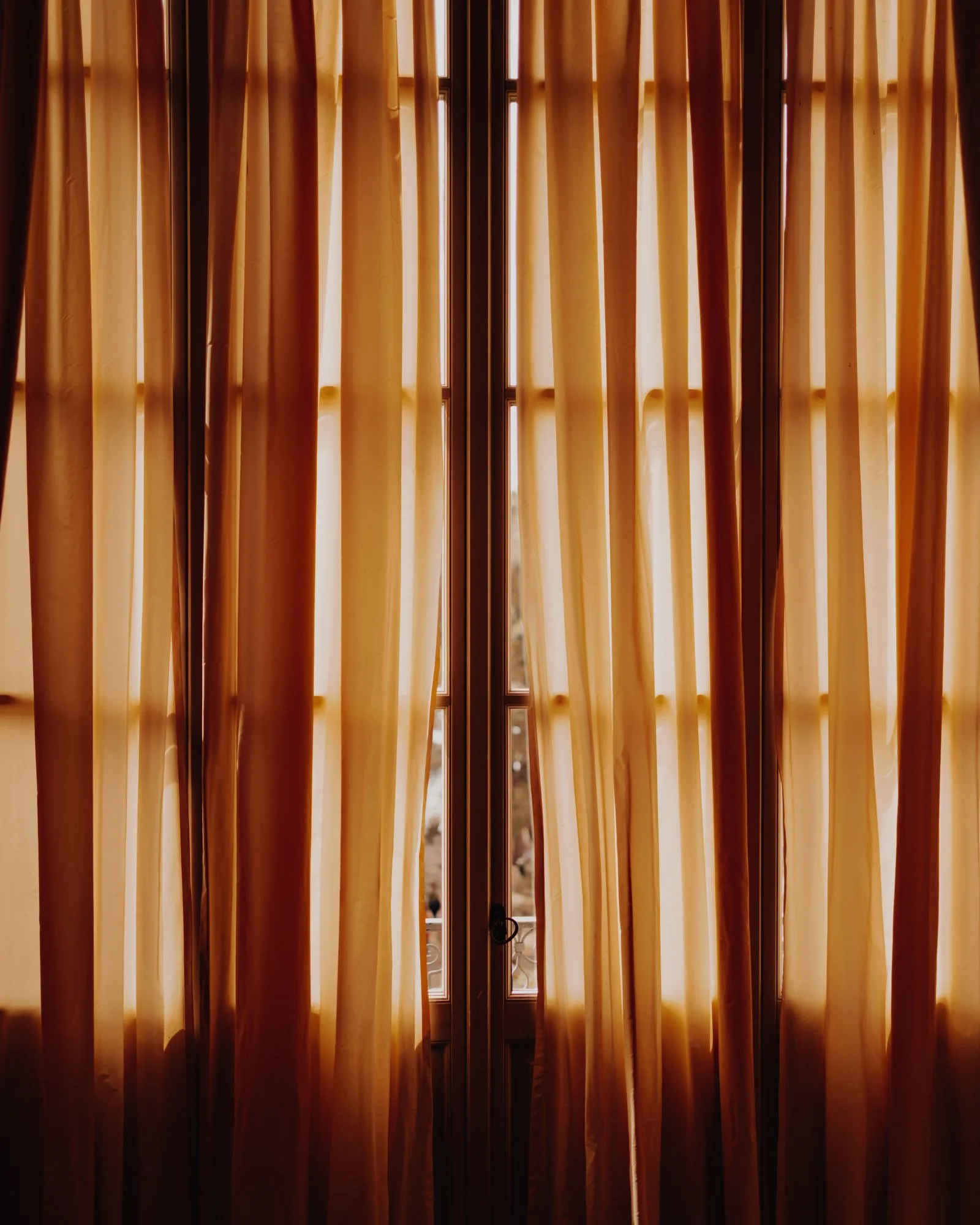
A curtain that hangs in straight, even folds makes the whole window look taller, because the eye follows the vertical lines from the rod to the floor without stopping. A curtain that bunches, twists or hangs unevenly does the opposite — it breaks the line and the wall feels shorter. The photo shows warm golden curtains hanging in neat straight folds over tall windows — smooth, evenly folded, with a clean, tidy drape.
Get the drape right by buying enough fabric: panels about 1.5 to 2 times the width of the rod gather into even folds, while panels the same width as the rod hang flat and look stretched. Iron or steam the panels after washing, and train the folds by tying the curtains loosely for a day after hanging so they fall in straight lines.
Right fabric weight for the season
Curtains are seasonal, and the wrong weight at the wrong time of year works against the room. Light linen and cotton sheers suit spring and summer — they let the light in and keep the room feeling airy. Heavy lined velvet and thermal panels suit winter — they block the draught, hold the warmth, and make the room feel cosy when the evenings turn cold. The photo shows the winter-weight option: a bright living room with heavy blue velvet floor-length curtains, a white sofa and a city view.
Swap the panels twice a year, when the season changes, and store the off-season set flat in a labelled box. One rod, two sets of panels, and the window works all year — light in summer, warm in winter, and always hung high and wide.

How high should I hang curtains in a small living room?
As high as you can — close to the ceiling, or about 10 to 15 centimetres above the window frame at the lowest. A rod fixed just above the frame chops the wall in half; a rod near the ceiling draws the eye up and makes the walls feel taller.
How wide should the curtain rod be?
Extend it 15 to 20 centimetres past the window frame on each side, so the open curtains stack on the wall instead of covering the glass. That makes the window look wider and lets in more daylight — and it works with the curtains you already own.
Should curtains touch the floor in a small room?
Yes — floor-length panels that just touch the floor create one unbroken vertical line and make the ceiling feel taller. Short curtains cut the wall and make the room feel smaller, so hem long panels to a “kiss” of the floor rather than letting them pool.
Are sheer curtains good for small living rooms?
Yes — sheers soften the daylight without blocking it, so the room stays bright and airy. Use them alone where daytime privacy is not a worry, and layer them with heavier curtains for the evening in a street-facing room.
Should curtains match the wall colour?
Matching the curtains to the wall colour removes a visual boundary and makes the room feel bigger, especially in a small living room. Choose a shade that matches closely — a curtain a shade off still reads as a contrast — and keep the design plain.
What fabric is best for small living room curtains?
Light linen, cotton and sheers for an airy look in spring and summer; heavier lined velvet or thermal panels for warmth and draught-blocking in winter. Swap the panels twice a year and store the off-season set flat in a labelled box.
Final Thoughts
Small living room curtain ideas that add height all come down to one line: an unbroken vertical from the ceiling to the floor. Hang the rod high and wide, run the panels to the floor, match the colour to the walls, and keep the design simple. Sheers let the light in by day, heavier layers close out the cold at night, and a curtain across a corner hides the storage or divides the room without a wall. The ceiling does not get higher — the curtains just make it look that way.
Save this post on Pinterest for your next living room refresh, and read our earlier living room ideas next: Cozy Small Living Room Ideas For Calm Evenings, Small Living Room Plant Ideas That Add Real Calm, Small Living Room Corner Ideas That Waste No Space, and Cozy Small Living Room Ideas For Tiny Apartments.
Written from small-room living experience — every idea here is renter-friendly and needs no renovation.
Further reading: HGTV’s do’s and don’ts of window treatments and IKEA’s how to hang curtains beautifully: 9 easy tips show more high, wide, and layered curtain ideas for the same small space.
Frequently Asked Questions
Should I use a curtain rod or a ceiling track in a small living room?
Use a rod for a window, because it is cheap, easy to fit, and simple to change. Use a ceiling track when the curtain must hang from the ceiling, such as a divider curtain or a window with no wall above it. Tracks also sit closer to the ceiling, so the vertical line stays unbroken and the room looks taller.
How much wider should curtain panels be than the rod?
Buy panels that total about one and a half to two times the rod width, so the fabric gathers into neat, even folds when closed. Panels the same width as the rod hang flat and look thin, with no drape to draw the eye upward. Measure the rod first, then check the panel width on the label before you buy.
Can curtains make a low ceiling look higher even without tall windows?
Yes, because the eye follows the long vertical line of the curtain, not the height of the glass. Hang the rod close to the ceiling, use floor-length panels in one colour, and keep the drape neat and simple. The window itself may be small, but the curtain wall reads as one tall, unbroken surface.
How do I layer sheer and heavy curtains without blocking the light?
Hang the sheer on the back rod or track, closest to the window, and the heavier panels on the front rod. During the day, pull the heavy panels fully to the sides, so only the sheer covers the glass and daylight still flows in. At night, close the heavy layer for privacy and warmth, and the room still feels tall.
When should I swap curtain fabric weight for the season?
Swap the panels twice a year, when the season changes: light linen, cotton, or sheers for spring and summer, and heavier lined velvet or thermal fabric for autumn and winter. Store the off-season set flat in a labelled box, so it stays clean and crease-free. Re-check the hem length after washing, because some fabrics shrink.


One Comment