

Small Space Storage Systems That Stay Tidy Daily
A small home never stays tidy by accident. With less square footage, every stray sock and unopened parcel is on full display, and a room can tip from cozy to chaotic in a single afternoon. The good news is that staying tidy in a small space is not about owning less or cleaning more — it is about building small systems that make tidying the easy default.
The ten systems below are made for real rented homes: no drilling, no built-ins, no big renovations. Each one is simple enough to set up in an evening and strong enough to keep your space calm day after day.
Key Takeaways
- Sort by category into labelled baskets, with one basket for one category.
- Follow one-in-one-out for clothes, mugs, and books.
- Keep a daily-use caddy for chargers, keys, and skincare that returns to one spot.
- Run a weekly ten-minute reset on the same day each week.
- Give every item a named home in a zone, and measure before buying anything new.

1. Sort by category into labelled baskets (one basket = one category)
The biggest tidying enemy in a small space is the “miscellaneous” pile. When chargers, batteries, spare keys, and hand cream all live in one junk drawer, putting anything away becomes a five-minute excavation. Instead, give every category its own basket: one for tech bits, one for stationery, one for first aid, one for sewing bits. When every item belongs to a category and every category has a basket, tidying becomes a two-second decision.
Keep each basket small enough to lift with one hand — a basket you can carry gets emptied and refilled, while a giant one becomes a junk vault. Measure your shelf depth and height before buying so baskets slide in without a fight. Renters can simply line them up on existing shelves or inside cupboards; a strip of masking tape and a marker makes a perfectly good label that peels off when you move.

2. Follow one-in-one-out for clothes, mugs, and books
Storage systems quietly fail when the volume keeps growing. One-in-one-out is the simplest brake: every time something new crosses your threshold, something old leaves. A new mug means an old mug goes to the charity bag; a new paperback means a finished one gets passed on. Your shelves stay at exactly the capacity your small space can handle.
Start with the three categories that multiply fastest — clothes, mugs, and books — and keep a small donation bag tucked in the wardrobe so the “out” half is effortless. It takes about ten seconds of thought at the moment of buying, and it is far easier than a painful twice-a-year clearout. Your storage stops being a pressure valve and starts being a stable system.

3. Keep a daily-use caddy (chargers, keys, skincare) that returns to one spot
The things you touch ten times a day — phone charger, keys, lip balm, hand cream, earbuds — are exactly the things that end up scattered across every surface. A daily-use caddy corrals them into one portable container that lives in a single fixed spot, like a hallway shelf or bedside table. When you need something, you take the caddy; when you are done, the caddy goes home.
Pick one with a handle so it travels easily from room to room, and keep it small enough that it cannot collect clutter of its own. The magic is the fixed home: once your brain learns “keys live in the caddy by the door,” you stop losing ten minutes hunting for them. For renters, this single habit replaces the need for hooks drilled into walls.
4. Decant into small matching containers
Bulky packaging is a space thief. Cereal boxes, rice bags, and cleaning-product bottles are all shaped for supermarket shelves, not your cupboards — and their mixed colors make even a tidy shelf look noisy. Decanting dry goods and refills into small matching jars and bottles lets you use every centimeter of shelf depth and turns open storage into something calm to look at.
Start with one shelf, not the whole kitchen, so the habit sticks. Square or straight-sided containers waste less space than round ones, and clear jars mean you can see at a glance what needs replacing. Measure the shelf height before you buy so lids clear the shelf above — in a small rental kitchen, a centimeter of clearance matters.

5. Give every item a named home — set up zones
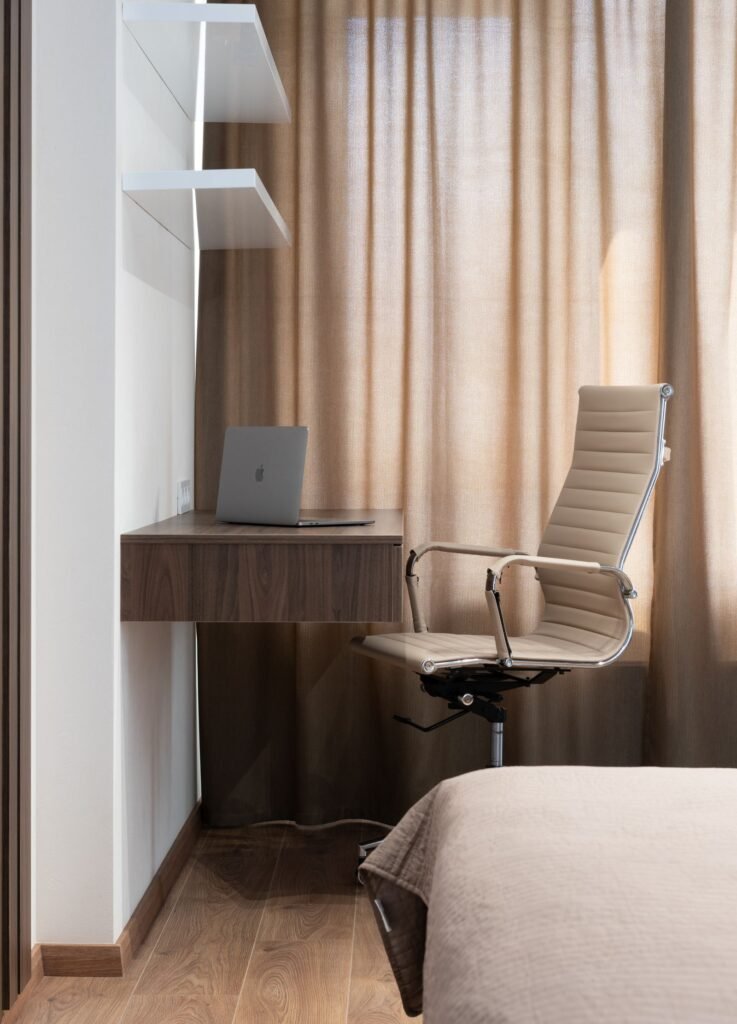
“Put it away” fails when “away” is vague. Zones fix that by dividing your small space into named territories: an entry zone for coats, bags, and shoes; a work zone for laptop and paperwork; a rest zone for blankets and books. Each zone holds only the items that belong to the activity happening there, so nothing migrates to the wrong corner.
Define zones with furniture and rugs rather than paint or partitions — a small bench marks an entry zone, a tray on the coffee table marks the reading zone. When something drifts, its zone tells you exactly where it goes back. This is the system that makes all the others work, because every basket, caddy, and container gets its zone address.

6. Run a weekly 10-minute reset on the same day each week
Even the best systems drift. A weekly reset catches the drift before it becomes a weekend-long project: set a timer for ten minutes and return every stray item to its zone, empty the donation bag spot, and wipe one surface. Because everything already has a home, ten minutes is genuinely enough — you are returning things, not reorganizing.
Anchor it to the same day and the same trigger each week, like Sunday evening after dinner or Saturday morning before coffee. The routine matters more than the day. In a small space, this single habit is the difference between a home that feels calm on autopilot and one that slowly slides until tidying feels overwhelming.

7. Fix the laundry flow (hamper spot, never a floor pile)
The floor pile is a system failure, not a character flaw — it means dirty laundry has no proper home. Give the hamper one fixed, sensible spot: beside the wardrobe, in the bathroom corner, or wherever clothes actually come off. When the hamper is exactly where the pile used to form, clothes go in the hamper by default.
Choose a slim hamper that fits your gap — measure the space between furniture first, since laundry corners in small flats are often oddly sized. If you sort lights and darks, two slim hampers side by side take up barely more floor than one round basket. Wash on a regular rhythm so the hamper empties before it overflows, and the floor stays permanently clear.

8. Keep a cleaning caddy in one cupboard
Cleaning supplies scattered under the sink, behind the toilet, and on top of the washing machine mean cleaning never quite happens — gathering everything is half the chore. One caddy holding your all-purpose spray, cloths, a small brush, and bin bags turns cleaning into a grab-and-go job. Store it in a single cupboard, ideally central to the flat, so it is always within reach.
Keep the kit minimal: in a small space you need far fewer products than the adverts suggest. A renter-friendly bonus — because nothing is mounted or plumbed in, the whole caddy moves with you. Refill cloths and sprays during your weekly reset so the caddy is always ready, and wiping a surface becomes a two-minute task instead of a postponed one.

9. Move spare and seasonal boxes out of daily reach
Daily storage and deep storage are different jobs, and mixing them is why cupboards burst. Spare bedding, seasonal clothes, holiday decorations, and rarely used gadgets belong out of your daily reach — on top of the wardrobe, under the bed, or in the highest cupboard shelf. Your everyday shelves then hold only what you actually touch each week.
Use sturdy boxes with lids so stacks stay stable, and label every box on two sides so you can identify it without pulling it down. Measure the under-bed or wardrobe-top clearance before buying boxes; in rentals, these awkward gaps are free storage real estate. Rotate seasonally: when winter coats come down, summer boxes go up.

10. Measure before buying anything new
The number-one cause of storage chaos in small homes is storage that does not fit. A basket that is two centimeters too wide, a box that will not clear the shelf above, a hamper that blocks the door — each one becomes clutter instead of a solution. The ten-second habit of measuring first saves you from the most common small-space mistake.
Keep a tape measure in your daily caddy or use the measure app on your phone, and note the three numbers that matter: width, depth, and height of the gap. Snap a quick photo of the shelf with the measurements written on masking tape stuck nearby. Renters especially benefit, since you cannot trim or rebuild — the fit has to be right off the shelf.
Final Thoughts
None of these systems asks for much — a few baskets, one caddy, ten minutes a week. Their power is that they work together: categories make labelling easy, zones give every container an address, the weekly reset keeps it all honest, and measuring first means everything fits. Start with just one or two systems this week, and your small space will start staying tidy on its own.
What is the simplest daily system for a small home?
One basket per category, one daily-use caddy that always returns to the same spot, and a named home for every item. Sort by category first, keep the caddy for chargers, keys, and skincare in one place, and give every item a named home in a zone so tidying becomes the easy default every day.
How does one-in-one-out work in practice?
When a new item in a category comes in, one old item in the same category goes out, so the total never creeps up. Apply it to clothes, mugs, and books, and keep one basket per category so the rule is easy to see. If the basket is full, something leaves before anything new goes in.
How do you stop the laundry and cleaning clutter?
Fix the flow, not the pile: a fixed hamper spot, a cleaning caddy in one cupboard, and no floor piles. Put the laundry hamper where clothes actually come off, keep the cleaning caddy in one cupboard so it always returns to the same spot, and give every item a named home so nothing lands on the floor.
How long should a weekly reset take?
Ten minutes on the same day each week is enough if daily items already have homes; it is a reset, not a deep clean. Run it on the same day each week, return the daily-use caddy to its spot, clear the landing strip, and put anything without a home back in its zone so the week starts tidy.
Where should spare and seasonal items go?
Out of daily reach, in labelled boxes, so everyday storage stays for everyday items only. Store spares and seasonal items in labelled boxes out of daily reach, keep one basket per category, and measure before buying any new storage so the everyday zones never fill up with things you rarely use.
Related reading: Studio Apartment Storage Ideas That Feel Cozy, Small Space Storage Ideas That Use Every Wall, and Hidden Storage Ideas For Small Spaces That Work
Save this tidy system on Pinterest, then read a related storage post to set up your next zone.
More inspiration: House Beautiful’s decluttering habits for small spaces and IKEA’s small one-room home ideas.




8 Comments