Small Space Shoe Storage Ideas That Work Well
Small space shoe storage ideas that work start with one honest rule: shoes only stay where they have a home. In a small home, shoes are the fastest clutter there is — a pair by the door becomes three, then a pile, then a trip hazard. The fix is not a bigger cupboard. It is a limit at the door, slim storage that fits the walkway, and a weekly reset that keeps strays from settling.
Start at the door, then use the hidden spots — under the bed, behind a door, on a wall — for the pairs you do not wear every day. Every idea below is renter-friendly, needs no drilling or renovation, and works in a hallway, a bedroom corner, or a studio flat.
Last updated 10 Nov 2026. Refresh in 3–6 months: re-check rack widths against your entryway and swap seasonal pairs with the weather.

Key Takeaways
- Set a one-pair limit by the door — every extra pair needs a real home elsewhere.
- Slim beats deep: measure the walkway before buying any rack or cabinet.
- Use hidden spots (under the bed, behind doors, on walls) for off-season and rarely worn pairs.
- A weekly shoe reset keeps the system working; without it, any rack fills up again.
Set a one-pair rule by the door with a tray or rack limit
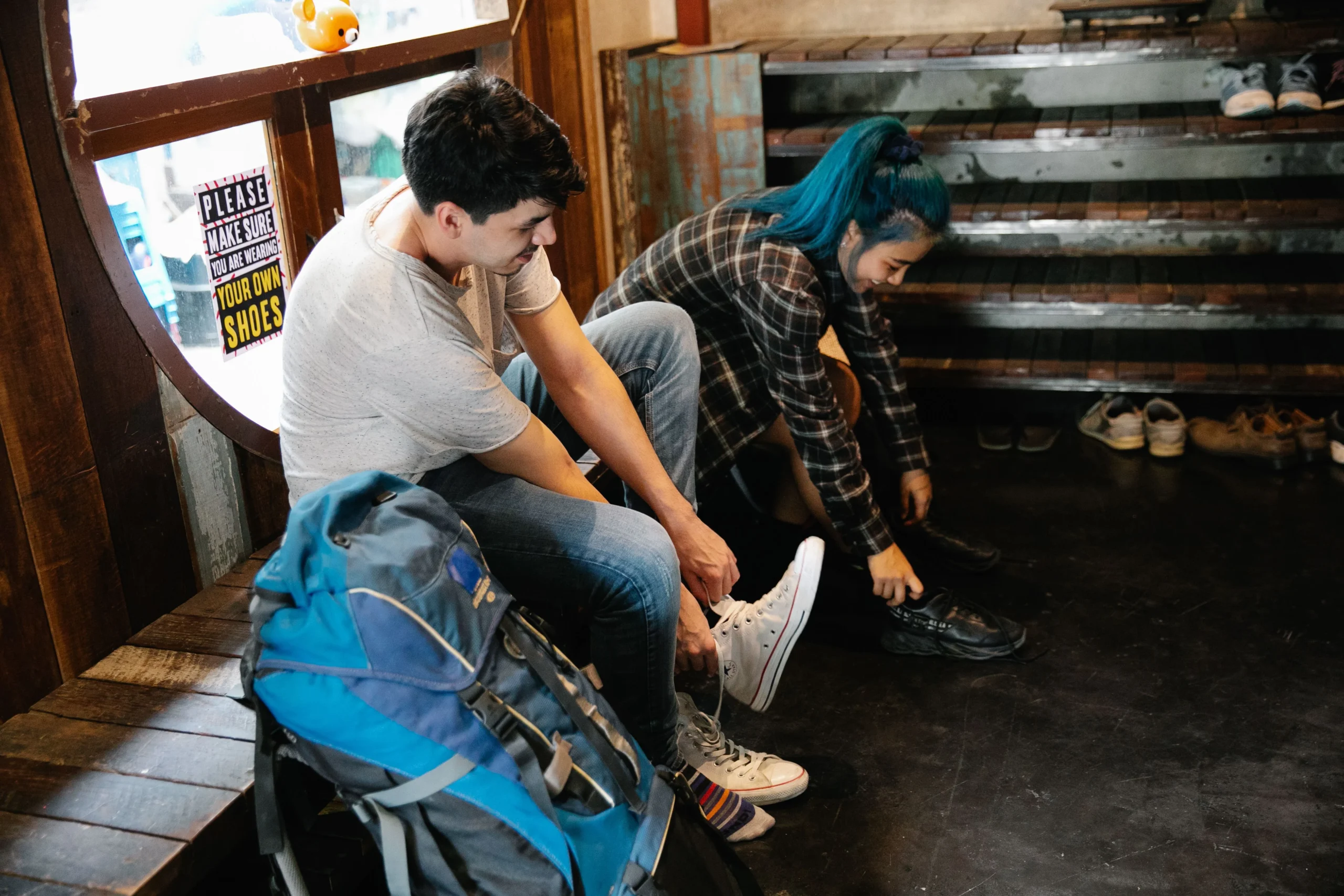
The door is where shoes multiply, so it is where the limit has to live. Decide how many pairs may sit by the door — one pair per person is a good start — and give that limit a physical boundary: a tray, a small rack, or a marked mat. When the tray is full, no more pairs stay out; the next pair goes to its home.
The rule works because it is visible. Everyone can see when the tray is full, so nobody has to be told. Keep the tray shallow and easy to wipe, since door shoes bring in the most dirt, and empty it of mud and leaves as part of the weekly reset.

Choose a slim shoe rack over a deep cabinet, and measure the walkway
A deep shoe cabinet looks tidy in a photo and blocks the hallway in real life. A slim rack — shallow enough to hug the wall — holds the same everyday pairs without narrowing the path you walk every day. Measure the walkway first: mark the rack’s footprint with tape and walk past it carrying bags before you buy. IKEA’s small one-room home ideas offer more inspiration for tight spaces.
Leave enough room to pass comfortably without turning sideways. If the rack forces a sidestep, it is too deep, however good it looks. A slim rack with two or three tiers is usually enough for daily pairs; the rest belong in hidden storage.

Hang an over-door shoe organizer behind the entry or bedroom door
The back of a door is free storage hiding in plain sight. An over-door shoe organizer — the pocket kind that hooks over the top of the door — holds several pairs without taking a single centimetre of floor. It works behind the entry door, a bedroom door, or a cupboard door, and it comes down without a mark when you move out.
Use the top pockets for the pairs you reach for most, and the lower pockets for lighter pairs. Keep heavy boots out of it; the organizer is for trainers, flats and sandals. If the door does not close smoothly with it on, move it to a door with more clearance.
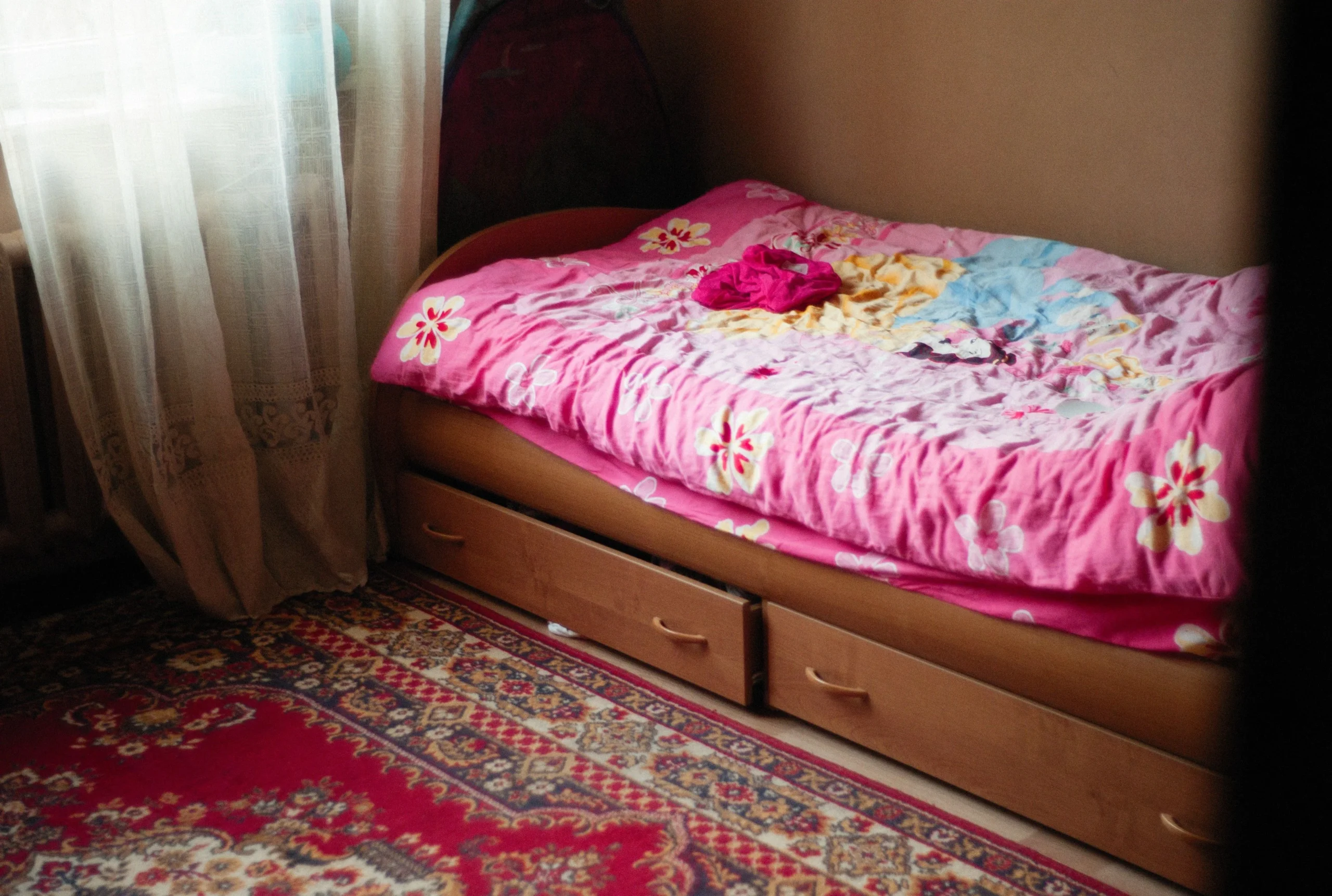
Store off-season pairs in under-bed shoe boxes
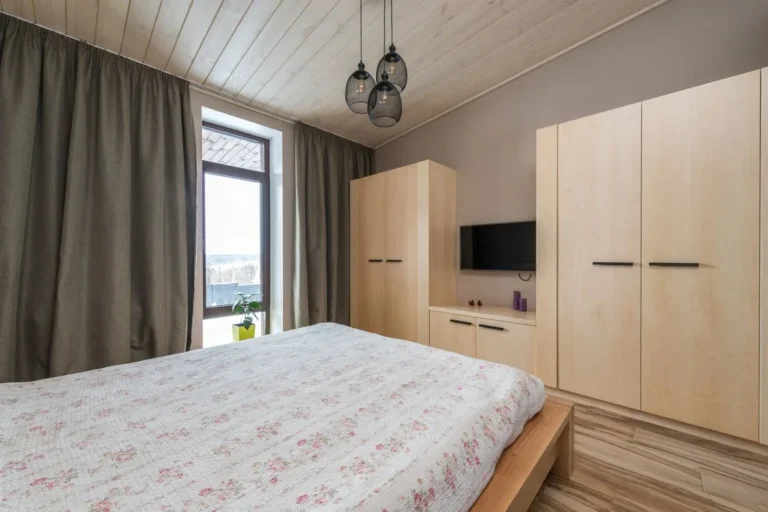
Off-season shoes do not need to be near the door — they need to be findable in three months. Under-bed shoe boxes keep winter boots out of the way in summer and sandals out of the way in winter, while using space that would otherwise sit empty. Flat boxes slide under most beds and keep dust off the pairs inside. Apartment Therapy’s small bedroom design ideas show more ways to use hidden bedroom storage.
Label each box by season and contents, and put the box you will need first at the front. When the season changes, swap the boxes: the incoming season comes out, the outgoing season goes under the bed. One swap, twice a year, and the door stays clear.
Use stackable clear-front shoe boxes so you can see every pair
Opaque boxes hide shoes so well that you forget you own them — and buy another pair just like them. Stackable boxes with a clear front solve that: you can see every pair at a glance, pull out one box without unstacking the rest, and keep the stack neat. They suit wardrobes, shelf tops and under-bed storage alike.
Stack no higher than you can safely reach, and keep the heaviest pairs at the bottom so the stack stays stable. One box per pair keeps things simple; stuffing two pairs into one box is how the system starts to fail.

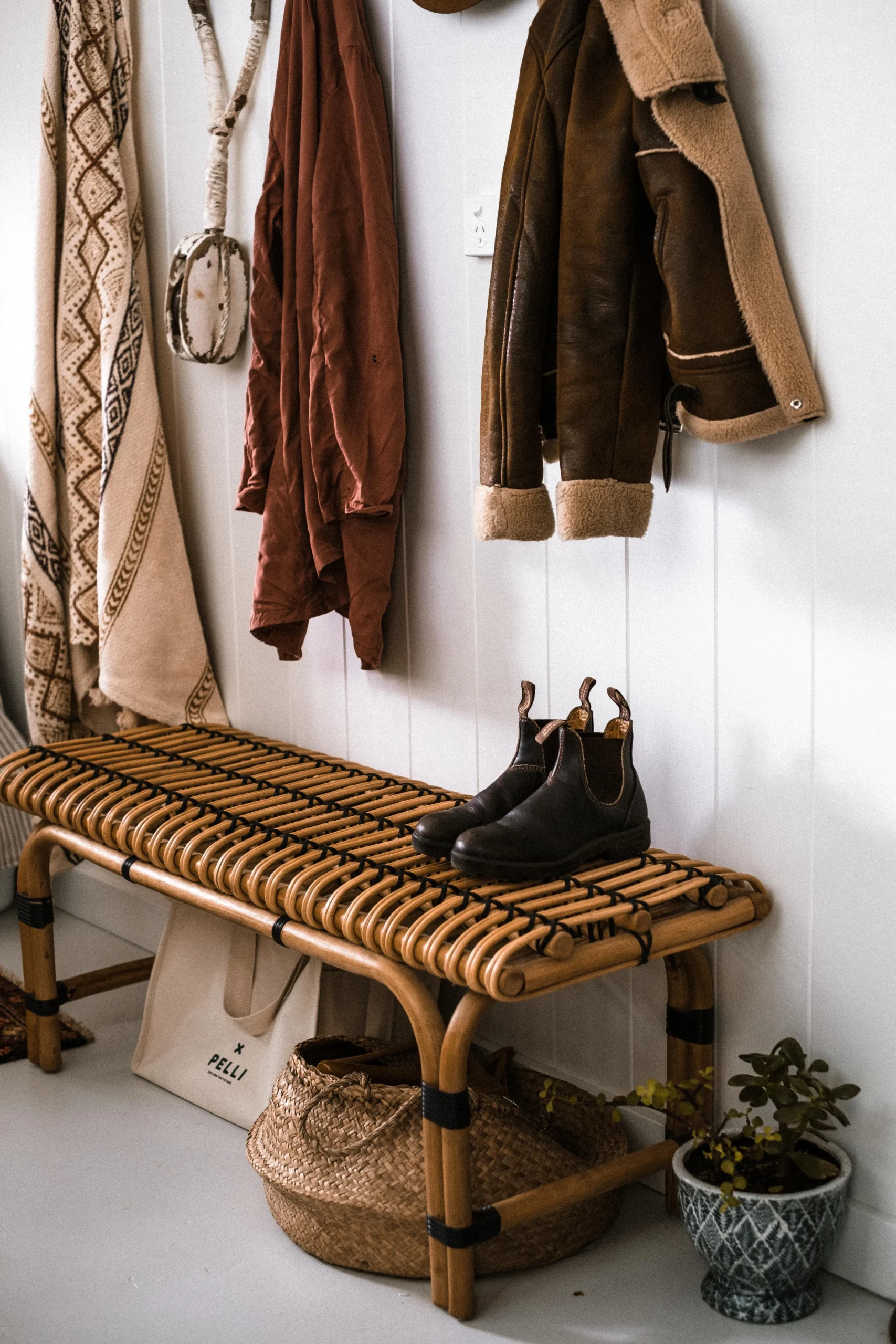
Add a shoe bench with storage underneath
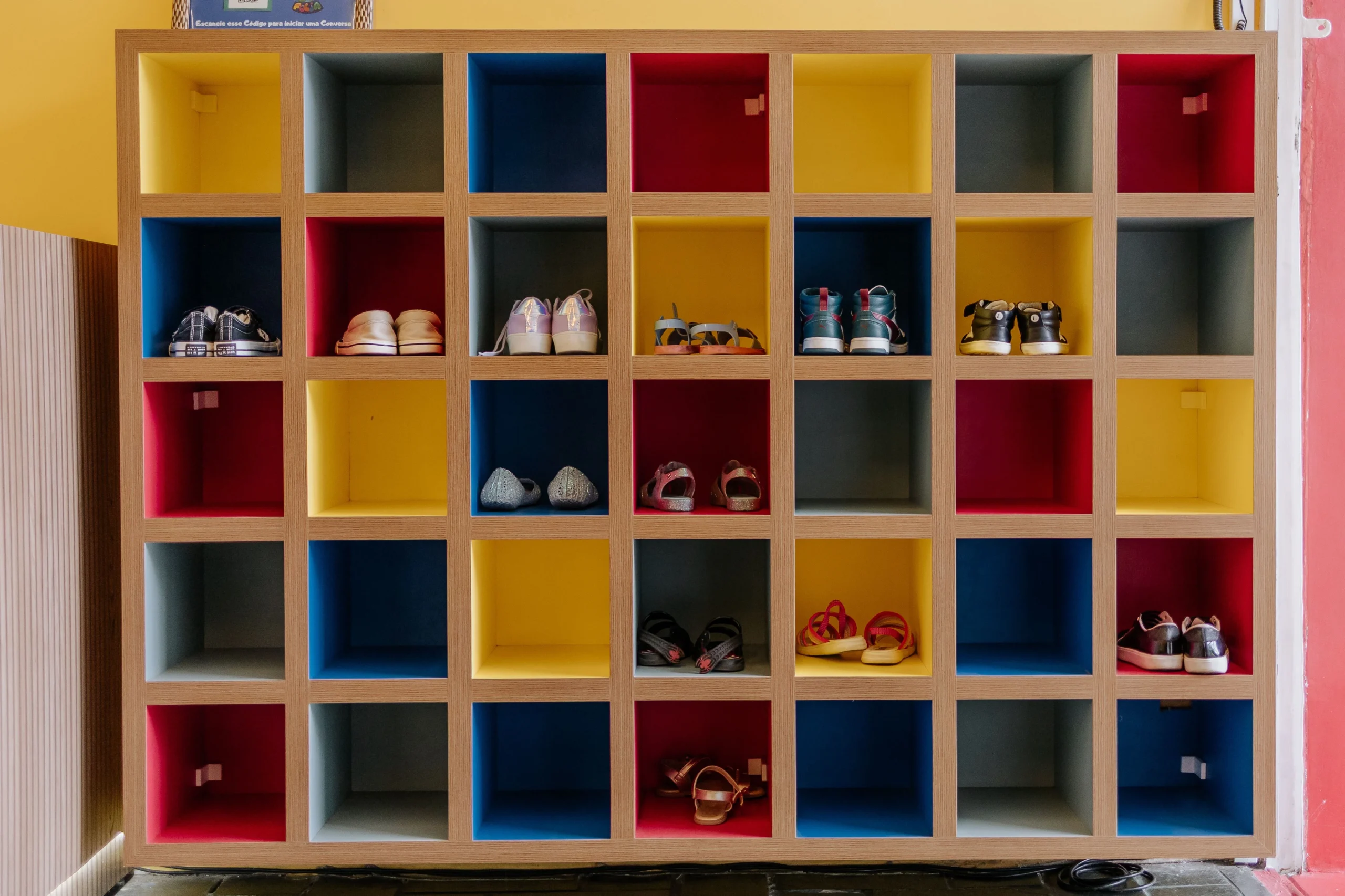
A shoe bench does two jobs at once: a place to sit while you put shoes on, and storage underneath for the pairs you wear most. Sitting beats hopping on one foot, and shoes tucked under the bench are out of the walkway instead of across it. In a small entryway, that double duty earns its floor space.
Pick a bench short enough to fit the wall it sits against, with open space or baskets underneath rather than solid doors — you need to slide shoes in and out in seconds. Keep the bench top clear for sitting; bags and post belong elsewhere.
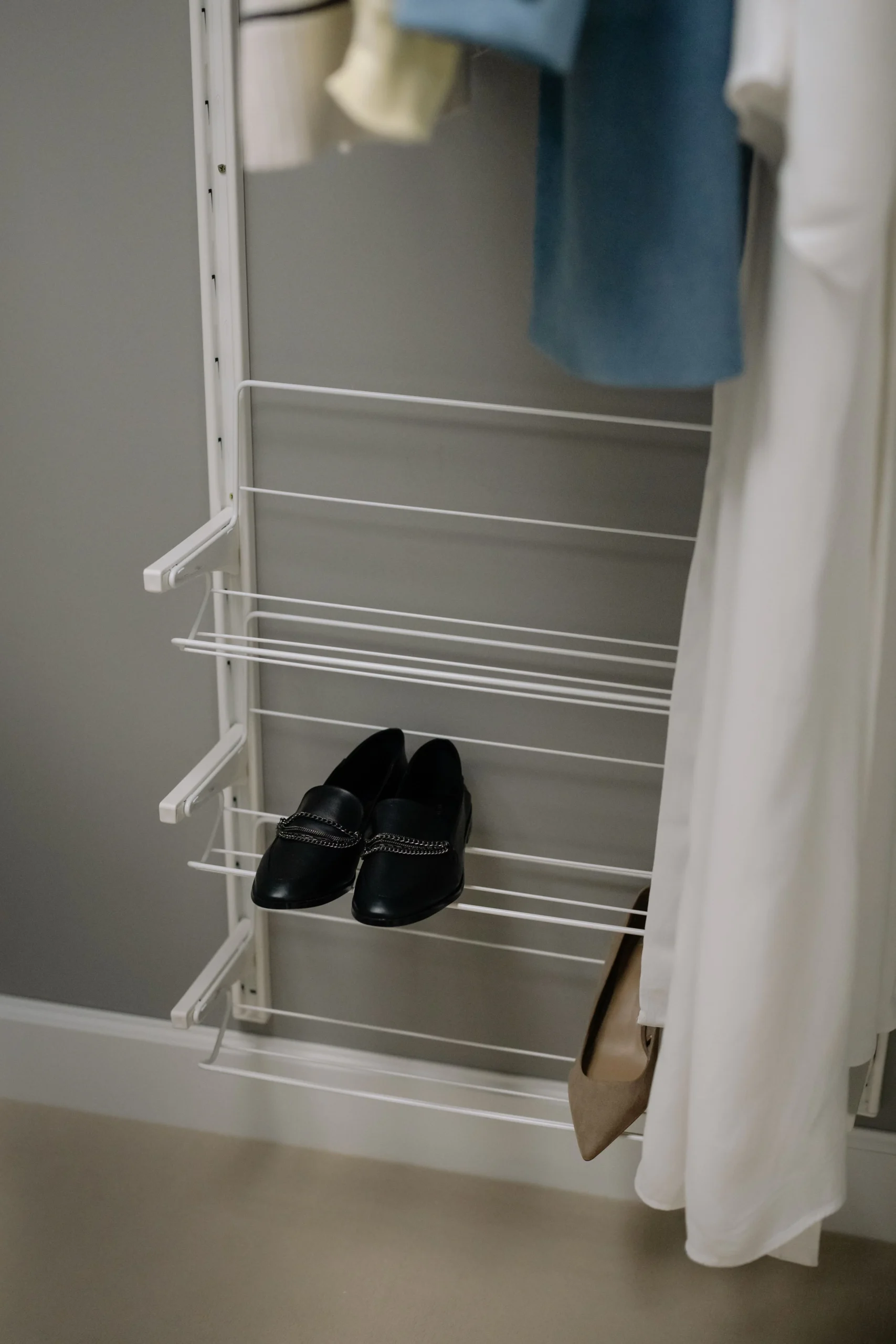
Mount a wall shoe rack to free the floor completely
When floor space is the scarcest thing in the house, the wall is the answer. A wall-mounted shoe rack — the kind that hangs on adhesive hooks or a slim rail — lifts everyday pairs off the floor entirely, which makes cleaning easier and the entryway feel bigger. It suits trainers and flats best, and it needs no drilling.
Mount it at a height you can reach without bending too far, and keep it to one or two rows so it reads as tidy rather than crowded. If you rent, choose a rail with removable adhesive fixings and check the weight limit before loading it up.
Keep tall boots upright with boot inserts
Tall boots slump, crease and topple when they are stored flat or folded, and a fallen boot takes up twice its space. Boot inserts — simple rolled supports that slide inside the shaft — keep boots upright, crease-free and easy to grab. They also let boots stand in a row on a shelf or in a wardrobe instead of flopping across it.
Use inserts sized to the boot, not one-size-fits-all if you can avoid it, and store boots in pairs with the toes facing the same way. If you do not want to buy inserts, rolled-up magazines or a pool noodle cut to length do the same job for free.

Give each person one basket for kids’ and guest shoes
Children’s shoes and guests’ shoes are the ones that never get put away, because they belong to nobody’s system. One basket per person fixes that: kids learn that their shoes live in their basket, and guests get a basket by the door instead of leaving shoes in the walkway. The basket is the home, and the rule is simple to remember.
Keep baskets low, open and easy to reach — a child will not use a lidded box on a high shelf. Empty each basket weekly so outgrown or single shoes do not pile up, and pass on pairs the kids have outgrown during the same tidy.

Do a weekly shoe reset: rotate, clean, re-home strays
No shoe system survives without a reset. Once a week, take five minutes: put stray shoes back in their homes, wipe the tray and the rack, rotate the pairs by the door so the ones you actually wear are the ones out, and move any pair you have not worn in a month into longer-term storage. The reset is what keeps the limit real.
Do it on the same day each week, ideally before the weekend, so the entryway starts the week clear. If the same stray pair keeps appearing, it needs a different home — not another reminder.
Q: How many pairs of shoes should I keep by the door in a small space?
A: One pair per person is a good limit, held by a tray or small rack. Extra pairs belong in hidden storage — under the bed, in the wardrobe, or behind a door — so the entryway stays clear.
Q: What is the best shoe storage for a narrow hallway?
A: A slim wall-hugging rack or a wall-mounted rack, measured against your walkway first. Deep cabinets block the path; slim storage keeps the hallway a hallway.
Q: How do I store shoes under the bed?
A: Use flat, labelled shoe boxes that slide easily under the bed. Keep off-season pairs there and swap them twice a year when the season changes.
Q: How can I stop tall boots from flopping over?
A: Use boot inserts that slide inside the shaft to hold boots upright. They stop creasing, save shelf space, and keep boots easy to grab in pairs.
Q: What is the best way to store kids’ shoes in a small home?
A: One low, open basket per child by the door. Kids can reach it and learn the habit, and a weekly empty-out stops outgrown pairs piling up.
Q: Do clear shoe boxes really help in small spaces?
A: Yes — you can see every pair without opening or unstacking boxes, so you stop buying duplicates and stop digging. Keep one pair per box and stack only as high as you can reach.
Final Thoughts
Small space shoe storage works when every pair has a home and the door has a limit. A tray, a slim rack, an over-door organizer, under-bed boxes and a shoe bench cover almost every pair in a small home — and the weekly reset is what keeps them all working. Start at the door, measure before you buy, and let the floor stay clear for feet, not shoes.
Save this post on Pinterest for your next entryway refresh, and read our earlier storage ideas next: small space storage ideas that use every wall, hidden storage ideas for small spaces that work, small entryway storage ideas for tiny hallways, and small hallway corner ideas that use dead space well.
Written from small-room living experience — every idea here is renter-friendly and needs no renovation.
Frequently Asked Questions
How wide should a slim shoe rack be for a narrow hallway?
Measure the walkway first, then choose a rack that still leaves about 90 centimetres clear for passing. A rack deeper than 25 centimetres usually forces a sidestep in a narrow hall, so a slim, wall-hugging rack wins. Check the width against the door swing too, so the rack never blocks a door opening.
How high should I mount a wall shoe rack?
Mount it where you can reach a pair without bending too far, usually at waist height or just below. Keep it to one or two rows, so the rack reads as a shelf rather than a wall of shoes. Leave a gap under the lowest row for a tray, and check the fixings hold the weight of the heaviest pair.
What should I store in a shoe bench?
Keep only the daily pairs under a shoe bench, in open baskets or on a low shelf where you can reach them while sitting. A bench is for putting shoes on, not for long-term storage, so off-season pairs belong under the bed or in a labelled box. Leave the bench top clear, so there is always somewhere to sit.
Where should I store shoes I rarely wear?
Keep rarely worn pairs out of the entryway, in labelled under-bed boxes or on a closet shelf, so the door only holds the pairs you wear this week. Store them clean, dry, with inserts for boots, and note the season on the label. Rotate them in at the seasonal swap, and the pairs by the door stay easy to reach.
How do I stop shoes smelling in a small entryway?
Let shoes air before you store them, rotate the pairs you wear, and keep wet shoes out of closed boxes until they are dry. Sprinkle a little baking soda inside overnight, or use cedar inserts, and wash removable insoles often. A weekly reset that airs the rack and removes the pair nobody wore keeps smells from settling in.