
Small Space Laundry Storage Ideas That Keep It Tidy
Small space laundry storage ideas start with one decision: laundry gets a fixed home, not the floor. In a small home, laundry spreads faster than almost any other chore — a pile by the bed, a rack across the walkway, clean clothes draped over a chair. The fix is a system with a place for dirty clothes, a place for drying, a place for supplies, and a place for clean clothes, all small enough to fit the home you have.
Every idea below is renter-friendly and needs no plumbing or renovation. The rhythm matters as much as the storage: little and often beats a weekly mountain, and a ten-minute reset keeps the whole system tidy.
Last updated 10 Nov 2026. Refresh in 3–6 months: re-check hamper size against your laundry rhythm and swap drying-rack placement with the season.
Key Takeaways
- Give laundry one fixed spot: a hamper where clothes come off, not wherever they land.
- Slim and foldable beats big and fixed — a slim hamper and a foldable rack fit small homes.
- Keep all supplies in one caddy, so laundry never spreads across shelves.
- Little and often wins: small, regular loads beat a weekly mountain, and a no-floor-pile rule keeps it tidy.
Give laundry one fixed hamper spot where clothes come off
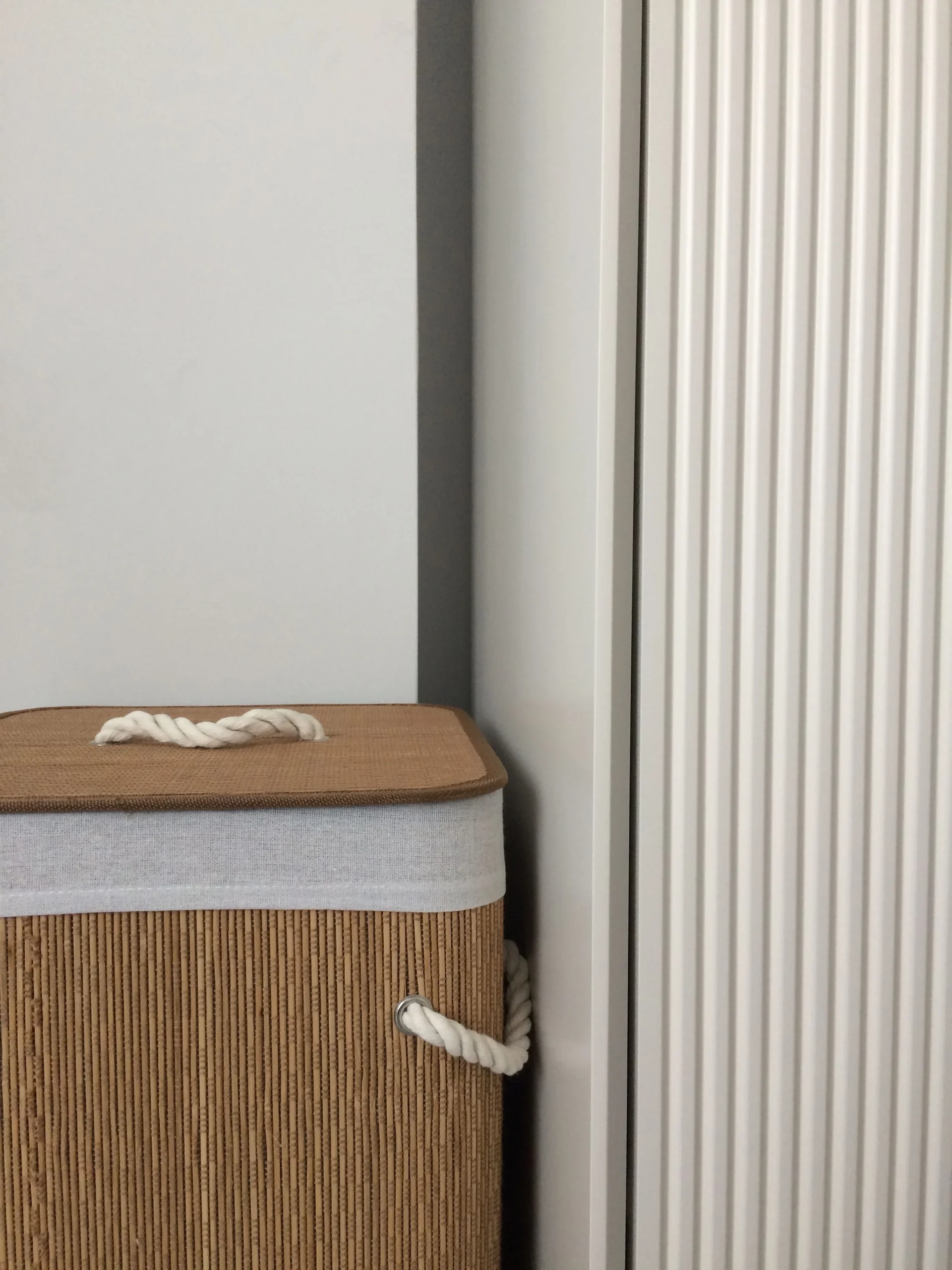
Laundry piles start where clothes come off — usually the bedroom floor. One fixed hamper spot in that exact place ends the pile: clothes go straight into the hamper instead of onto the floor, because the hamper is right there. Put the hamper where you undress, not where it looks tidiest, or it will not get used. Apartment Therapy’s small bedroom design ideas show how a fixed spot keeps a small bedroom calm.
Choose a hamper that fits the spot without blocking a walkway or a door, and keep it open-topped or easy to lift clothes into — a lid you have to open every time is a reason to drop clothes beside it instead. One hamper, one spot, every day.
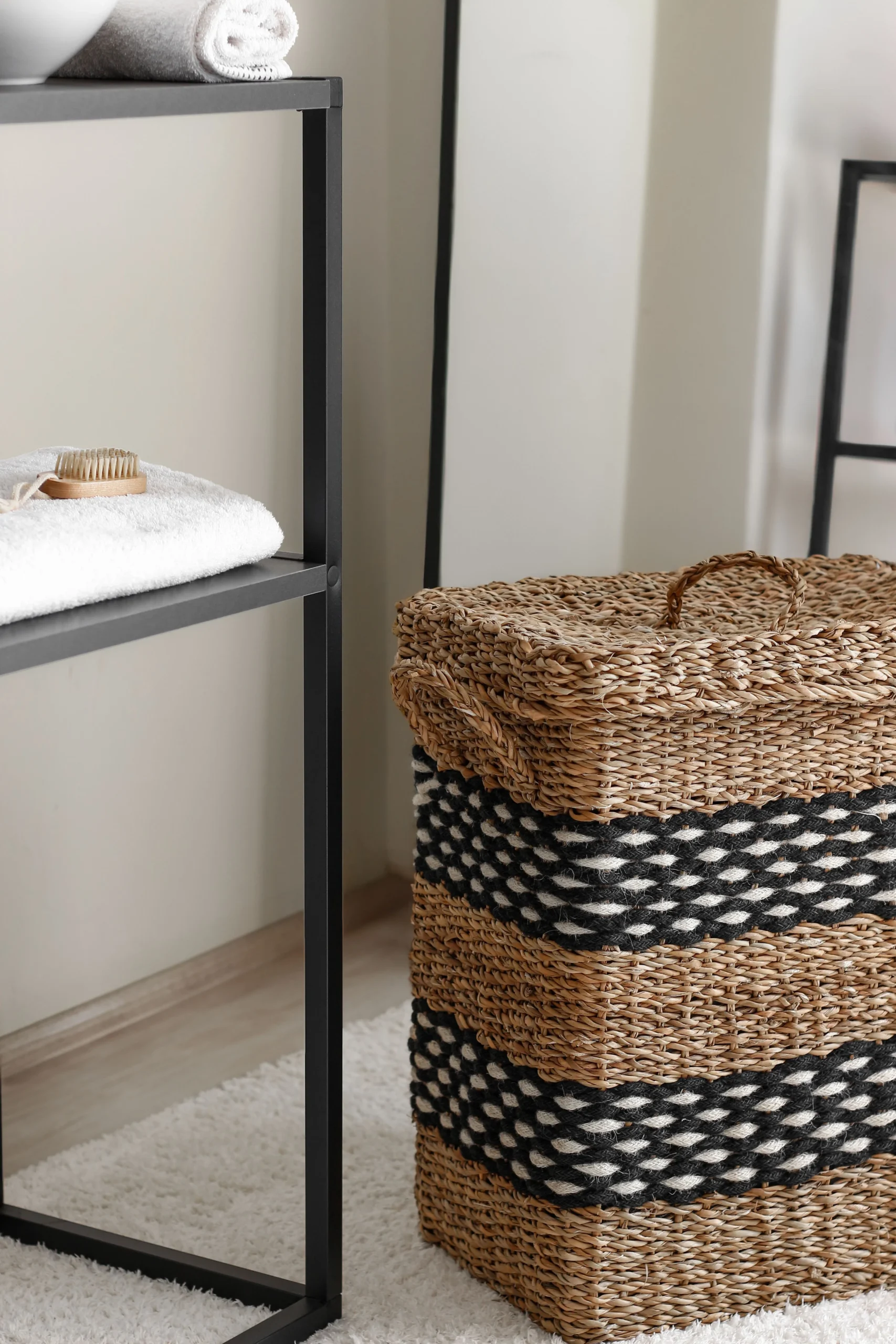
Use a slim hamper for tight gaps, or two slim hampers for sorting lights and darks
A wide hamper eats floor space a small home cannot spare, but a slim hamper slides into a tight gap — beside the wardrobe, behind a door, at the end of a bed. Two slim hampers side by side do even more: one for lights, one for darks, so sorting happens as clothes go in and wash day needs no sorting at all. The pair takes up little more room than one wide hamper.
Label the hampers if the household needs the reminder, and keep them the same height so they read as one tidy unit. If two hampers will not fit, use one slim hamper with a divider bag inside for lights and darks.

Dry in small spaces with a foldable rack or an over-door airer
Drying is the hardest part of laundry in a small home, because a full rack blocks the room. A foldable rack solves it: it opens when you need it, folds flat against a wall or under a bed when you do not, and holds a full load without taking over the room. An over-door airer does the same job on the back of a door, using space that was doing nothing. IKEA’s small one-room home ideas show the same make-every-corner-count thinking for a whole home.
Put the rack where air moves — near a window or a warm spot — and do not overload it, or clothes take twice as long to dry. Fold the rack away as soon as the load is dry; a rack left up becomes a second wardrobe, and the room never gets its space back.

Set up a folding station: one surface, fold straight from the dryer
Clean laundry that is not folded becomes a pile on a chair. A folding station — one clear surface, even just the end of a bed or a small table — breaks that habit: take clothes straight from the dryer or the rack, fold them on the station, and put them away in the same session. Folding straight away takes five minutes; folding a pile later takes twenty and usually does not happen.
Keep the station clear for its job, not as a general surface, and fold at the same time each wash day so it becomes part of the routine. A basket on the station for each person’s folded clothes makes putting away a one-trip job.

Keep detergent and supplies in one caddy
Detergent, stain remover, pegs and dryer sheets spread across shelves, cupboards and the top of the machine until laundry supplies live in three places at once. One caddy — a small box, basket or tote — holds them all, and it travels with you from the shelf to the machine and back. Everything in one place means nothing gets lost and nothing gets bought twice.
Keep the caddy on one shelf, near the machine or the hamper, and check it monthly so you notice when something is running low before wash day. Do not store detergent in a damp spot, and keep the caddy out of reach of small children.

Store the ironing board behind a door or use a fold-flat one
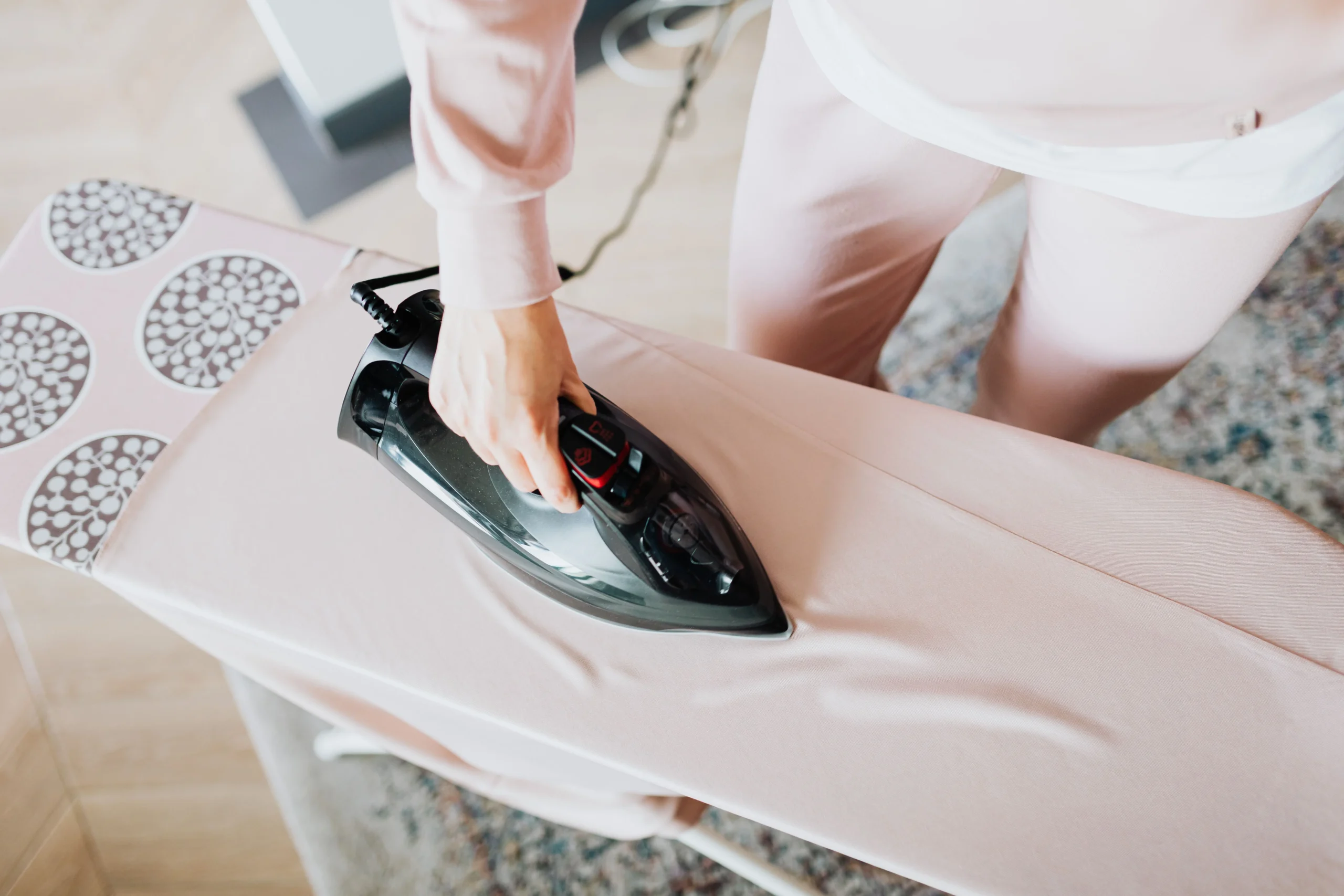
An ironing board leaning in a corner is a permanent piece of clutter in a small home. A board stored behind a door — on hooks, in a slim holder — disappears when it is not needed, and a fold-flat or tabletop board takes up even less space. The board should be reachable in a minute, not buried behind three other things.
If you iron rarely, a tabletop board on a sturdy surface does the job and stores on a shelf. If you iron often, keep the full board behind the nearest door so setting it up is a one-minute job, not a reason to put it off.
Give clean laundry one basket or shelf per person
Clean laundry without a home ends up on chairs and beds, and then it has to be re-folded or re-washed. One basket or one shelf per person fixes that: folded clothes go straight into their basket, and each person takes their basket to their room. The basket is the last step of the laundry system, and it closes the loop.
Keep the baskets labelled or colour-coded per person, and empty each one the same day the laundry is folded. A basket that sits full for three days becomes a second pile — the system only works if the basket empties as fast as it fills.

Keep a small-space washing rhythm: little and often
A weekly mountain of laundry overwhelms a small home — the hamper overflows, the rack blocks the room, and the folding takes an hour. Little and often works better: small loads every two or three days, folded and put away the same day, keep the system moving and the home clear. The washing machine runs the same amount overall, but the home never holds a mountain.
Pick fixed wash days that fit your week — for example, midweek and weekend — and stick to them. If the hamper is full before wash day, that is the signal to wash sooner, not to start a floor pile.

Keep the no-floor-pile rule: the floor holds feet only
The floor is not storage, and laundry is the chore that forgets that fastest. The no-floor-pile rule is simple: no clothes on the floor, ever — dirty clothes go in the hamper, clean clothes go in a basket or on a shelf, and drying clothes go on the rack. The rule is easy to remember and easy to check: if it is on the floor, it is in the wrong place.
Make the rule household-wide, not just for laundry — once the floor stays clear of clothes, it stays clear of everything else more easily too. If a pile keeps forming in one spot, that spot needs a hamper or a basket, not another reminder.
Do a weekly 10-minute laundry reset
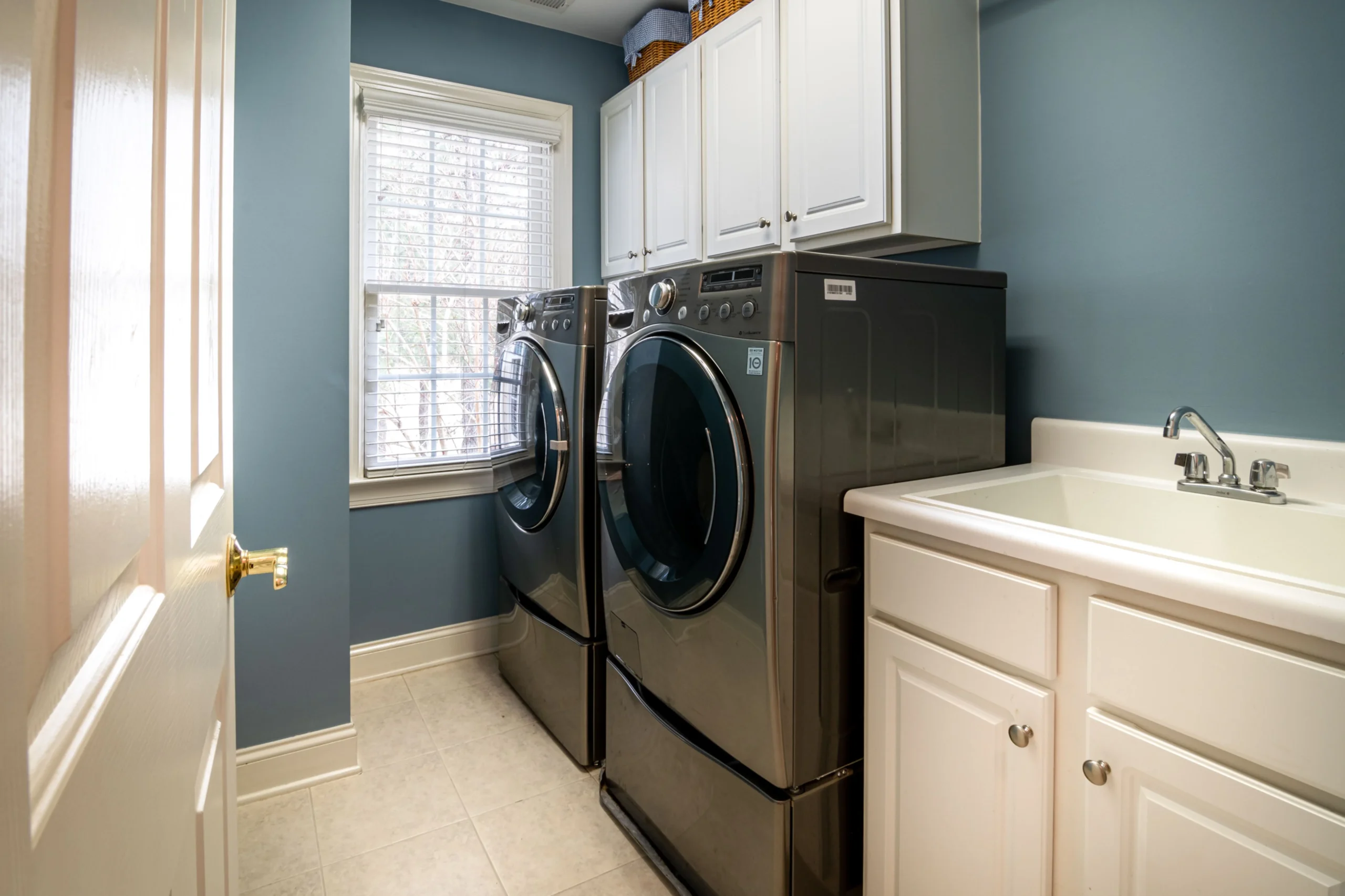
Once a week, take ten minutes: empty the hamper into the machine or the wash queue, fold and put away anything clean, wipe the laundry shelf, check the caddy for low supplies, and fold the drying rack away. Ten minutes, same day each week, keeps the whole system from drifting back into piles and racks left up for days.
Do the reset before the weekend, so the home starts the week clear. If ten minutes is not enough, the system has too much in it — shrink the backlog with one extra load, not a longer reset.

Where should I put a laundry hamper in a small space?
Where clothes come off — usually a bedroom corner — in a fixed spot that does not block a walkway or door. A hamper you have to walk to will not get used; one right where you undress will.
What is the best hamper for a small home?
A slim hamper that fits a tight gap, or two slim hampers side by side for sorting lights and darks as clothes go in. Slim hampers slide beside wardrobes and behind doors where wide ones cannot fit.
How do I dry laundry in a small space?
Use a foldable drying rack or an over-door airer, placed where air moves near a window. Fold the rack away as soon as the load is dry so the room gets its space back.
How can I stop clean laundry piling up on chairs?
Fold it straight from the dryer or rack at one clear folding station, into one basket or shelf per person, and put it away the same day. Clean laundry with no home always becomes a pile.
Where should I store an ironing board in a small home?
Behind a door on hooks or in a slim holder, or use a fold-flat or tabletop board that stores on a shelf. It should be reachable in a minute, not buried behind other things.
How often should I do laundry in a small space?
Little and often — small loads every two or three days, folded and put away the same day. A weekly mountain overwhelms a small home; regular small loads keep it clear.
Final Thoughts
Laundry in a small home is a system, not a pile: a hamper where clothes come off, a slim sorter, a foldable rack, one caddy for supplies, a folding station, and a basket per person for clean clothes. Add a little-and-often rhythm, a no-floor-pile rule, and a ten-minute weekly reset, and laundry stops taking over the home — it just gets done.
Save this post on Pinterest for your next laundry refresh, and read our earlier storage ideas next: small space storage systems that stay tidy daily; small entryway storage ideas for tiny hallways; studio apartment storage ideas that feel cozy; small hallway corner ideas that use dead space well.
Written from small-room living experience — every idea here is renter-friendly and needs no renovation.
Frequently Asked Questions
How many hampers does a small home need?
One hamper where clothes come off is enough to start, with a slim second hamper for sorting lights and darks if you have the gap. Two slim hampers side by side read as one unit and stop sorting piles forming on the floor. Keep both the same height, label them if needed, and empty each one on wash day.
What size caddy should I use for laundry supplies?
Choose a caddy small enough to sit on one shelf near the machine, with a handle so you can carry it to the hamper or the folding station. It only needs room for detergent, stain remover, pegs, and dryer sheets, not a whole cupboard. Check it monthly, so you notice when something is running low before wash day.
How do I keep a drying rack from blocking the room?
Use a foldable rack, place it where air moves near a window, and fold it flat the moment the clothes are dry. Do not overload it, or clothes take longer to dry and the rack stays up for days. Wash small loads, so the rack holds one load at a time and the walkway stays clear between washes.
What should I do with clean laundry on wash day?
Fold it straight from the dryer or rack at your folding station, into one basket or shelf per person, and put each basket away the same day. Clean laundry left on a chair has to be re-folded or re-washed, so it doubles the work. Keep the baskets labelled, so everyone knows which one is theirs and the pile never grows.
How do I fit an ironing board behind a door?
Use hooks or a holder on the back of a door, and check the door closes with the board in place. A fold-flat board stores on a shelf if the door is too shallow, and a tabletop board works on a surface for rare ironing. Keep the board out of the corner, so it stops being a piece of clutter.



2 Comments