
Under Bed Storage Ideas For Small Rooms That Work
Under bed storage ideas for small rooms that work start with one simple truth: the space under your bed is the biggest empty space in a small bedroom, and it is the one most people never use properly. It is roughly the size of a wardrobe shelf, hiding in plain sight — yet it usually holds nothing but dust, a lost sock, and the thing you shoved under there in a hurry six months ago. Give that space a system — low boxes that slide, labels you can read from the doorway, and a rule about what lives there — and a small bedroom gains a whole cupboard without losing a centimetre of floor.
The ideas below build that system from the gap you actually have, not the gap you wish you had. Measure first, buy second, and keep the under-bed space for things you reach for every few weeks, not every day.
Last updated 14 Nov 2026. Refresh in 3–6 months: re-check the boxes for dust and damp, and swap the seasonal boxes when the weather turns.

Key Takeaways
- Measure the gap before you buy anything — the box must be shorter than the clearance, or it will scrape every time you pull it out.
- Under the bed is for things you reach for every few weeks, not every day — seasonal clothes, spare bedding, occasional shoes.
- Lidded boxes keep dust out; labels on the end that faces out mean you never pull every box to find one thing.
- A bed skirt or a floor-length cover hides mismatched boxes instantly, and a 5-minute monthly reset keeps the space from becoming a junk drawer.
Low rolling boxes under the bed
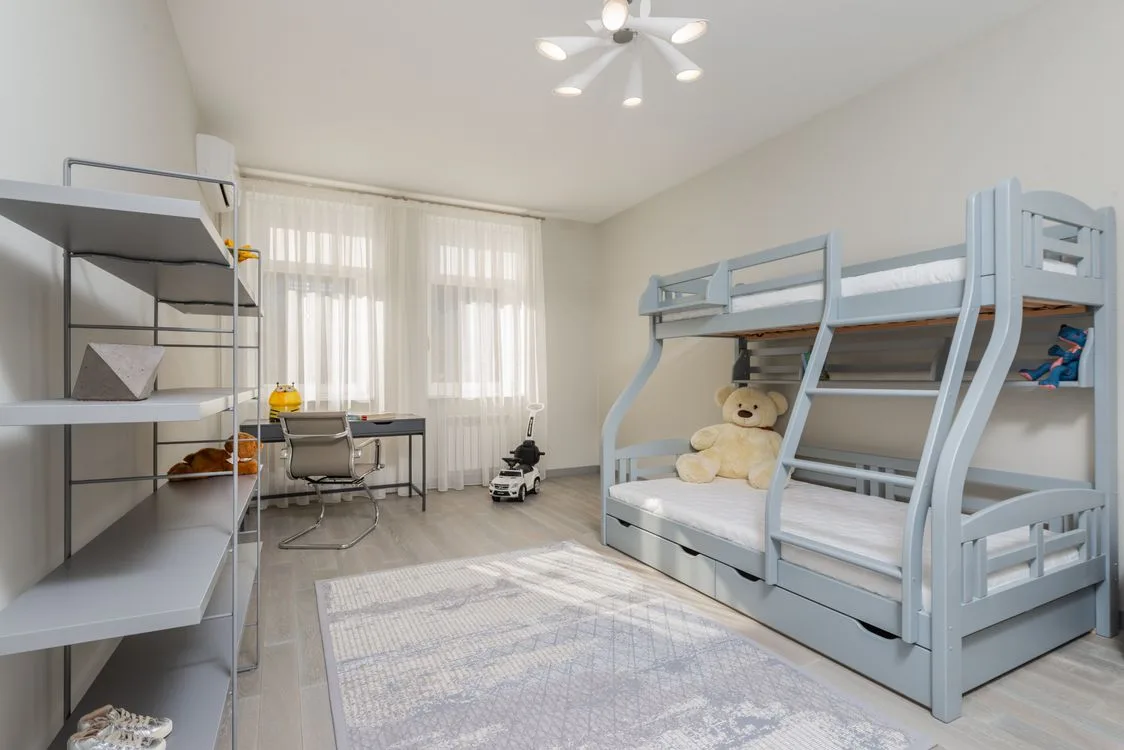
A low box on wheels is the easiest under-bed storage there is, because it slides out with one hand and slides back without lifting. Put spare bedding, out-of-season clothes or guest sheets in a shallow rolling box with a lid, and the space under the bed becomes a drawer you already own — no new furniture, no assembly, just a box that rolls. The photo shows drawers built in under the lower bunk of a children’s bed, which is the same idea in furniture form: low, flat storage that pulls out from under the mattress.
Choose boxes that are at least a couple of centimetres shorter than your clearance, so they never scrape the frame, and pick ones with lids — under a bed collects dust faster than almost anywhere else in the room.
Vacuum bags for bulky bedding
Bulky bedding is the enemy of a small bedroom: one spare duvet fills a whole shelf, and two fill a cupboard. Vacuum bags shrink a duvet or a pile of winter coats to a fraction of their size — fill the bag, pull the air out with a vacuum cleaner, and the flat pouch slides under the bed where the full duvet never could. The photo shows the result rather than the bag itself: folded white duvets and pillows stored away neatly on shelves, packed down and out of the way.
Use vacuum bags only for clean, fully dry items, and only for things you will not need until the season changes — resealing takes a vacuum every time, so they are a poor choice for anything you reach for weekly.

Bed risers to create taller under-bed space
Some beds sit so low that nothing useful fits underneath — a few centimetres of gap, and every box you own is too tall. Bed risers fix that: small blocks that lift each leg of the bed by several centimetres, creating taller under-bed space where none existed. The photo shows what the extra height buys you — a low wooden platform bed with a clear gap beneath it in a bright bedroom, the kind of space a taller box can actually slide into.
Check that the risers suit your bed’s legs and stay stable before you load the space beneath — wide-base risers, a leg that sits properly in the riser’s cup, and a weight rating that covers the bed plus whoever sleeps in it. Once the bed is higher, buy boxes to fit the new gap, not the old one.

Labelled fabric boxes by season
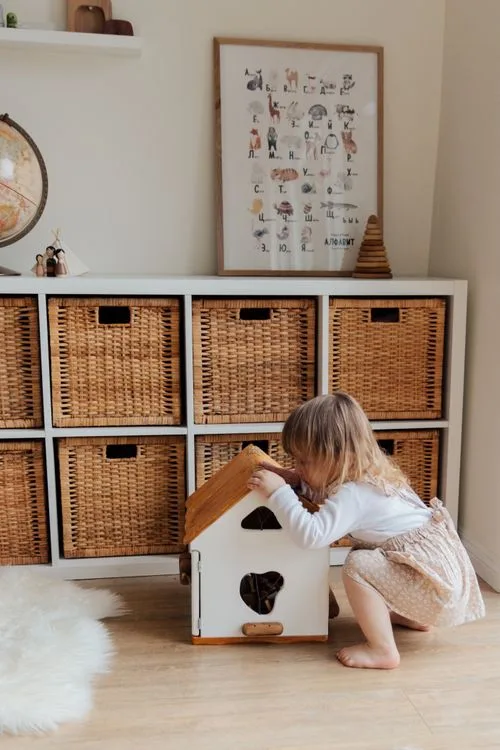
Fabric boxes are the soft option for under-bed storage: light, cheap, easy to fold away when empty, and forgiving around bed legs and centre supports that a rigid box would catch on. Label each one by season — “Winter”, “Summer”, “Guest bedding” — on the end that faces out, so you can read it from the doorway without pulling anything out. The photo shows wicker storage baskets beside a bed in a small bedroom; the same labelling idea applies, whether the box is fabric, wicker or plastic.
Keep one box per season and swap them twice a year, when the weather turns. That swap doubles as a cleanout: anything you did not miss while it sat under the bed can go to the charity shop.

Daily items at the near edge, rarely-used at the back
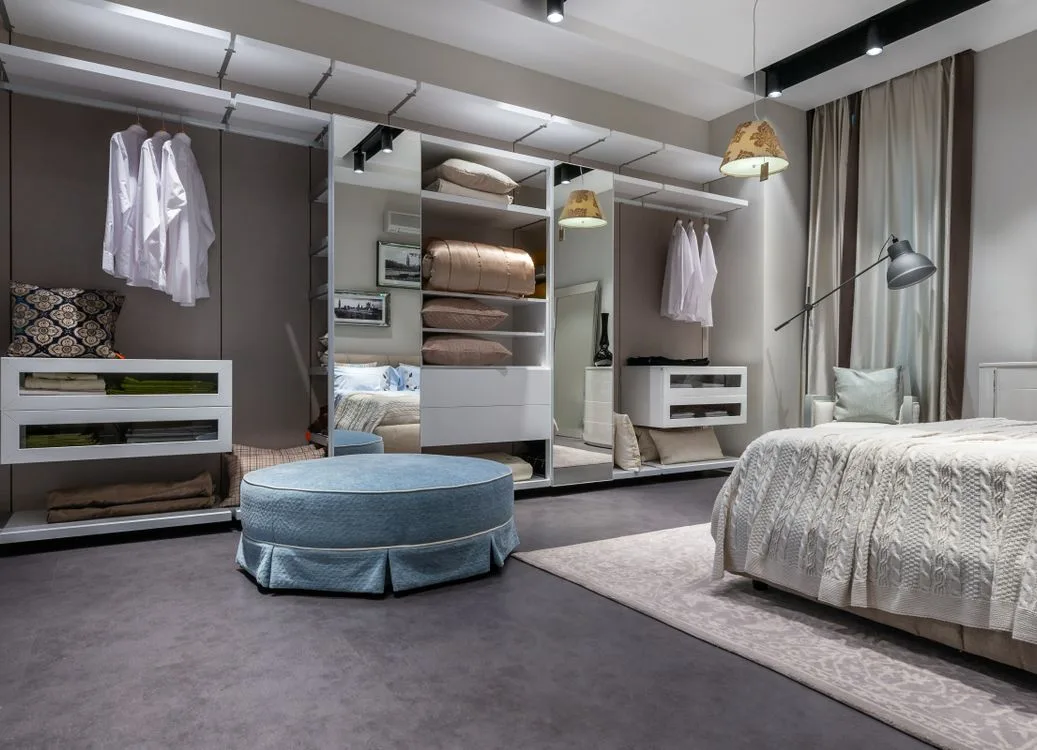
The back of the under-bed space is the hardest place in the bedroom to reach — you have to kneel, reach past the boxes at the front, and pull blindly. So give the front edge to the things you reach for most often, and push the rarely-used things to the back: guest bedding and off-season clothes at the back, the spare sheet set and the shoes you wear this month at the front. The photo shows the principle in a wardrobe instead of under a bed: an open built-in wardrobe with folded clothes, hanging shirts and drawers beside a made bed, where everything is visible and reachable because it has a place near the front.
Work the same way with the boxes themselves: the box you open every fortnight lives at the side of the bed you get out of, and the box you open twice a year lives at the far end.
Under-bed shoe organiser trays
Shoes are the messiest thing in a small bedroom: they pile by the door, they migrate under the wardrobe, and pairs separate themselves the moment you stop watching. A shallow tray or a low divided box under the bed gives every pair one home — one pair per slot, no tumbling, no dust, and no hunting for the missing left shoe. The photo shows the same idea on a rack instead of a tray: red sneakers lined up in pairs on a white slatted shoe rack, each pair together and easy to grab.
Keep under-bed shoe storage to the pairs you wear occasionally — the seasonal boots, the smart shoes, the spares.

Flat storage for books and magazines
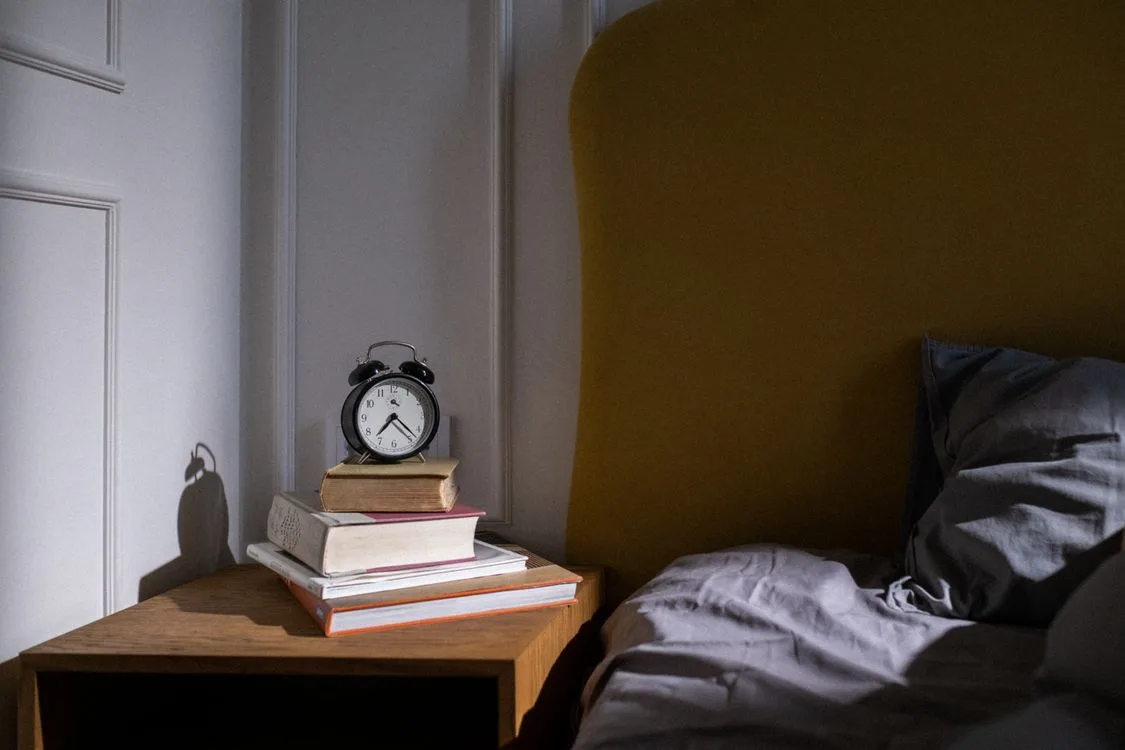
Books and magazines are flat, heavy and awkward — they lean, they topple, and a tall stack on a small nightstand is one nudge from the floor. Store them flat instead: a shallow tray or a low box under the bed holds a stack of books lying down, where they cannot fall, cannot lean, and cannot take up surface space. The photo shows a flat stack of books with a vintage alarm clock on a wooden nightstand beside a bed — the same flat-stack idea, kept low and tidy.
Keep the stack small — five or six books, not twenty — and keep only the books you are actually reading or re-reading. A flat box of current reads by the bed is a small library; a deep box of every book you own is a cupboard you will never open.
A bed skirt to hide the boxes neatly
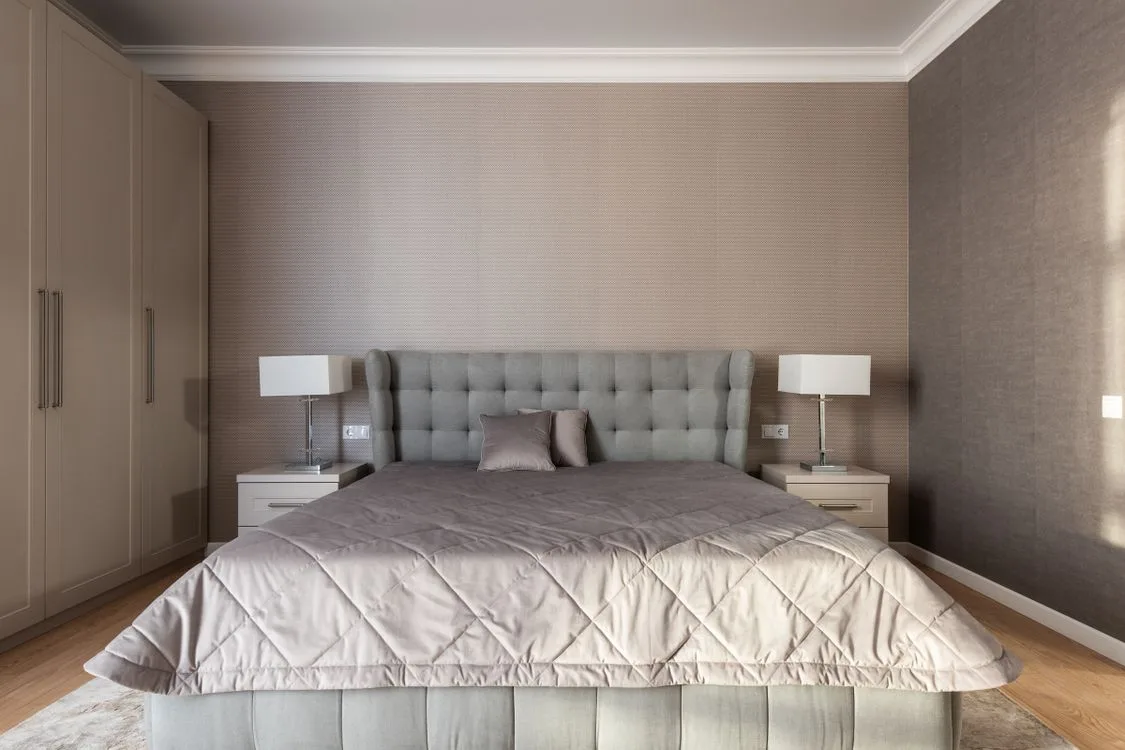
Under-bed storage works best when you cannot see it. Mismatched boxes — a clear plastic one, a fabric one, a vacuum bag — look like clutter the moment they peek out from under the bed, however tidy they are inside. A bed skirt or a floor-length cover hides them all in one move: it drapes to the floor, the boxes vanish behind it, and the bedroom looks like a bedroom again instead of a storeroom. The photo shows the same hiding effect from a quilted cover draping down to the floor between two bedside lamps — nothing underneath is visible at all.
Choose a skirt that reaches the floor without pooling, in a colour that matches the bedding, and make sure it lifts easily when you need a box — a skirt you have to wrestle with is a skirt you will stop using.
Measure the gap before buying boxes
This is the tip that saves you the most money, because it comes before any spending at all. Measure the gap between the floor and the lowest part of the bed frame — not the side rail, but the lowest slat or support that hangs down — and write the number down before you look at a single box. A box a centimetre too tall is useless, and it will sit in the hallway until you return it. The photo shows the measuring itself: two hands holding a yellow tape measure across a white panel.
Take the numbers with you, and buy boxes at least two centimetres shorter than the clearance so they slide without scraping.

Monthly under-bed reset in 5 minutes
Under-bed storage fails slowly: one box gets overfilled, a bag drifts in from the hallway, dust gathers around the edges, and within a few months the space is a junk drawer again. A monthly reset stops that — five minutes, once a month, on the same day you change the sheets. Pull each box out, wipe the floor underneath, check the labels, and put back only what belongs. The photo shows what the reset leaves behind: a tidy made bed with grey bedding, a mirrored closet and a dresser in a bright bedroom — the calm result of a system that gets maintained.
Keep the reset to five minutes and keep it boring: no reorganising, no new boxes, just dust, labels and strays.

How much space do I need under the bed for storage?
Most beds give you 15 to 25 centimetres of clearance, and most under-bed boxes need around 15 centimetres. Measure from the floor to the lowest part of the frame, not to the mattress, and buy boxes at least 2 centimetres shorter than the gap so they slide without scraping.
What should I store under the bed?
Things you reach for every few weeks, not every day: off-season clothes, spare bedding and guest sheets, occasional shoes, wrapping paper, and luggage you use a few times a year. Keep daily items out — you will stop putting them back if you have to kneel every morning.
Are vacuum bags safe for duvets?
They are fine for synthetic bedding for a season, as long as the items are clean and fully dry before sealing. Avoid long compression for down and feather fillings, which can lose their loft, and open the bags every season to let the bedding breathe.
How do I keep dust out of under-bed storage?
Use boxes with lids or zip closures, never open baskets. Vacuum under the bed when you change the sheets, and a bed skirt or floor-length cover keeps dust from settling on the boxes in the first place.
Can I use under-bed storage if I rent?
Yes — rolling boxes, fabric boxes, vacuum bags and bed risers all need no tools and no fixings, and they move with you. Nothing here is screwed to the bed or the wall, so the whole system packs up on moving day.
What if my bed is too low for boxes?
Bed risers lift the frame by several centimetres and create space where none existed — check they suit your bed’s legs and weight rating first. If risers are not an option, flat vacuum bags and low fabric boxes fit gaps as small as 12 centimetres.
Final Thoughts
Under bed storage ideas for small rooms work when the space is treated like a cupboard, not a hiding place: measure the gap first, use low lidded boxes that slide, keep daily things at the near edge and seasonal things at the back, and hide it all behind a bed skirt. Vacuum bags shrink the bulky bedding, risers create height where there was none, and a five-minute monthly reset keeps the system from sliding back into a junk drawer. The bedroom does not get bigger — it just stops wasting its biggest empty space.
Save this post on Pinterest for your next bedroom refresh, and read our earlier storage ideas next: Small Space Shoe Storage Ideas That Work Well, Seasonal Storage Rotation Ideas For Small Spaces, Small Space Storage Systems That Stay Tidy Daily, and Hidden Storage Ideas For Small Spaces That Work.
Written from small-room living experience — every idea here is renter-friendly and needs no renovation.
Further reading: HGTV’s 56 best under-bed storage organizers in 2026 and IKEA’s smart bedroom storage hacks in unused spaces show more wheeled box, riser, and hidden storage ideas for the same small space.
Frequently Asked Questions
How high should bed risers lift the bed?
Choose risers that lift the frame by 5 to 10 centimetres, so the gap grows enough for low boxes without making the bed hard to climb into. Check that the risers suit your bed’s legs, sit flat on the floor, and stay stable before you load the space beneath. Wide risers are steadier than narrow ones on a hard floor.
Should I choose rolling boxes or fabric boxes for under the bed?
Choose rolling boxes for the items you reach for every few weeks, because wheels and a handle let you pull the box out with one hand. Choose fabric boxes for seasonal clothes, because they are light, cheap, and fold flat when empty. Many small rooms use both: hard boxes at the near edge, and soft boxes at the back.
How should I arrange boxes under the bed?
Put the box you open most at the near edge, where you can reach it without kneeling, and the rarely used box at the back. Work the same way inside each box: the item you need next on top, and the rest below it. Label the end that faces out, so you never pull every box out to find one thing.
Can I store shoes under the bed?
Yes, keep under-bed shoe storage to the pairs you wear occasionally, such as seasonal boots and smart shoes, on a low tray with a lip. Daily shoes belong by the door, where you can grab them on the way out. Use a lidded tray, so dust stays off the shoes, and keep only one pair per tray slot.
How can I hide under-bed boxes without a bed skirt?
Use a floor-length cover that matches the bedding, so the boxes disappear behind one neat line. A fitted bed frame with a low edge also hides boxes, and matching boxes in one colour read as one unit. Keep the boxes the same height, so the line under the bed stays straight and the room looks calm.



One Comment