
Small Bedroom Plant Ideas That Keep The Air Fresh
Small bedroom plant ideas that keep the air fresh start with restraint: one good plant in the right place does more for a small bedroom than ten small pots scattered across every surface. Green softens hard edges, adds life to a room that is mostly bed, and keeps the air feeling fresher — but a small bedroom has no space for a jungle, so every plant has to earn its place.
The secret is choosing plants for your room’s actual light, not the light you wish it had, and giving them a routine you can keep. A snake plant beside the bed will thrive for years on neglect; a sun-loving plant in the same spot will fade in weeks. Pick the right plant, put it in the right spot, and the fresh air takes care of itself.

Key Takeaways
- One plant per surface, not a jungle — every plant has to earn its place in a small bedroom.
- A snake plant beside the bed is the best bedroom plant: it tolerates low light and releases oxygen at night.
- Water on a schedule, not by guessing, and always use pots with drainage and saucers.
- Keep plants off the bed itself, off walkways, and choose low-light plants for dark rooms.
One plant per surface, not a jungle
A small bedroom has few surfaces — a nightstand, a dresser, a windowsill — and each one has a job. One plant per surface keeps the green calm and deliberate; three plants on one nightstand turn it into a nursery and leave nowhere for a glass of water or a book. The rule is simple: if a surface cannot hold the plant and its job, the plant belongs somewhere else.
Count your surfaces before you buy plants, and buy one plant per surface at most. The room will feel green without feeling crowded, and every plant will be easier to water, wipe and look after.

Put a snake plant beside the bed
The snake plant is the best bedroom plant there is, and it belongs beside the bed. It tolerates low light, survives weeks without water, and — unlike most plants — releases oxygen at night, when you are actually in the room breathing it in. Its upright leaves take up almost no floor space, which matters in a small bedroom.
Choose a pot that fits the gap beside the bed and matches the room, and keep the plant in its nursery pot inside a decorative outer pot so watering is easy. Water it only when the soil is completely dry — in winter, that can mean once a month.

Trail a plant from a high shelf
A trailing plant on a high shelf is one of the prettiest sights in a small bedroom — its leaves spill down the wall and soften the whole corner, without costing a centimetre of floor or surface space. Pick one high shelf, ideally the one nearest the window, and let a single trailing plant own it.
A pothos or a trailing philodendron suits this spot: both grow fast, forgive missed watering, and look good with long trails. Trim the trails when they reach the shelf below, and use the cuttings to start new plants in water — free plants, and a shelf that stays intentional instead of overgrown.

Keep a small pot on the nightstand
A small pot on the nightstand puts green exactly where you see it first thing in the morning and last thing at night — and it is the easiest plant in the room to look after, because it is always within reach. Choose a small, slow-growing plant like a peperomia or a tiny ZZ plant, in a pot that leaves room for a lamp, a glass of water and a book.
Keep the pot small — no wider than your hand — so the nightstand keeps its job. A tiny plant that thrives beats a big plant that crowds the lamp and gets knocked over in the dark.

Hang a planter in the window
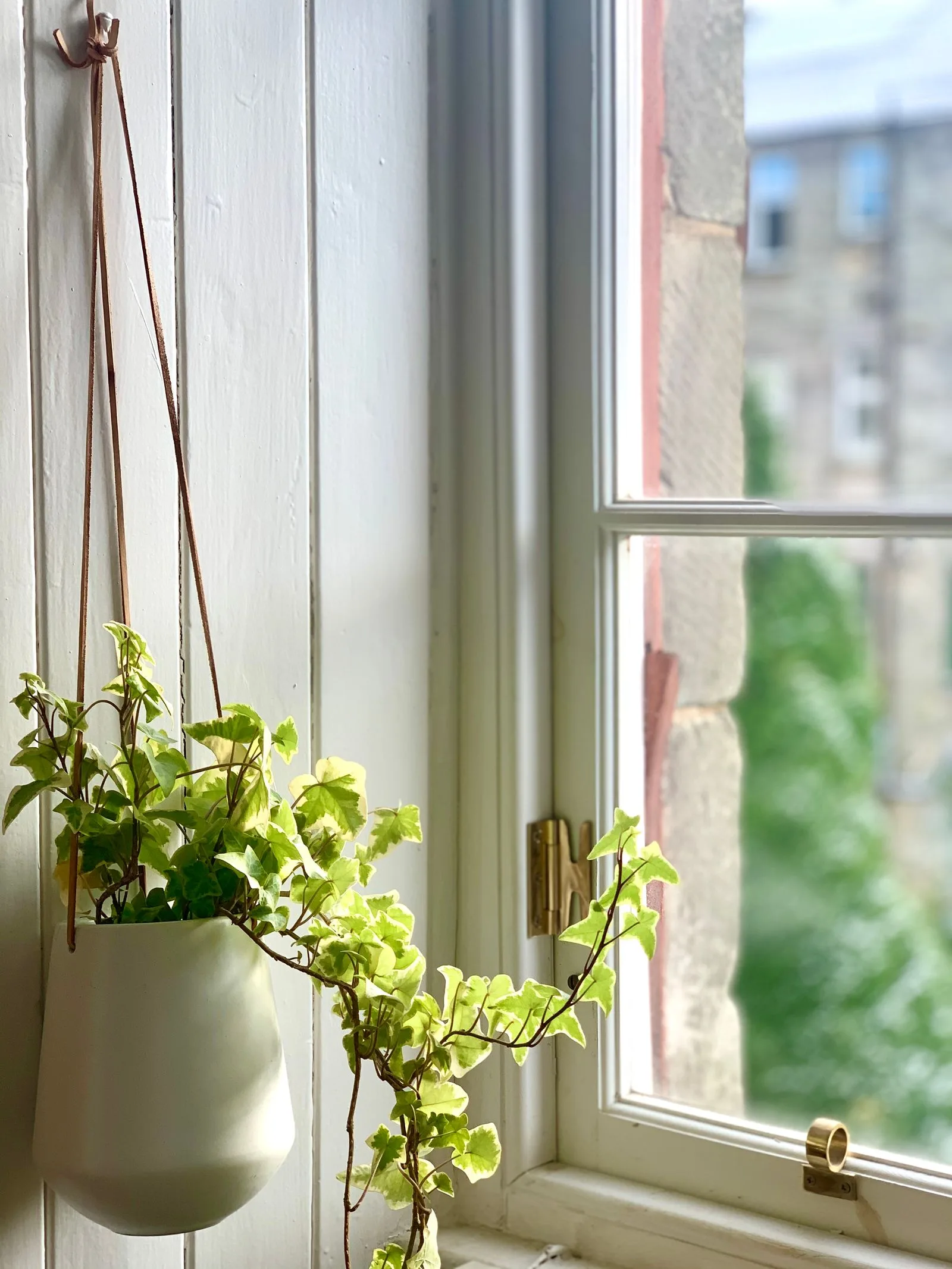
A hanging planter in the window puts a plant in the brightest spot in the room without using a single centimetre of surface — and the light shining through the leaves makes the whole bedroom glow. One planter, hung where it gets light but never blocks a walkway, is enough; two or three turn the window into a curtain of leaves.
Choose a trailing plant for a hanging planter, and use a planter with a saucer or a liner so water never drips onto the floor. Hang it from a hook in the ceiling or a tension rod across the window recess, and check the hook’s weight limit first.
Water on a schedule, not by guessing
Plants die more often from irregular watering than from anything else — drowned one week, forgotten the next. One watering day a week, on the same day, fixes that: every plant gets checked, watered if its soil is dry, and left alone if it is not. The routine matters more than the amount, because most bedroom plants would rather be slightly dry than soaking wet.
Check the soil with a finger before you water — if the top few centimetres are dry, water; if they are damp, wait. Put the watering day on your calendar or set a phone reminder, and the plants will get steady care without you having to think about them.
Wipe the leaves once a month
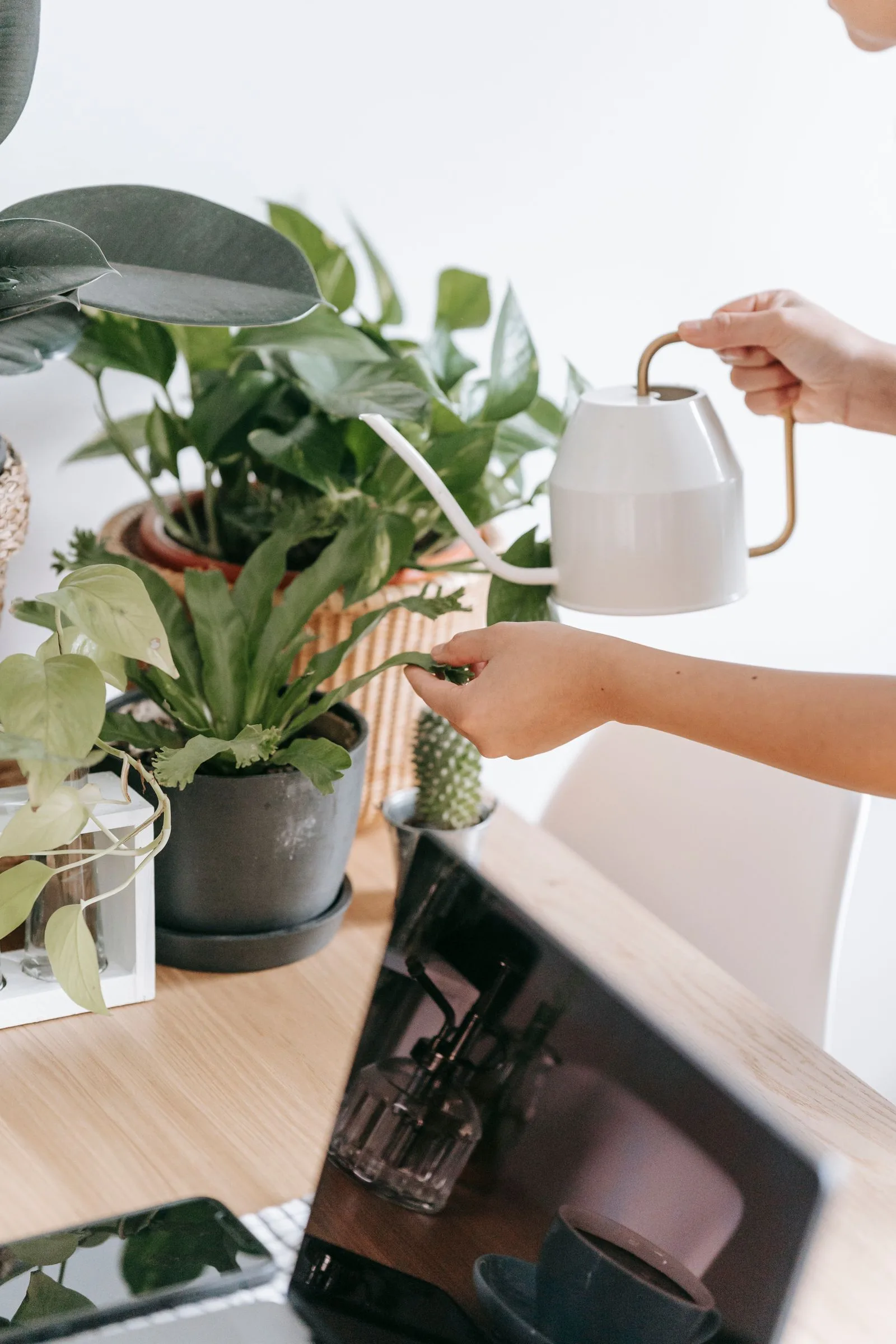
Dust settles on plant leaves just as it settles on furniture, and in a small bedroom you see every leaf up close. Dusty leaves cannot catch light properly, so the plant grows more slowly and looks dull — and dusty leaves also hold allergens in the air you sleep in. Wiping the leaves once a month with a damp cloth takes five minutes and keeps the plants glossy and healthy.
Use the monthly wipe to check under the leaves for pests and to turn the pot a quarter-turn, so the plant grows evenly instead of leaning toward the window. Clean leaves catch more light, which means a healthier plant and fresher air.

Choose low-light plants for dark rooms
A bedroom with a north-facing window or a small window gets soft, indirect light all day — which suits some plants beautifully and kills others slowly. The safe picks are the ones that evolved for shade: snake plants, pothos, ZZ plants and peace lilies all thrive in low light, need little water, and keep their colour without direct sun.
Avoid sun-lovers in a dark bedroom: succulents, cacti and most flowering plants will stretch toward the window, grow leggy, and fade. If you love a sun-loving plant, keep it on the windowsill itself, where it gets the brightest light the room has.
Keep plants off the bed itself
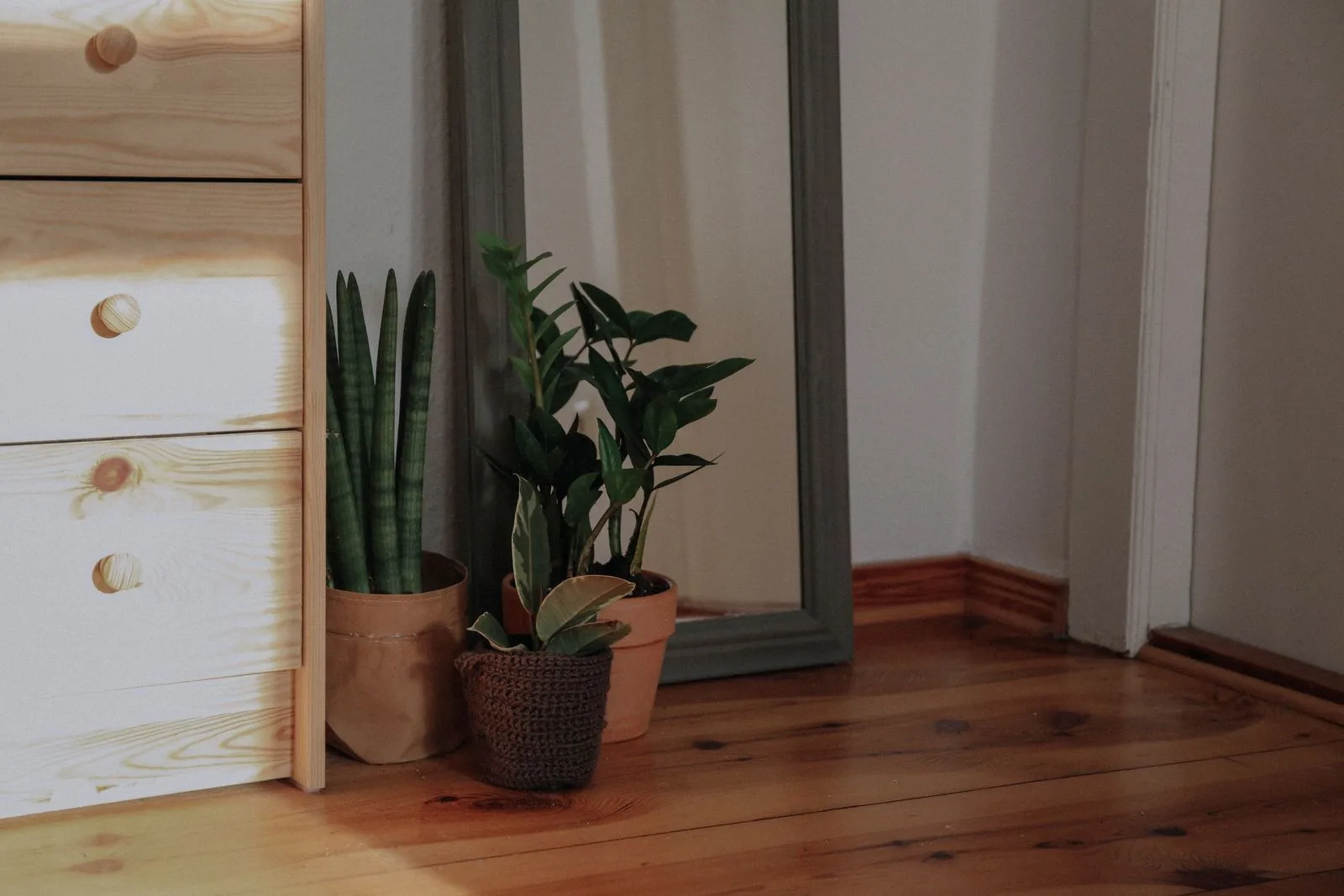
Plants belong beside the bed, above it, or across the room — never on the bed itself. A plant on the bed gets knocked over in the night, spills soil into the sheets, and puts damp earth where you sleep. It also blocks the bed’s job: the bed is for sleeping, and anything on it that is not bedding is in the way.
If you love the look of green near the bed, put the plant on the nightstand, on a shelf above the headboard, or in a hanging planter beside the bed. You get the green in your eyeline without the soil in your sheets.
Repot once a year in spring
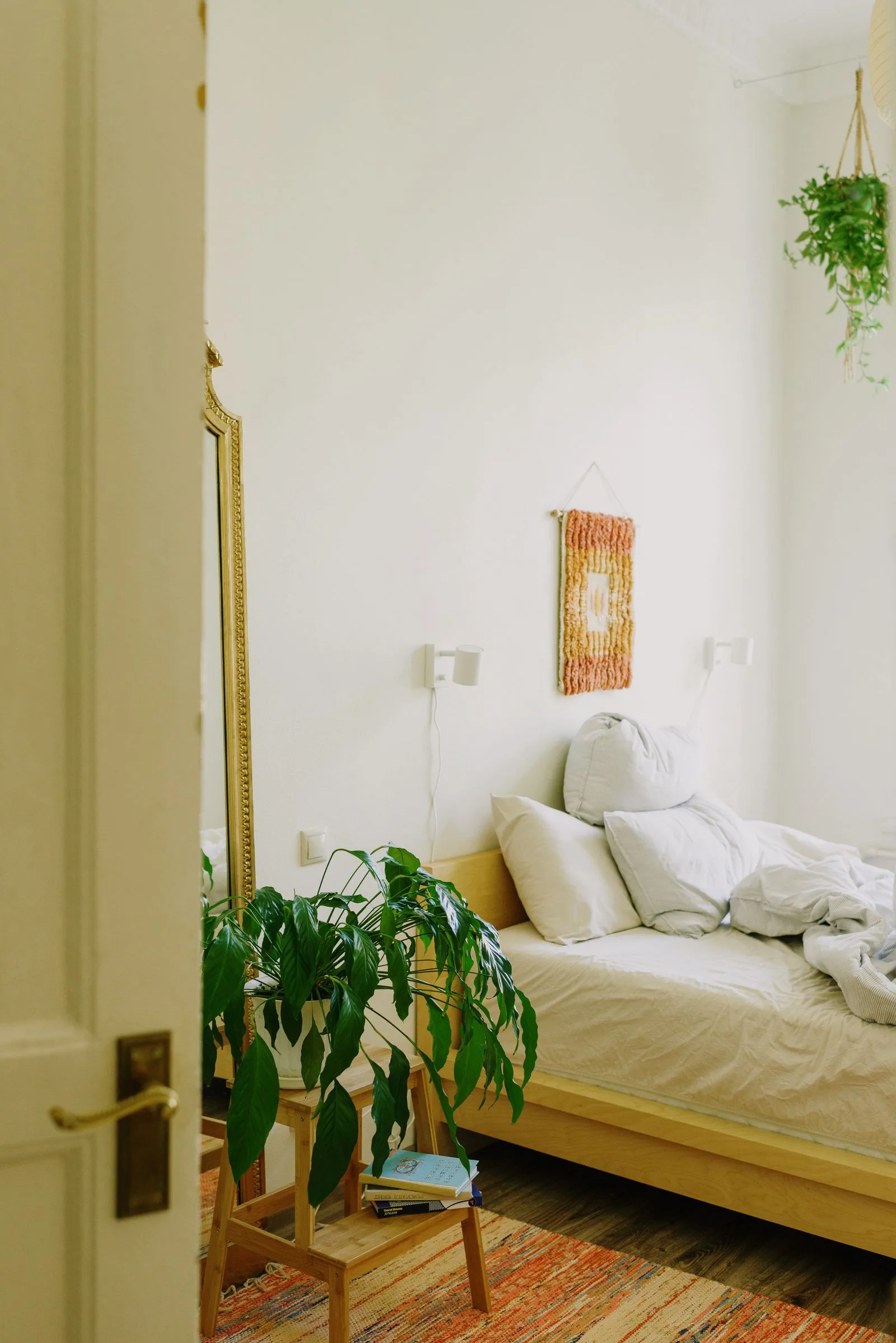
A plant that has outgrown its pot stops growing, dries out too fast, and looks tired no matter how well you water it. Repotting once a year in spring — when the plant is starting to grow again — gives it fresh soil, room for its roots, and a new lease of life for the year ahead.
Choose a pot only a few centimetres wider than the old one, use fresh potting mix, and water the plant well after repotting. Spring is the right time because the plant has the whole growing season to settle in before winter slows it down again.
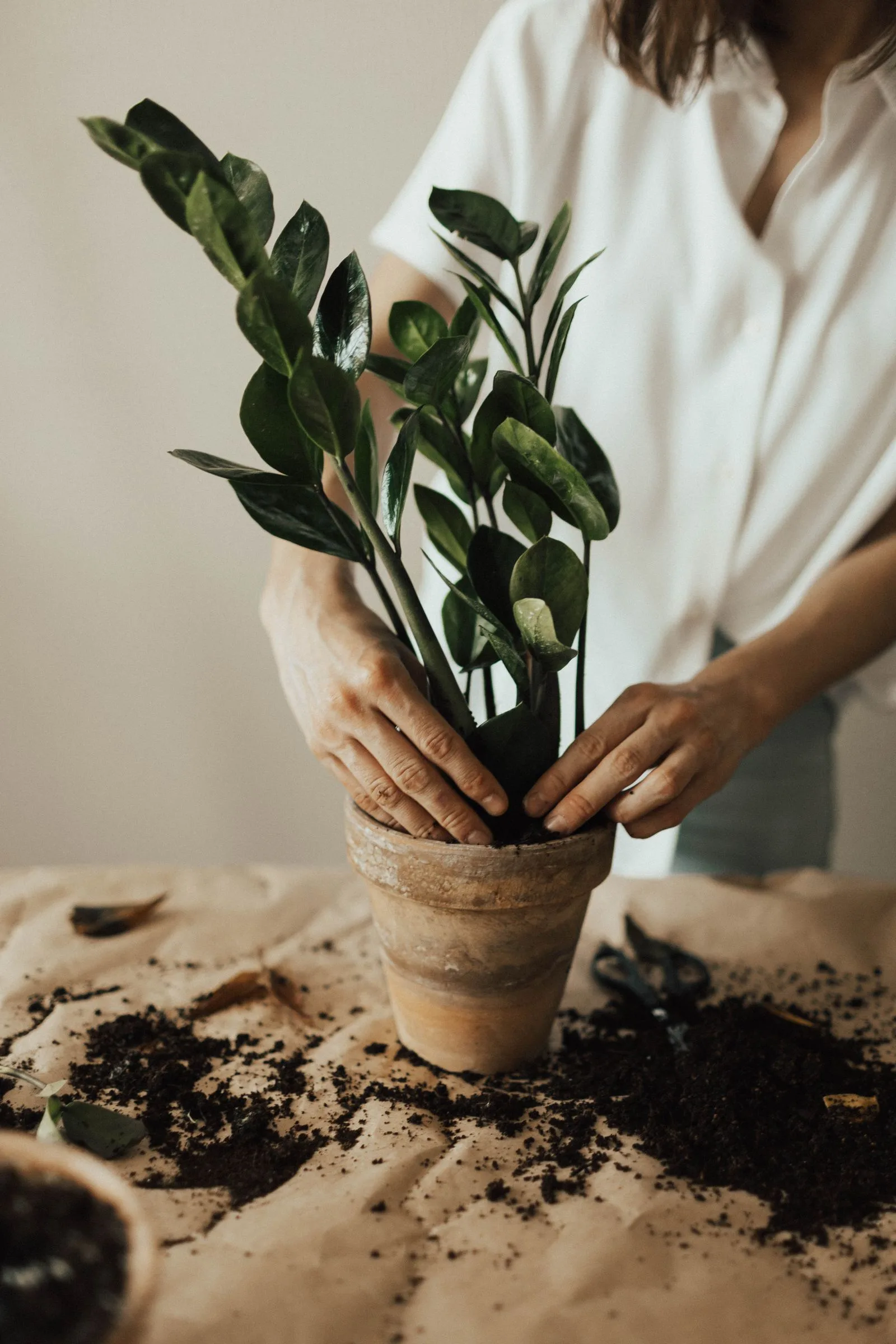
What is the best plant for a small bedroom?
A snake plant beside the bed — it tolerates low light, survives weeks without water, and releases oxygen at night, unlike most plants. Its upright leaves take up almost no floor space. If you want something trailing, a pothos on a high shelf is the next best choice.
Do bedroom plants really keep the air fresh?
They help, modestly. Plants absorb some airborne compounds through their leaves, release moisture that keeps dry bedroom air comfortable, and — in the case of snake plants — release oxygen at night. They will not replace ventilation, so open the window daily too; think of plants as a bonus, not a filter.
How many plants should a small bedroom have?
Two to four, depending on the room’s size — one per surface at most. A snake plant by the bed, a small pot on the nightstand, and one trailing plant on a high shelf is a good trio. More than that turns a small bedroom into a jungle that is hard to water and harder to keep tidy.
Which plants survive a dark bedroom?
Snake plant, pothos, ZZ plant and peace lily all thrive in low light and need little water. They keep their colour without direct sun and forgive a missed watering. Avoid succulents and cacti in dark rooms — they stretch toward the window, grow leggy and fade.
Is it safe to sleep with plants in the bedroom?
Yes, completely. The amount of carbon dioxide plants release at night is tiny and poses no risk, and snake plants actually release oxygen at night. Keep plants off the bed itself, and choose pet-safe plants like spider plants or Boston ferns if animals share the room.
How often should I water bedroom plants?
Check them once a week on the same day, and water only if the top few centimetres of soil are dry. Most bedroom plants prefer being slightly dry to soaking wet — snake plants and ZZ plants can go three to four weeks between waterings in winter. Always use pots with drainage holes and saucers.
Final Thoughts
Small bedroom plant ideas work when the green is restrained: one plant per surface, a snake plant beside the bed, a trailing plant on one high shelf, and low-light plants for dark rooms. Water on a schedule, wipe the leaves monthly, repot in spring, and keep plants off the bed itself. The air feels fresher, the room feels alive — and the plants survive real life, not just a photo.
Save this post on Pinterest for your next bedroom refresh, and read our earlier plant and bedroom ideas next: Small Living Room Plant Ideas That Add Real Calm, Small Bedroom Sleep Ideas That Bring Deeper Rest, Cozy Small Bedroom Ideas That Feel Like A Retreat, and Small Bedroom Corner Ideas For Calm Slow Mornings. More inspiration: Easy Houseplant Care’s top houseplants for the bedroom and IKEA’s nature-inspired bedroom design.
Written from small-room living experience — every idea here is renter-friendly and needs no renovation.
Last updated 12 Nov 2026. Refresh in 3–6 months: re-check each plant’s light needs as the seasons change, and repot any plant that has outgrown its pot.




2 Comments