Small Book Storage Ideas For Tiny Homes
Small book storage ideas for tiny homes start with one shift: books need a system, not a bookcase. One home per book, spread across the walls and furniture you already own — three staggered floating shelves for the books you love looking at, a leaning ladder shelf that needs no anchors, and under-bed drawers for the rest. Nothing in this system takes floor space, nothing needs building work, and the books live where the reading happens.
The ten ideas below build that system step by step, from the shelves on the wall to the one-in-one-out rule that keeps it from growing. Everything is sized for a tiny home, most of it costs under $80, and the whole system can be set up in a weekend.
Key Takeaways
- Three staggered floating shelves, about 2 ft each, hold a modern-bookcase look with zero floor space.
- A leaning ladder shelf (~$40–80) leans on the wall, needs no anchors, and leaves a light footprint.
- Under-bed drawers become hidden bookcases that keep dust and light off the books.
- One shelf per reader, not one shelf per room — and if a book has no shelf, it does not live in the house.
Tip 1 — Three staggered floating shelves, about 2 ft each
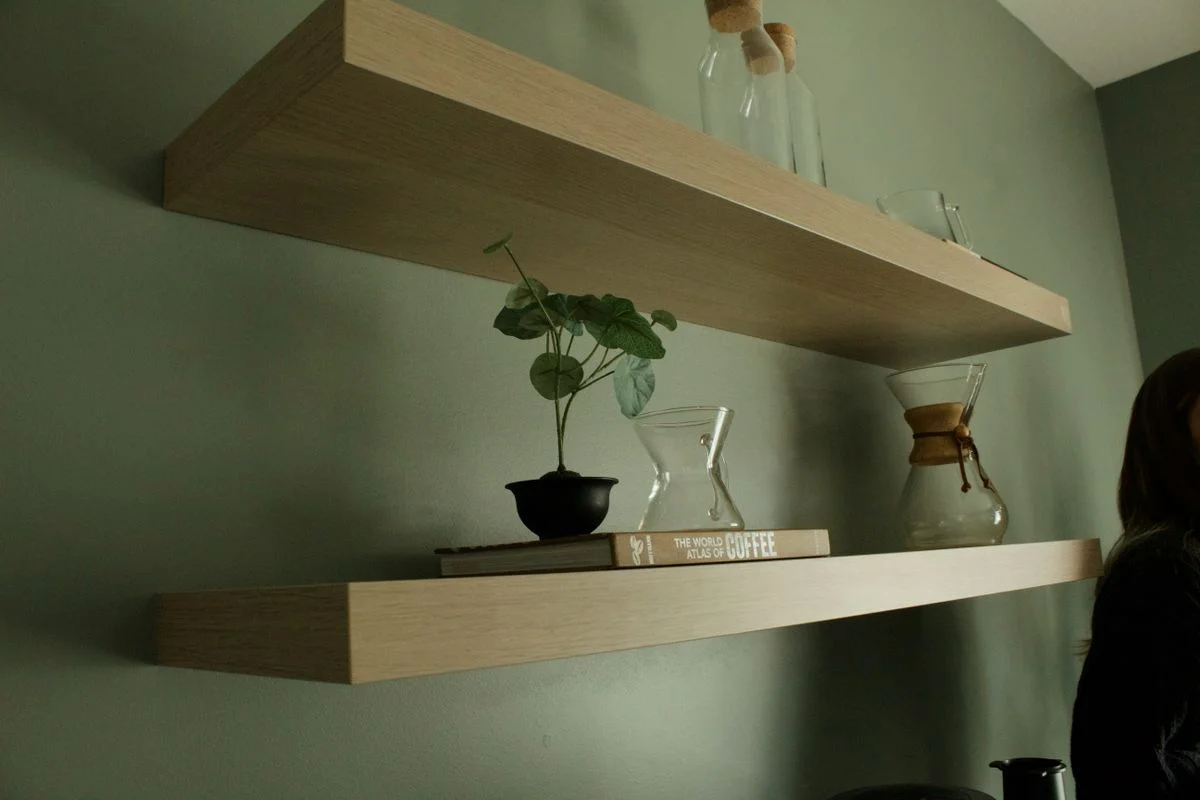
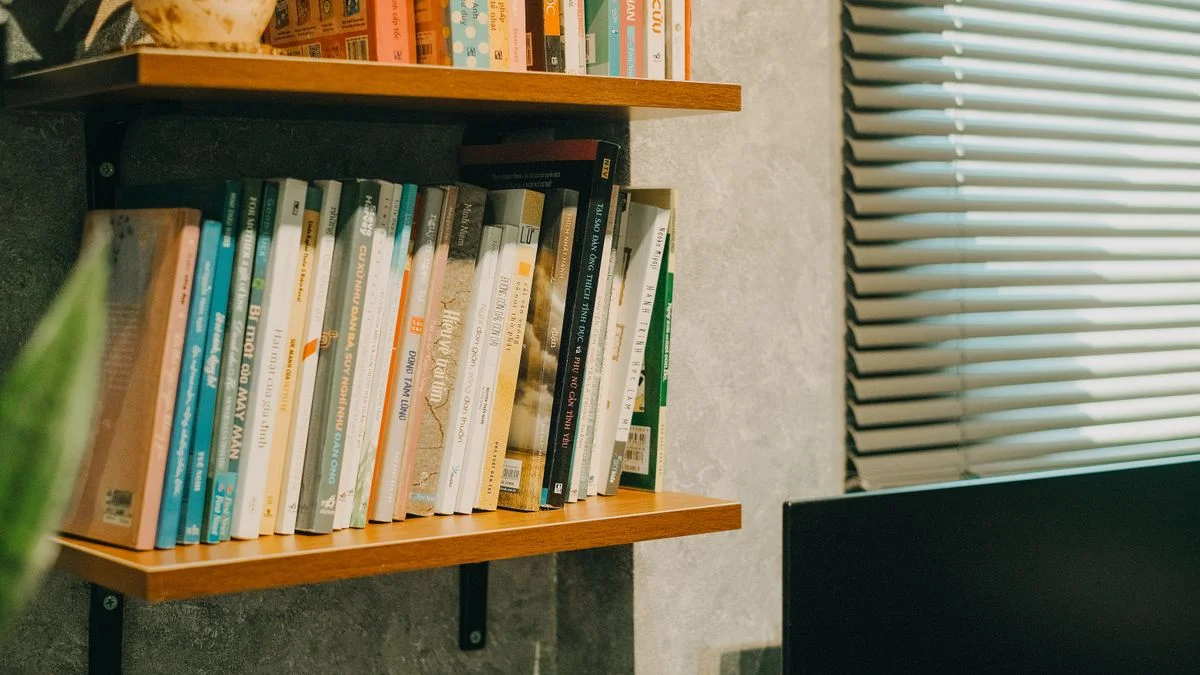
Three staggered floating shelves, about 2 ft each, hold a modern-bookcase look with zero floor space. Stagger them — one high, one middle, one low, each offset from the one above — and the wall reads as a designed display instead of a row of planks. Each shelf holds a row of books standing upright, spines out, with one small plant or photo at the end to break the line. The shelves take no floor at all, which is the whole point in a tiny home.
Fix them into studs where you can, or use proper plasterboard fixings rated for the weight of books — a shelf of books is heavier than it looks. Keep the heaviest books on the lowest shelf, and leave a little breathing room at the end of each row so the display never looks stuffed. Three shelves, staggered, and the wall becomes the bookcase.
Tip 2 — A leaning ladder shelf that needs no anchors
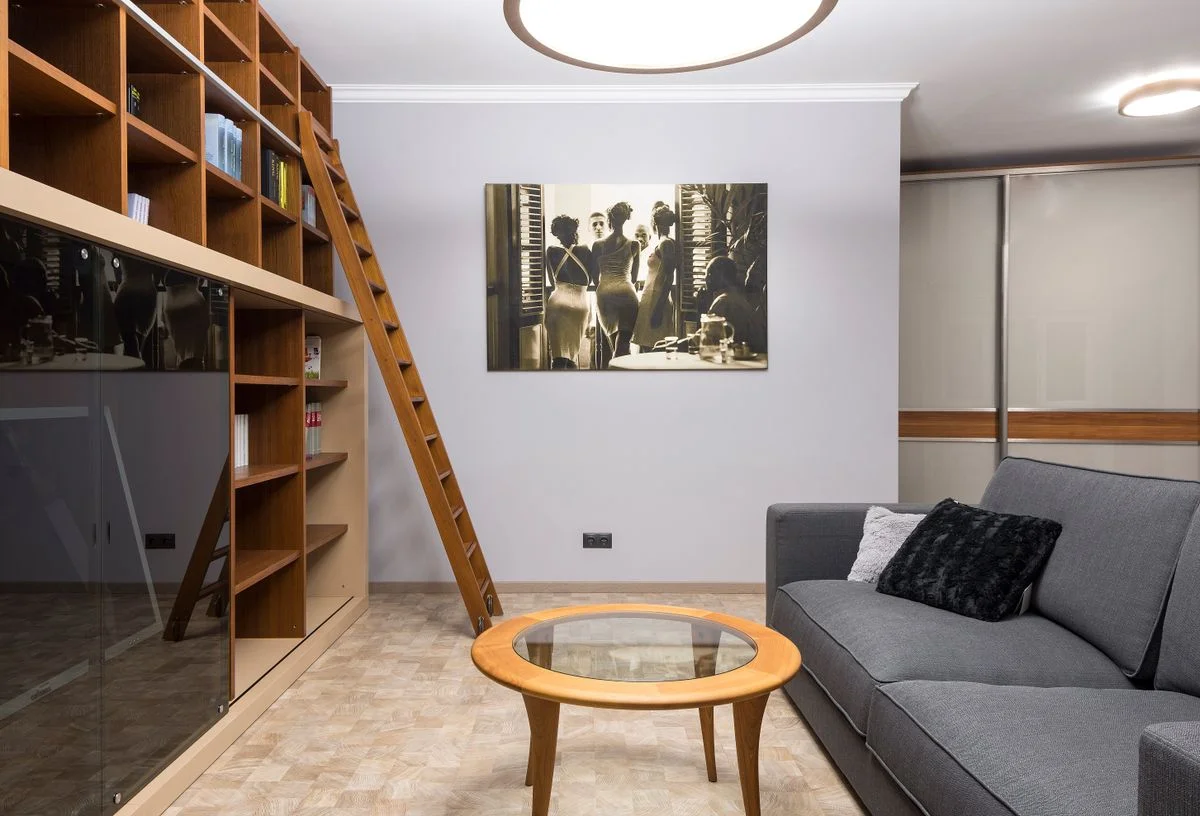
A leaning ladder shelf, roughly $40–80, leans on the wall and needs no anchors at all — which makes it the renter’s bookcase. It stands in a corner, its feet a few inches from the wall, its top resting gently against it, and its shelves step back as they rise, so the deepest shelf is at the bottom and the shallowest at the top. Books sit on the deep shelves, small plants and photos on the shallow ones, and the whole piece leaves a light footprint on the floor.
Choose a ladder shelf with a wide, stable base and felt pads on the feet, so it never marks the floor. Test it before you load it: lean it, push it gently, and check that it sits flat and steady. One ladder shelf in a dead corner, and the books have a home that moves house with you.
Tip 3 — Under-bed drawers become hidden bookcases
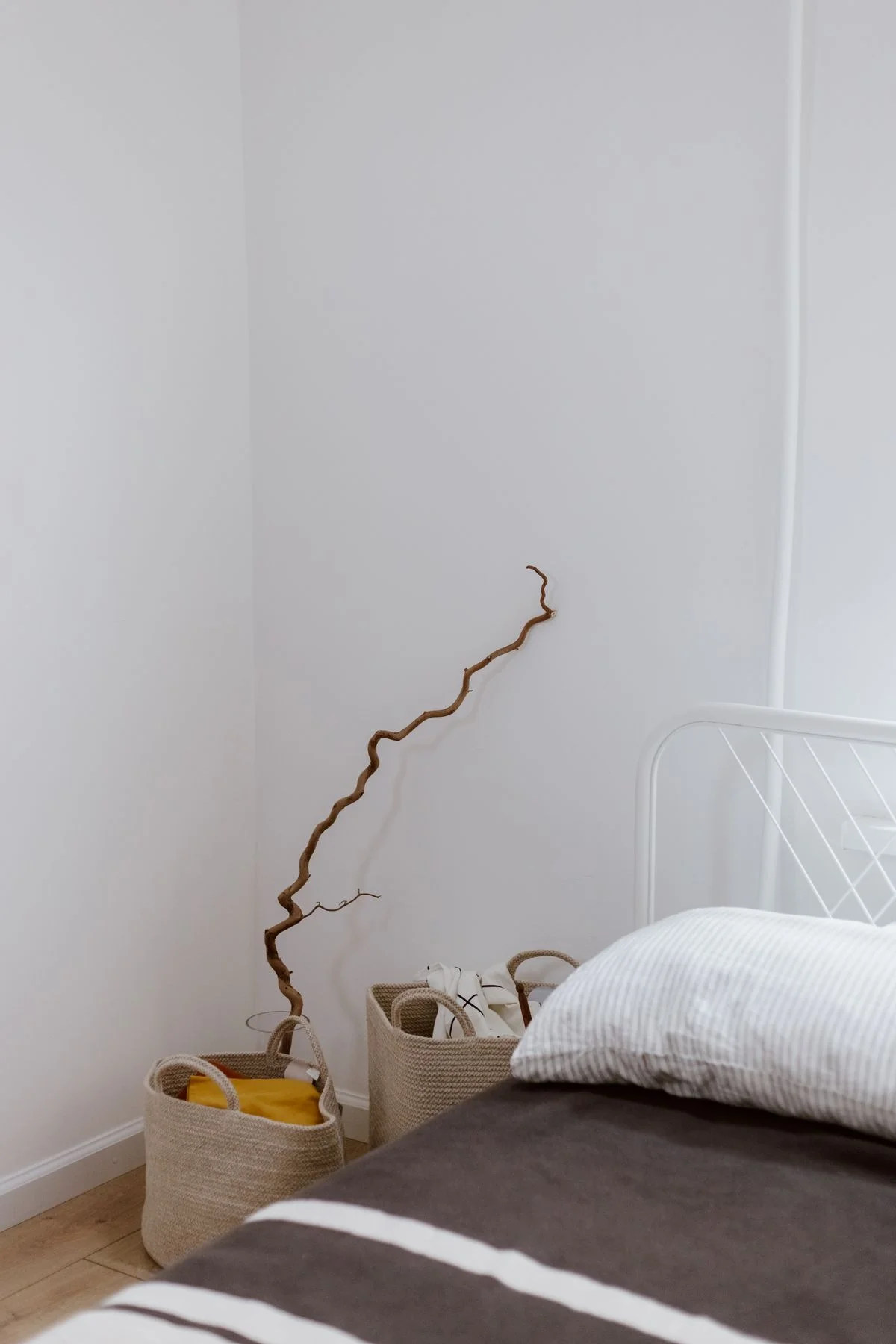
Under-bed drawers become hidden bookcases that keep dust and light off the books. A shallow drawer or a flat box on wheels slides under the bed and holds a row of books lying flat, spines facing out, sorted by the reader who owns them. Books stored flat under a bed stay cool, dark and dust-free, which is kinder to paper than a sunny shelf ever is. The bed you already own becomes the bookcase you thought you had no room for.
Label each drawer by owner or by kind — novels in one, cookbooks in one — so a book can be found without pulling every drawer out. Keep the books you are reading now out of the drawers and on the shelves, and the drawers hold the rest. Hidden, dust-free, and always within reach.
Tip 4 — An over-door rack behind the bedroom door
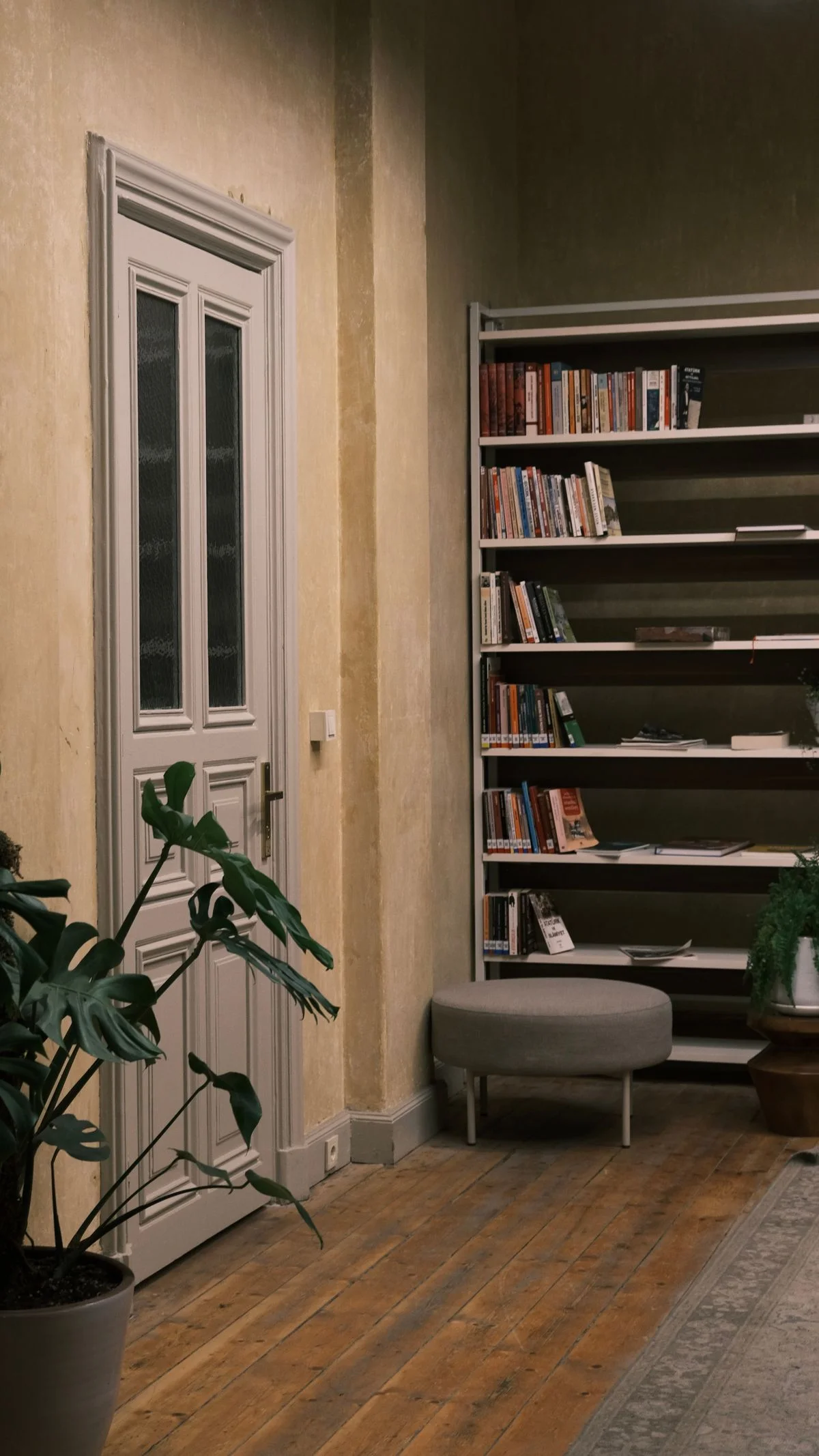
An over-door rack behind the bedroom door is a secret personal library, roughly $15–25, and it uses space nobody else wants. The rack hooks over the top of the door, no screws and no drilling, and its shallow shelves hold a row of paperbacks at eye level. Open the door and the library is there; close the door and it disappears behind it. It is the smallest bookcase in the house, and it holds more than it looks like it should.
Keep the rack light — paperbacks, not hardbacks — so the door still swings freely and the hinges never strain. Put the books you are reading this month on it, and swap them when the month turns. One rack, one door, and a library hides in plain sight.
Tip 5 — A low bench with cubbies by the door
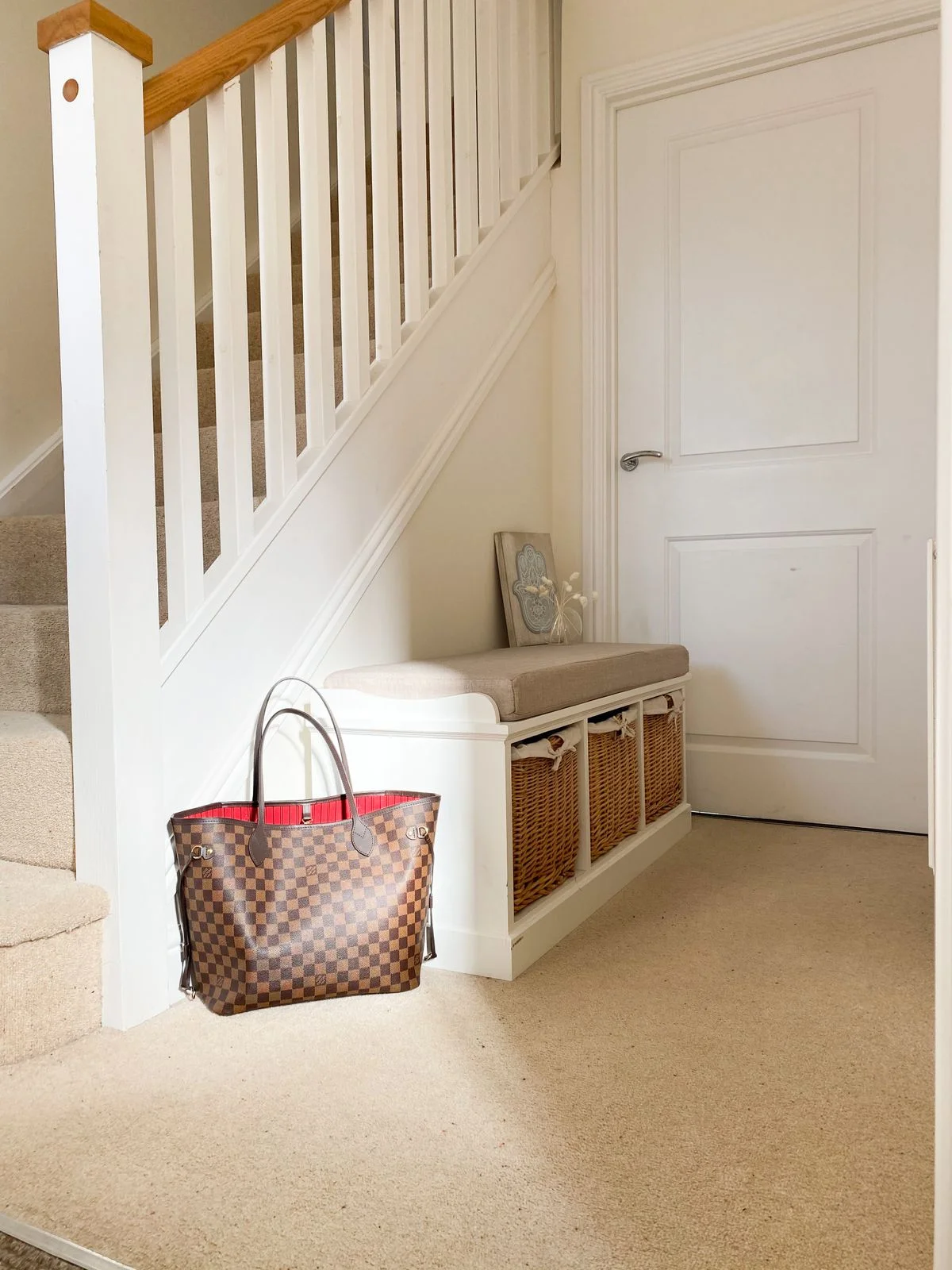
A low bench with cubbies under it stores books, bags and shoes by the door, so the hallway stops being the place books go to be forgotten. Sit on the bench to put your shoes on, and the cubbies below hold the book you are reading, the bag that carries it, and the shoes that go with them. The bench is one piece of furniture doing three jobs, and it sits in the hallway’s dead strip by the door where nothing else fits.
Give each person in the house one cubby, and the rule is simple: your book lives in your cubby, not on the hallway floor. A basket inside a cubby keeps small books and notebooks from sliding around. One bench, one cubby each, and the door becomes the place reading starts.
Tip 6 — A window-alcove bench turns the sill into the reading spot
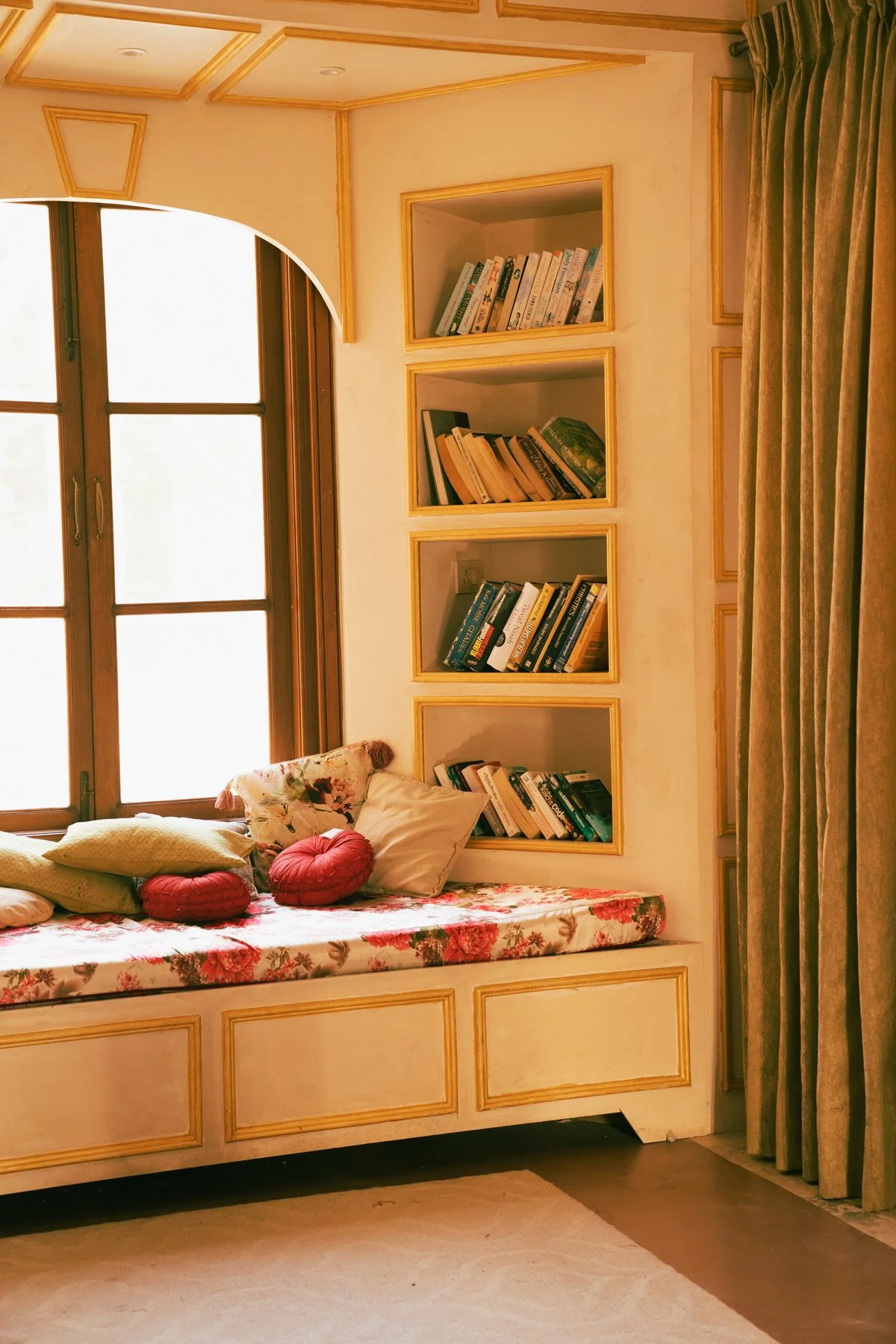
A window-alcove bench with storage beneath turns the sill into the reading spot. A low bench fitted into the window alcove — or a simple cushion on a storage box pushed under the window — gives you a seat with daylight on the page and a view beyond it, and the space beneath the bench holds the books for that seat. The window is already the brightest spot in the room; the bench just lets you sit in it.
Add one cushion and one small throw, and the bench is the seat everyone reaches for with a book. Keep the books beneath the bench in the order you read them, current read on top, so the next chapter is always one lift away. A bench, a window, and the best seat in the house costs almost nothing.
Tip 7 — Couch-back shelving keeps the current read at arm’s reach
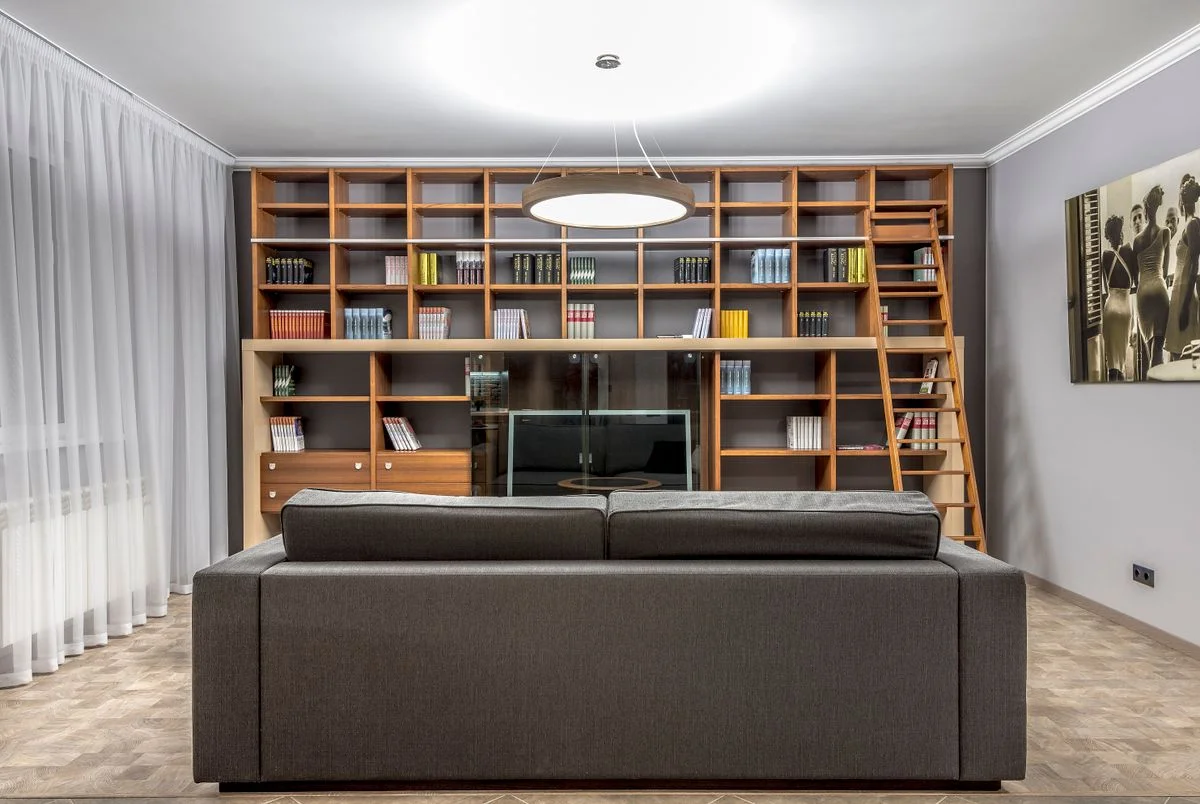
Couch-back shelving — a thin shelf spanning the back of the sofa — keeps the current read at arm’s reach. A narrow shelf, just deep enough for a book lying flat, runs along the sofa back, and the book you are reading now lives there, open or closed, exactly where your hand falls when you sit down. No side table needed, no floor space lost, and the sofa gains a shelf without gaining a single inch of footprint.
Keep the shelf to one book and one mug, and it stays a shelf; load it with five books and it becomes a cluttered ledge. A slim console table behind the sofa does the same job if the sofa sits away from the wall. One shelf, one book, and the current read is always where you left it.
Tip 8 — One shelf per reader, not one shelf per room
One shelf per reader, not one shelf per room — the books live where the reading happens. The cook’s books live on the kitchen shelf, the child’s books live by the bed, and your novel lives by the sofa, because a book stored where it is read gets read, and a book stored in a bookcase in another room gets forgotten. Give each reader one shelf, in the room where they actually sit down with a book, and the system runs itself.
Label the shelf if it helps — a name on a small tag, or a colour per reader — so nobody’s books drift onto someone else’s shelf. When a reader finishes a book, it goes back to their shelf, not to a pile on the table. One shelf per reader, and every book has an owner and a place.
Tip 9 — Only the books you are reading stay on display
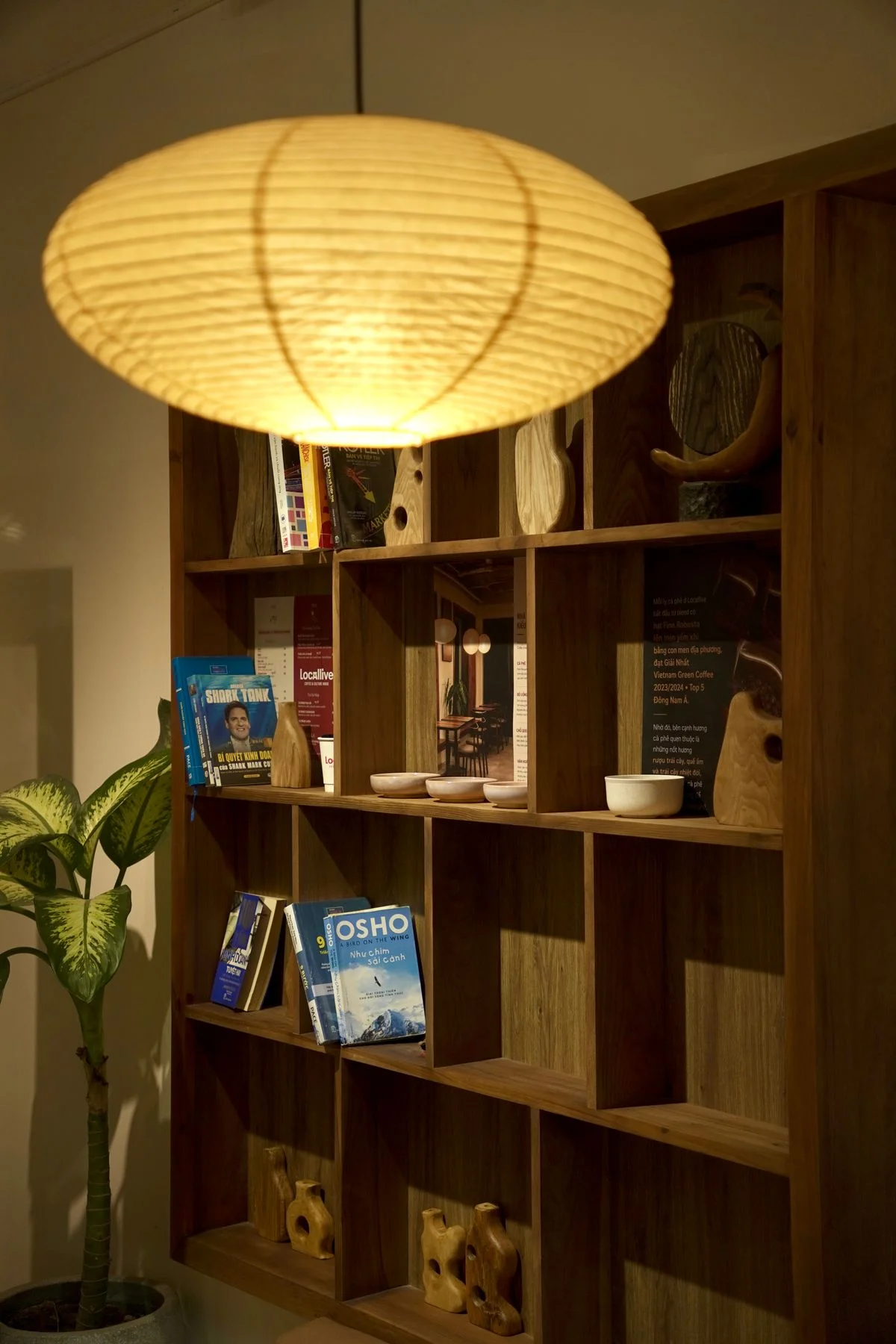
Keep only the books you are reading or re-reading on display — the rest in one labelled box, rotated monthly. A shelf holding five books you love looks like a display; a shelf holding fifty books you have forgotten looks like storage. Put the rest in one labelled box, out of sight, and swap a few books out each month, so the shelves feel new without buying anything. A book you have not seen for a month is a book worth picking up again.
Keep the box somewhere easy to reach — under the bed, on top of the wardrobe — so the monthly rotation takes ten minutes, not an afternoon. Let each reader choose which books go in and which come out, so the rotation feels like choosing, not losing. Five books out, the rest in the box, and the shelves always show the books that matter now.

Tip 10 — If a book has no shelf, it does not live in the house
If a book has no shelf, it does not live in the house — one in, one out. Every book in a tiny home needs a home of its own, and when the shelves are full, a new book has to earn its place by replacing one that leaves. Pass the finished book to a friend, donate it, or sell it, and the new book takes its exact spot. The rule is easy to understand and easy to enforce, because it is a fact about space, not a punishment.
Apply the rule at birthdays and holidays, when new books arrive fastest, and let each reader choose which old book leaves. A book collection that never grows is a collection that never needs a clear-out, and a reader who chooses what stays learns to value what they keep. One in, one out, and the shelves stay the size they started.
How do I store books in a small home without a bookcase?
Spread them across the walls and furniture you already own: three staggered floating shelves, a leaning ladder shelf, under-bed drawers, and an over-door rack behind the bedroom door. Give each book one home, keep the books you are reading on display, and rotate the rest monthly from one labelled box.
How many books can floating shelves hold?
Three staggered shelves about 2 ft each hold roughly a row of books per shelf, standing upright with spines out. Fix them into studs or use plasterboard fixings rated for the weight of books, keep the heaviest books on the lowest shelf, and leave breathing room at the end of each row.
Is a leaning ladder shelf safe for books?
Yes, if it has a wide stable base and sits flat — choose one with felt pads on the feet, test it with a gentle push before loading it, and keep heavy books on the deepest bottom shelves. Ladder shelves cost roughly $40–80, need no anchors, and move house with you.
Where should I keep books I am not reading right now?
In one labelled box, flat and out of the way — under the bed is ideal, because books stored flat in the dark stay cool and dust-free. Rotate a few books out of the box each month so the shelves feel new, and keep only the books you are reading or re-reading on display.
What is the one-in-one-out rule for books?
When the shelves are full, a new book must replace one that leaves — donate it, pass it to a friend, or sell it. The new book takes the old book’s exact spot, so the collection never grows past the shelves you have.
How do I stop books from piling up on every surface?
Give each reader one shelf in the room where they actually read, and make the rule that a finished book goes back to its shelf, not to a pile on the table. A low bench with cubbies by the door catches the book you carry, and a couch-back shelf holds the current read.
Small book storage ideas for tiny homes work when the books have a system, not a bookcase: three staggered floating shelves about 2 ft each, a leaning ladder shelf that needs no anchors, under-bed drawers for the books you are not reading, and an over-door rack behind the bedroom door. A low bench with cubbies by the door, a window-alcove bench with storage beneath, and couch-back shelving keep the current read at arm’s reach, while one shelf per reader puts the books where the reading happens. Keep only the books you are reading on display, rotate the rest monthly from one labelled box, and remember the rule that keeps it all working: if a book has no shelf, it does not live in the house.
Save this post on Pinterest for your next bookshelf-free tidy-up, and read our earlier storage ideas next: Small Space Storage Ideas To Use Every Wall, Cozy Reading Nook Ideas For Small Spaces, Under Bed Storage Ideas For Small Rooms That Work, and Small Bedroom Storage Ideas That Free Up Space.
Useful links: Shelving Units and Bookcases.
Written from small-room living experience — every idea here is practical for a tiny home, with a renter-friendly option wherever drilling is a problem.
Last updated 20 Nov 2026. Refresh in 3–6 months: re-check the floating shelf fixings and the ladder shelf feet, and rotate the display box.